





Trek-style smart glasses that allow the blind to see - VIDEO
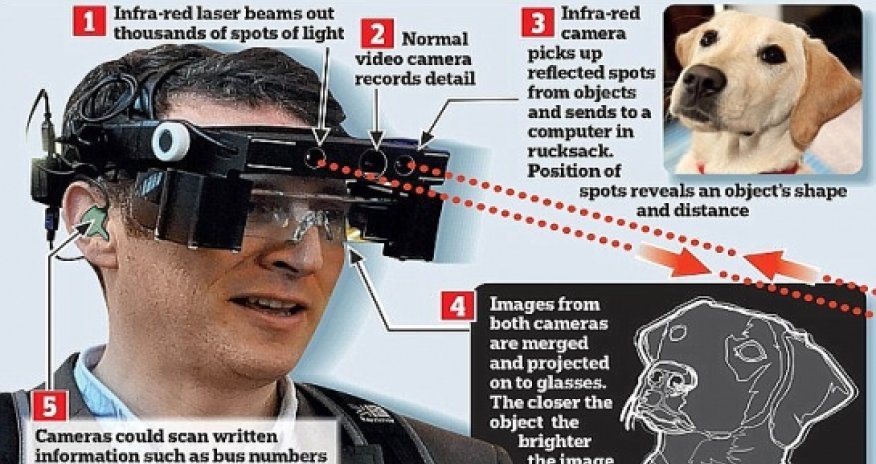


The revolutionary technology enables those suffering from sight loss to see obstacles and faces, similar to the fictional high-tech visor worn by Geordi La Forge in TV's Star Trek.The smart glasses consist of a video camera mounted on the frame of the glasses; a computer processing unit that is small enough to fit in a pocket; and software that provides images of objects close-by to the see-through displays in the eyepieces of the glasses.The joint project between the University of Oxford and the Royal National Institute of Blind People (RNIB) has won a £500,000 grant in a Google charity competition. The money will enable RNIB and Oxford University to create 100 pairs of smart glasses and test them with 1,000 people.This will be the first large-scale test of smart glasses and augmented reality for sight enhancement anywhere in the world and is the first step towards getting the glasses made available to everyone who needs them - for as little as £300.There are 300,000 people registered as blind in the UK who still have some remaining vision and it si estimated the glasses could help half of them.The smart glasses enable those with very limited vision to make use of what sight remains, increasing their confidence and helping them navigate and communicate with people.The prototype has already enabled users to identify faces and obstacles more clearly than they have seen for years.Within 18 months, RNIB hopes to be able to revolutionise the lives of 1,000 people living with sight loss, providing the foundations to create a low-cost version with additional functionality for people with sight loss around the world.‘The idea of the smart glasses is to give people with poor vision an aid that boosts their awareness of what’s around them – allowing greater freedom, independence and confidence to get about, and a much improved quality of life,’ says Dr Stephen Hicks of the Nuffield Department of Clinical Neurosciences at the University of Oxford, who is leading the development of the glasses.'The group has been awarded further funding from the Royal Society to look at introducing more features into the glasses, such as face, object or text recognition. An audio prompt via an earphone would give people more information about who or what they are seeing.‘We eventually want to have a product that will look like a regular pair of glasses and cost no more than a few hundred pounds - about the same as a smart phone,’ says Dr Hicks.(dailymail.co.uk)Bakudaily.az











Latest news 
More news

 Photo
Photo 



 Video
Video