





NASA finds evidence of liquid water on surface of Saturn moon
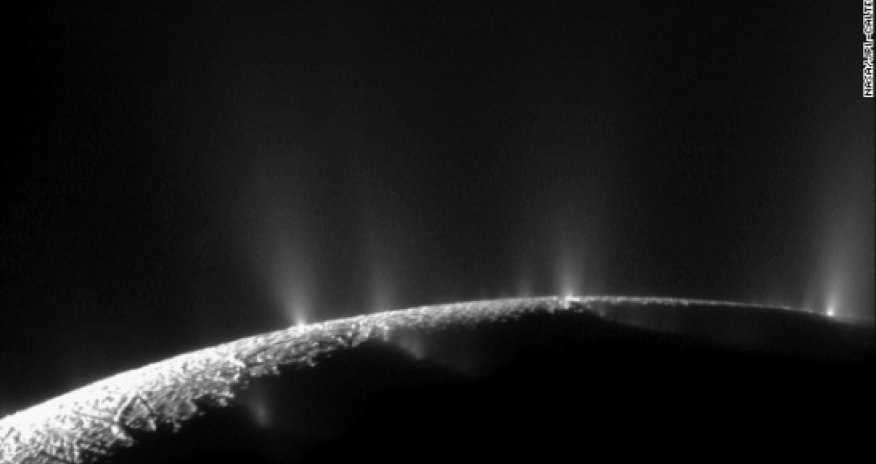


NASA scientists announced Monday the identification of 101 distinct geysers erupting on Saturn's moon Enceladus. Their analysis suggests that water, a crucial component for life beyond our planet, can reach the Saturnian moon's surface.First sighted in 2005, the geysers erupt from four "tiger stripe" fractures along the moon's south polar terrain and spew tiny ice particles and water vapor, NASA said in news release. Photos: Cassini's Saturn discoveries Photos: Cassini's Saturn discoveriesAfter seven years of collecting mission data from NASA's Cassini spacecraft, scientists found the geysers to be powered by small hot spots -- the result of water vapor condensing and venting from subsurface seawater; thus, answering questions about the geysers' origins.Researchers had previously thought the ice particles and water vapor came from either frictional heat or from water vapor below the surface."Once we had these results in hand, we knew right away heat was not causing the geysers, but vice versa," said NASA adviser Carolyn Porco, who led the Cassini imaging team."It also told us the geysers are not a near-surface phenomenon, but have much deeper roots."(CNN)Bakudaily.az











Latest news 
More news

 Photo
Photo 



 Video
Video