





Life in Baku dachas


By Kamal Ali
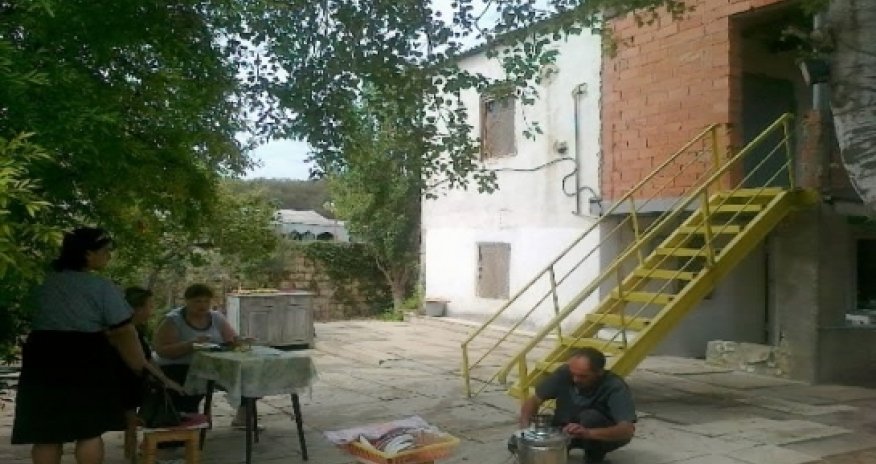
Baku residents have always had dachas in the villages - which were later named “settlements” – outside the Azerbaijani capital.
Oil millionaires would move to their seaside dachas together with their families and servants once summer arrived. A typical dacha of the early 20th century was a two-story building that’s an average country house by today’s standards. Oil tycoon Haci Zeynalabdin Tagiyev’s dacha is an example of that.
Some other dachas, such as the one owned by millionaire Hacinski, are like palaces by even today’s standards.
In Soviet times, between 1950s and 1980s, rich Baku residents would buy one-story dachas. They started building two-story houses in later years.
In the yard, Bakuvians would grow the special and very sweet Absheron grapes, as well as figs and black and white tut. They would use swimming pools after the sunset so that neighbors didn’t see them naked. It would be an embarrassment if they did.
In cooler days of the year, data owners would hire local villagers to look after their houses. The watchmen often robbed the houses instead. The tradition of dacha robbery by night watchmen is still alive.
In autumn and winter times, husbands and their adult sons used dachas for secret dating with women/prostitutes.
From the 2000’s on, people started settling in country houses permanently. Having equipped the houses with all the necessary winter appliances, they started commuting between the villages and the city every day. This is how heavy traffic jams emerged in Baku roads during peak hours.
The number of those settling in the villages permanently and renting out their Baku apartments is expected to grow even further in the future.
So what is that makes holidays so different at Baku dachas? It is all about having long hours of sleep, constant fight against mosquitoes, making barbeques, grape, fig and tut jams, meeting family and friends, having quarrels with local residents who do not stand men in shorts, organizing car racing on village roads, playing cards with neighbors, speaking to friends and relatives on the phone and inviting them to your dacha, etc.
The form of holidaymaking in dachas has changed over time with the emergence of satellite TV channels and the Internet. Now there is certainly a nearby restaurant with live music or a leisure center with a large pool. It is still boring though.
The scene in the famous play "The Ring of Happiness" ("Baxt uzuyu") by Vaqif Samadoglu where several families share a yard and often eat together is now a thing of the past. Now dachas are surrounded by two-meter walls and have angry dogs in the yard. Communication with neighbors is limited to the minimum. Neighbors often quarrel over garbage thrown over the walls.
On the beach, you are offered a ride on scooters, donkeys, horses and camels. Holidaymakers travel between the villas on quads, motorcycles and bicycles.
New concerns that have emerged include the need to pay for water in the pool as all water supplies are calculated by the same meter, and public utilities have become more expensive.
In the past 10 years, Baku residents have come to realize that renting a summer house is cheaper than owning it. Rentals range between 500 manat and 5,000 manat a month depending on amenities, locations, the size of the pool, proximity to the sea, road quality, etc.
Bakudaily.az











Latest news 
More news

 Photo
Photo 



 Video
Video