





Kill switch: breeding kamikaze mosquitoes
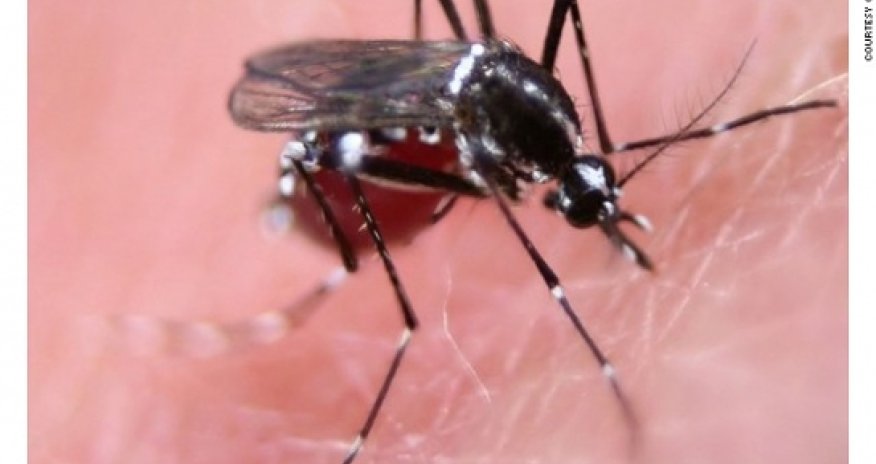


In the past 50 years, incidence of Dengue Fever has multiplied by 30 according to the WHO, spreading from nine countries in 1970 to over 100 today. There is no vaccine or cure for the painful virus known as Breakbone Fever, and of the 50-100 million people infected each year, over 20,000 die.Aedes Aegypti has spread with this epidemic, and has become the target of efforts to control the disease. But while solutions such as mass spraying of toxic chemicals have proved expensive, ineffective and environmentally damaging, scientists hope to use the insect as the agent of its own destruction.British biotech firm Oxitec is tackling the problem through pioneering genetic modification (GM) of the Aedes Aegypti. Scientists breed large numbers of the insects in laboratories and inject the sperm cells of males with a lethal gene. When the mosquito is released into the wild and mates with a female -- always of the same species - the deadly transgene is passed on and the offspring dies.Oxitec report successes from their Release of Insects with Dominant Lethality (RIDL) programme trials in Malaysia, the Cayman Islands and Brazil, claiming a 96% suppression rate in the latter case. This has proved enough for the Brazilian government to announce this year the first commercial release of GM mosquitoes into the wild. The treated insects are awaiting approval in the US.Oxitec CSO Dr. Luke Alphey claims the techniques the company has been refining since 2009 offers a high degree of control."In the target area we could suppress the population even to zero levels," he says."It works. The engineered males can court and mate wild females and we can suppress the target populations as we demonstrated in the Cayman Islands and in Brazil. To a huge level, enough suppression to prevent epidemic dengue."Alphey believes the concept could be applied at scale. "I hope that it will become a major part of control of major pest insects. If we could reduce, even in some countries, the burden of diseases like dengue...that would be fantastic. We're just at the dawn of genetic control."(CNN)Bakudaily.az











Latest news 
More news

 Photo
Photo 



 Video
Video