





Would you drive a car that runs on URINE? - VIDEO
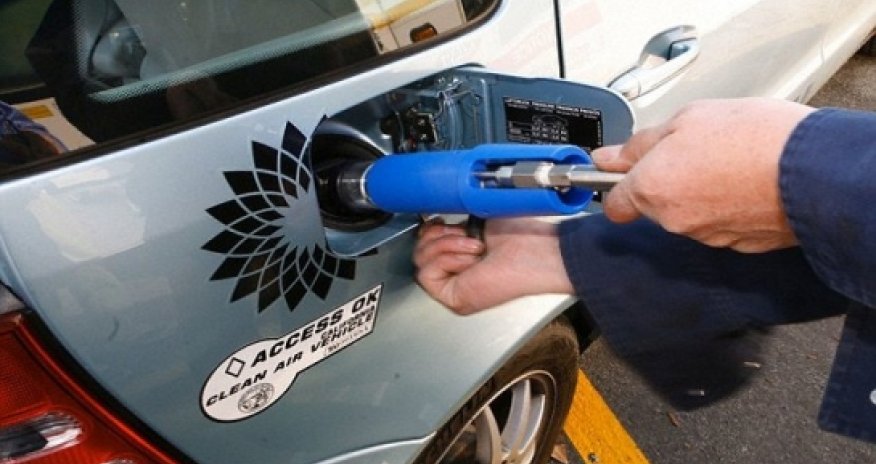


While most of us will label this as waste, scientists are hoping to use urine to someday generate power for vehicles, homes and cities.A group of scientists from Korea University has outlined a plan to use carbon atoms recovered from human urine to produce cheap electricity.This, they claim, would be done by replacing expensive platinum used in current fuel cells with carbon naturally found in human waste.Fuel cells are a promising technology that convert chemical energy into electricity by reacting hydrogen and oxygen.They work by delivering hydrogen gas to a negatively charged anode on one side of the fuel cell, while oxygen is channelled to a positively charged cathode on the other side.At the anode, a catalyst – usually platinum – knocks the hydrogen atoms’ electrons off, leaving positively charged hydrogen ions and free electrons.A membrane placed between the anode and cathode only allows the ions to pass through. This means electrons have to travel along an external circuit generating an electric current.Scientists hope they could be used widely in the future to provide power for vehicles and generate electricity in the home.The problem is that the catalyst used inside a fuel cell is expensive and its high cost is currently holding back commercial development of the technology.By replacing platinum with carbon, which has shown to have similar properties, Korean researchers believe they could drive down the cost of fuel cells.The study was led by Jong-Sung Yu of Korea University, who said there are other environmental benefits that come with treating urine as a commodity rather than a waste product.He argues that fewer pollutants, such as leftover drugs, from urine would reach water bodies.As well as fuel cells, the carbon they recover from urine could also be used in battery applications.(dailymail.co.uk)Bakudaily.az











Latest news 
More news

 Photo
Photo 



 Video
Video