




Baku signs strategic partnership charter with United States
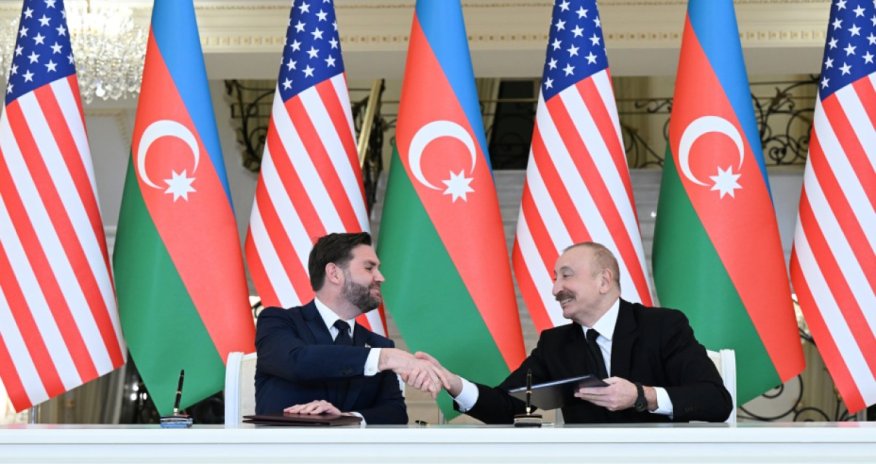


BAKU, Feb 10 (Reuters) – Azerbaijan and the United States signed a strategic partnership charter on Monday, deepening cooperation in energy, transport, artificial intelligence and security, in a move that could reshape connectivity and geopolitical dynamics in the South Caucasus.
The document was signed in Baku by Azerbaijani President Ilham Aliyev and U.S. Vice President JD Vance, elevating bilateral ties to a formal strategic partnership framework.
The charter reaffirms mutual support for sovereignty, independence and territorial integrity, and builds on a memorandum of understanding signed in Washington on Aug. 8, 2025, establishing a working group to prepare the agreement.
Focus on connectivity and TRIPP corridor
A central pillar of the charter is regional connectivity, with a particular emphasis on the Trans-Caspian transport route, also known as the Middle Corridor, linking Asia and Europe via Central Asia, the Caspian Sea and the South Caucasus.
The two governments said they would cooperate to develop land, maritime and air transport infrastructure, improve customs procedures, facilitate trade and expand digital and energy connectivity.
The charter also recognizes the “Trump Route for International Peace and Prosperity” (TRIPP), a multimodal initiative designed to ensure uninterrupted transport between mainland Azerbaijan and its Nakhchivan exclave. The project is framed as supporting broader international trade and regional integration.
Energy and critical minerals
The United States and Azerbaijan pledged to expand cooperation in oil, gas and electricity sectors, including through joint projects and potential partnerships with third countries aimed at diversifying supply routes.
The agreement also calls for deeper cooperation in civilian nuclear energy and support for the transit of critical minerals through the Middle Corridor to global markets.
Azerbaijan, a key oil and gas producer in the Caspian region, has long positioned itself as a strategic energy partner for Western markets, particularly through projects such as the Southern Gas Corridor.
AI, digital infrastructure and investment
Beyond traditional energy and transport sectors, the charter outlines plans to strengthen cooperation in artificial intelligence, digital infrastructure and research and development.
The two countries said they would explore the development of AI data centres in Azerbaijan in partnership with the private sector, as well as create mechanisms to support joint R&D, cybersecurity initiatives and early-stage technology commercialisation.
The document emphasizes public-private partnerships, voluntary technology transfer on mutually agreed terms and the development of a skilled technological workforce in Azerbaijan.
Security and defence cooperation
On security, the charter states that peace in the South Caucasus serves the shared interests of both countries. Washington praised Azerbaijan’s contribution to international peacekeeping missions alongside U.S. and coalition forces.
The two sides agreed to expand defence cooperation, including the potential sale of defence equipment, enhance counterterrorism collaboration and strengthen cybersecurity and protection of critical infrastructure.
The United States also pledged to cooperate with Azerbaijan on humanitarian demining, including through financial support and technology transfer, as Baku continues to address landmine contamination in territories affected by past conflicts.
Implementation framework
Under the charter, working groups will be established in areas including economy and trade, energy, connectivity, artificial intelligence and digital development, as well as security and defence.
Within three months of signing, the working groups are expected to identify priority projects and develop implementation roadmaps. The two governments plan to meet at least annually under the framework of the charter.
The agreement marks one of the most significant upgrades in U.S.-Azerbaijan relations in recent years, coming amid shifting geopolitical alignments and growing competition over energy routes and digital infrastructure in the wider Eurasian region.
BAKU, Feb 10 (Reuters) – Azerbaijan and the United States signed a strategic partnership charter on Monday, deepening cooperation in energy, transport, artificial intelligence and security, in a move that could reshape connectivity and geopolitical dynamics in the South Caucasus.
The document was signed in Baku by Azerbaijani President Ilham Aliyev and U.S. Vice President JD Vance, elevating bilateral ties to a formal strategic partnership framework.
The charter reaffirms mutual support for sovereignty, independence and territorial integrity, and builds on a memorandum of understanding signed in Washington on Aug. 8, 2025, establishing a working group to prepare the agreement.
Focus on connectivity and TRIPP corridor
A central pillar of the charter is regional connectivity, with a particular emphasis on the Trans-Caspian transport route, also known as the Middle Corridor, linking Asia and Europe via Central Asia, the Caspian Sea and the South Caucasus.
The two governments said they would cooperate to develop land, maritime and air transport infrastructure, improve customs procedures, facilitate trade and expand digital and energy connectivity.
The charter also recognizes the “Trump Route for International Peace and Prosperity” (TRIPP), a multimodal initiative designed to ensure uninterrupted transport between mainland Azerbaijan and its Nakhchivan exclave. The project is framed as supporting broader international trade and regional integration.
Energy and critical minerals
The United States and Azerbaijan pledged to expand cooperation in oil, gas and electricity sectors, including through joint projects and potential partnerships with third countries aimed at diversifying supply routes.
The agreement also calls for deeper cooperation in civilian nuclear energy and support for the transit of critical minerals through the Middle Corridor to global markets.
Azerbaijan, a key oil and gas producer in the Caspian region, has long positioned itself as a strategic energy partner for Western markets, particularly through projects such as the Southern Gas Corridor.
AI, digital infrastructure and investment
Beyond traditional energy and transport sectors, the charter outlines plans to strengthen cooperation in artificial intelligence, digital infrastructure and research and development.
The two countries said they would explore the development of AI data centres in Azerbaijan in partnership with the private sector, as well as create mechanisms to support joint R&D, cybersecurity initiatives and early-stage technology commercialisation.
The document emphasizes public-private partnerships, voluntary technology transfer on mutually agreed terms and the development of a skilled technological workforce in Azerbaijan.
Security and defence cooperation
On security, the charter states that peace in the South Caucasus serves the shared interests of both countries. Washington praised Azerbaijan’s contribution to international peacekeeping missions alongside U.S. and coalition forces.
The two sides agreed to expand defence cooperation, including the potential sale of defence equipment, enhance counterterrorism collaboration and strengthen cybersecurity and protection of critical infrastructure.
The United States also pledged to cooperate with Azerbaijan on humanitarian demining, including through financial support and technology transfer, as Baku continues to address landmine contamination in territories affected by past conflicts.
Implementation framework
Under the charter, working groups will be established in areas including economy and trade, energy, connectivity, artificial intelligence and digital development, as well as security and defence.
Within three months of signing, the working groups are expected to identify priority projects and develop implementation roadmaps. The two governments plan to meet at least annually under the framework of the charter.
The agreement marks one of the most significant upgrades in U.S.-Azerbaijan relations in recent years, coming amid shifting geopolitical alignments and growing competition over energy routes and digital infrastructure in the wider Eurasian region.











 Photo
Photo 



 Video
Video