





Mysterious mermaid stripped naked - PHOTO+VIDEO
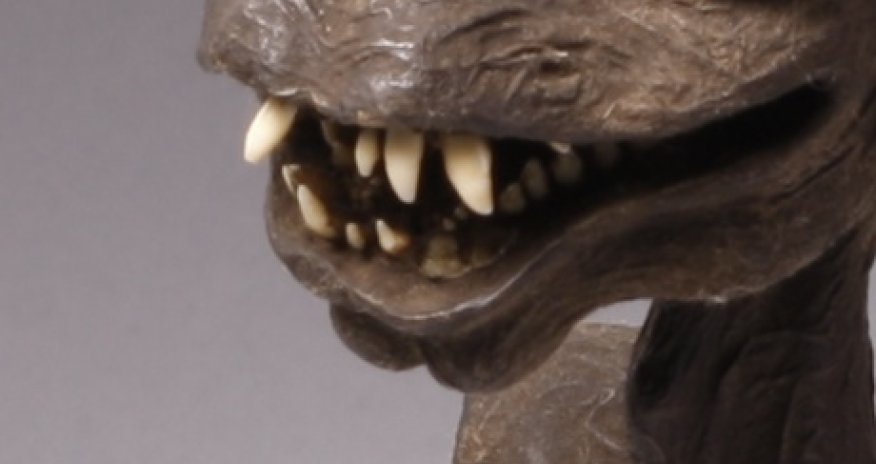


At that point, I was familiar with the idea that tales of mermaids most likely arose from the misidentification of real-world animals like the Sirenidae (a family of American aquatic salamanders that lack hind limbs) or Sirenia (the dugongs, manatees and now extinct Steller’s sea-cow). I was less familiar with fake mermaids, taxidermy chimera supposedly made by attaching a monkey to a fish.I wasn’t quite sure what to expect as I peered into the case where the mermaid lurks in the Horniman’s Centenary Gallery, a space that struggles to strike a balance between the low light levels needed to preserve museum objects and the need for visitors to actually see the exhibits. With a torch, however, I was able to pierce the stygian gloom to reveal the suitably nightmarish visage of the “Japanese Monkey-fish” (as the museum’s register describes it). This presumptive descriptive name led me to think about taxonomy rather than taxidermy: what should the scientific name be? Pseudosiren paradoxoides (literally, the “absurd pretend mermaid”) seemed an appropriate moniker. But in the interests of a snappier name and still assuming Japan was the country of origin, perhaps ningyo or “man fish” would be better. However, presumptions and assumptions are bad for the business of science, so I took it back to basics and, given the absence of feminine characteristics, I settled on “merman”.“Is it real?” is the first question that most of the museum’s visitors ask and they are all dutifully disappointed by the equivocal answer that it’s a real object, but not a real merman. “What is it made of?” is the second most common enquiry and one to which we now have an answer.It quickly became apparent that in spite of appearances the merman did not contain a trace of monkey. The main clue lay in the teeth, which lacked the typical simian pattern of having four incisors in the top jaw and four in the bottom. In fact, it lacked the standard mammalian feature of having properly defined incisors altogether, raising questions about just what teeth they were.Once extracted from the caliginous comfort of its case and in collaboration with colleagues from several institutions I set about a thorough examination of the merman. The jaws, it turns out, contain several rows of teeth. This is a distinctly fishy arrangement and Oliver Crimmen identified them as jaws from a species of wrasse. The scales of the tail and arrangement of the fins seem to have come from a carp.With help from GrrlScientist and Bob O’Hara, we got samples of the fishy components to Markus Pfenninger for DNA analysis. Alas, the years have not been kind to the merman’s genetic material, so we have not been able to pinpoint the precise species of fish that went into its making.X-rays have been more forthcoming, revealing what lies beneath the surface of the specimen. Most strikingly, it is evident that the sinewy arms were supported by wire rather than bone. CT scans kindly conducted by the Saad Centre for Radiography at City University London and dissection of the resulting data by James Moffatt have given even more information on the method of construction. So here, in just nine simple steps, is a recipe for making the Horniman merman:Take a triangular piece of wood (for the torso) and a smaller block (that will bolster the tip of the tail) and connect them with a length of thick, twisted wire (as a stand-in for the spine).Fix a softwood stick into the triangular torso to create the basis for the merman’s neck.Make a hole at the top of the stick and pass a knotted length of string through the hole. Wrap it around and around the end of the stick until you have a ball shape for the head. Cover this with clay and leave to dry.Use a nail to secure a straight piece of wood across the top of the triangle. This will form the shoulders.Make small holes at each end of the shoulder piece and insert a short piece of soft wood, bamboo or tightly rolled-up paper to fashion the arms. Crack and bend the material at an appropriate point to form elbows. Attach metal wires to make the lower arms and fingers.Bulk out the body with fabric and add a layer of clay. Make sure the clay body is the right size to fit into the fish you have available (a carp is recommended).Prepare the fish by cutting off its head, following the last gill slit. Gut it and remove all flesh. Clean the inside of the skin thoroughly and rub with salt and borax (if you can get it). Fit the fish skin to the body, using material to pad out areas where the fit isn’t perfect. Remove any fins you don’t like the look of and trim the tail to the shape you desire.Apply papier-mâché (tinted with ink or charcoal) to the torso, neck and head areas, being careful to build up and sculpt sections according to the anatomy you want to show. Make sure the jaws of a fish are well embedded in this papier-mâché layer in the head and fix chicken claws or fish spines at the fingertips to make sharp nails. Push in glass eyes if you like (though these will probably fall out later). Add wispy tufts of plant down to give your merman hair.Seal the junction between the torso and tail sections with a resin tinted to match the papier-mâché. Use the same resin to seal shut the belly of the fish. Allow to dry.Job done.(The Guardian)ANN.Az











Latest news 
More news

 Photo
Photo 



 Video
Video