





Galileo’s astronomical puzzle is solved after 400 years
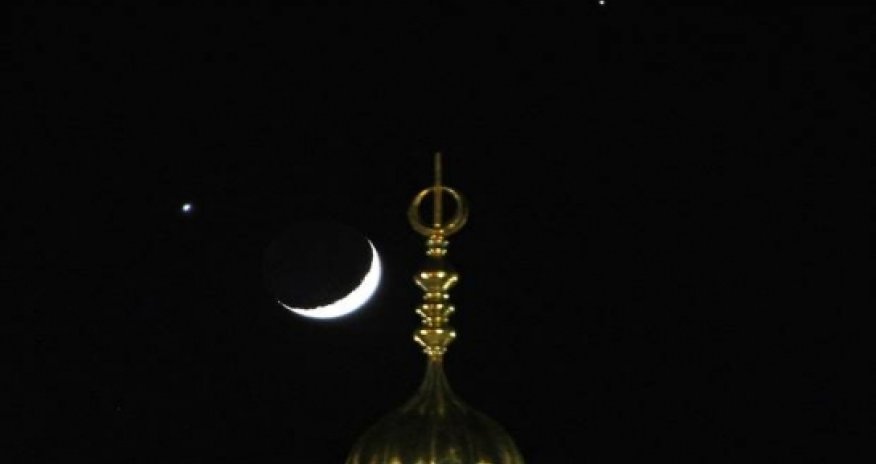


Venus is nearer to Earth than Jupiter and therefore appears brighter in the night sky, however this alone cannot account for its larger-than-life appearance. There must be another reason to do with the way the eye perceives light compared to the optical reality of a telescope, scientists said.Viewed directly with the naked eye, Venus appears to have a “radiant crown” which makes it look eight to ten times bigger than Jupiter even though Jupiter is four times larger when seen from Earth.Galileo was the first to realise that this radiant crown was something to do with human perception, or, as he described it, an “impediment of our eyes” which the telescope eliminated, but he put it down to some kind of optical interference to the light from the planets as the light entered the human eye.However, scientists have now shown that the effect is caused by the way the light-sensitive cells at the back of the eye respond to images of different intensity set against a dark background. Venus appears larger because its brighter-than-Jupiter image is much exaggerated by the visual centres of the brain to create a bigger radiant crown than Jupiter’s, according to the study published in the journal Proceedings of the National Academy of Sciences.They believe the effect influences the way we see everything because the human retina and brain are finely tuned to respond to the contrast between light objects against a dark background. This makes them appear larger than light objects of the same size set against a light background, said Jose-Manuel Alonso of the State University of New York College of Optometry.“Galileo was the first to say that our eye was distorting reality. He could see that Venus appeared to be much larger than Jupiter when seen with the naked eye and that the opposite was true when he looked through his telescope,” Dr Alonso said.Galileo said that the effect was some kind of size illusion created by the eyes. “Either because their light is refracted in the moisture that cover the pupil, or because it is reflected from the edges of the eyelids and these reflected rays are diffused over the pupil, or for some other reasons,” Galileo wrote.The 19 Century German physicist Hermann von Helmholtz came nearer to the truth when he said that the “irradiation illusion”, as he called it, was caused by our sensation of the object and not by the optics of the eye.“The latest research demonstrates that the sensation Helmholtz used to explain the irradiation illusion is a ‘non-linear’ response of the visual system when objects are presented on dark backgrounds,” Dr Alonso explained.The edges of a light object appear blurred and this is effectively magnified by the brain so that the entire object appears bigger than it should. Venus, being nearer to Earth, is brighter than Jupiter and so it appears bigger against the dark background of the night sky, he said.(independent.co.uk)ANN.Az











Latest news 
More news

 Photo
Photo 



 Video
Video