


Kazakhstan After 2025: Institutional Reforms and a Pragmatic Course
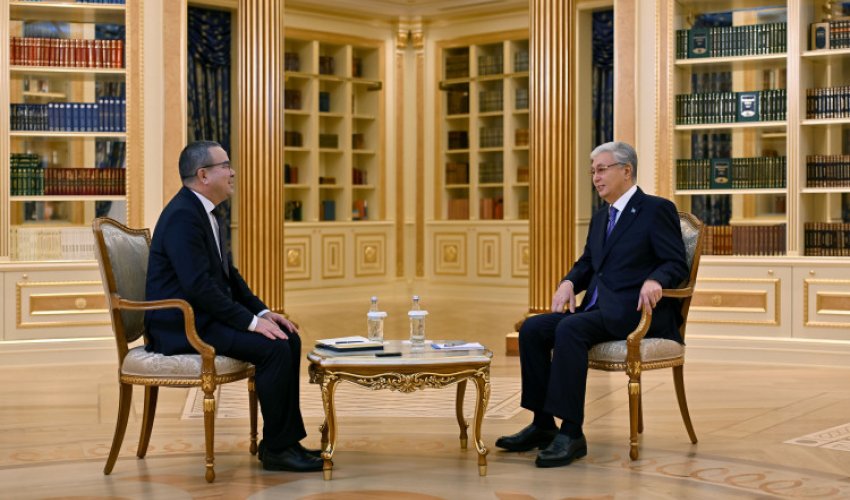


In an interview with Turkistan on January 5, President of Kazakhstan Kassym-Jomart Tokayev outlined in detail his vision of how the country is entering a new stage of modernization—without abrupt breaks, but through gradual and, in his words, irreversible changes to political, economic, and social institutions. The tone of the interview was restrained and conceptual: the president sought to present reforms as a coherent, interconnected process rather than a set of isolated decisions.
Speaking about the political system, Tokayev emphasized that Kazakhstan has moved from declarations to institutional construction. He recalled that the core model of governance remains the formula “A Strong President — an Influential Parliament — an Accountable Government,” while noting that the substance of this formula is evolving. Strengthening the role of Parliament and maslikhats (regional representative body in Kazakhstan), expanding political competition, and abandoning the practice of manual governance, in his view, are creating a more stable and predictable system. At the same time, the president made it clear that stability is not an end in itself, but a necessary condition for reforms, which must be evolutionary and free from radicalism and populism.
The economic part of the interview was built around a shift in priorities. Tokayev described 2025 as a transitional year and noted that future growth cannot rely solely on commodity revenues and macroeconomic indicators. He repeatedly returned to the idea that economic development should be felt at the household level, not only reflected in reports. In this context, the president criticized a dependency mindset and excessive state involvement in the economy, stressing that diversification and support for small and medium-sized enterprises form the basis of long-term sustainability.
Addressing tax and budget policy, Tokayev focused in particular on the new Tax Code. He rejected interpretations of the reform as fiscal tightening, stating that its purpose is to restore fairness and eliminate imbalances whereby the main burden falls on conscientious taxpayers. The president linked social justice to the need for tax discipline and the fight against gray schemes, emphasizing that the state is not abandoning its social obligations but expects greater responsibility from businesses and citizens. Budget transparency, in his interpretation, is not a technical issue but a strategic element of trust between the state and society.
Social policy in the interview was presented as an investment in people. Tokayev stressed that the ultimate beneficiary of all reforms must be the citizen, with education and healthcare remaining key priorities. At the same time, he criticized a formalistic approach to social programs and insisted on targeted support for vulnerable groups. His remarks clearly reflected a growing public demand not so much for expanded assistance as for fairness, quality of public services, and their real effectiveness.
Issues of culture and identity occupied a special place in the interview. The president spoke about the importance of supporting the Turkic world and a shared historical memory, while warning against turning this theme into an instrument of isolation or political bloc-building. According to him, a soft Turkic identity is taking shape—one that carries no military or political dimension and is viewed primarily as an ideological, cultural, and humanitarian resource. In the same context, Tokayev criticized the impact of social media on the quality of public thinking and underscored the role of print media as a space for thoughtful, non-sensational dialogue. History and culture, he argued, should strengthen social cohesion rather than divide society.
Turning to digitalization and artificial intelligence, the president described them as tools for development rather than threats. He noted that Kazakhstan needs to carve out its own niche in the global digital transformation, placing emphasis on workforce training and digital literacy. The role of the state, he said, is to regulate sensibly without stifling innovation and initiative.
In the foreign policy section of the interview, Tokayev reaffirmed Kazakhstan’s commitment to a multivector and pragmatic course. Sovereignty and national interests were described as unconditional priorities, while balance in relations with major powers was presented as a practical tool that allows the country to maintain predictability and room for maneuver. The president emphasized that Kazakhstan intends to continue active participation in regional and international initiatives, positioning itself as a supporter of dialogue and stability.
Overall, the interview presents Kazakhstan as a state undergoing a deep, structural transformation. Tokayev made it clear that reforms are complex and not always popular, but he sees stagnation and complacency as the main alternative risks. Responsibility for the country’s future, in his view, is shared by the state and society, which should act not as opponents, but as co-participants in the course of modernization.




Latest news 
More news
 Photo
Photo 

 Video
Video