





Earth not eternal as scientists examine lifespan of planets


Scientists studying the formation and destruction of planets say Earth’s lifespan, in cosmic terms, may be shorter than often assumed.
Research into planetary evolution suggests that while planets form from dust and gas around young stars, their ultimate fate depends largely on the evolution of their host stars.
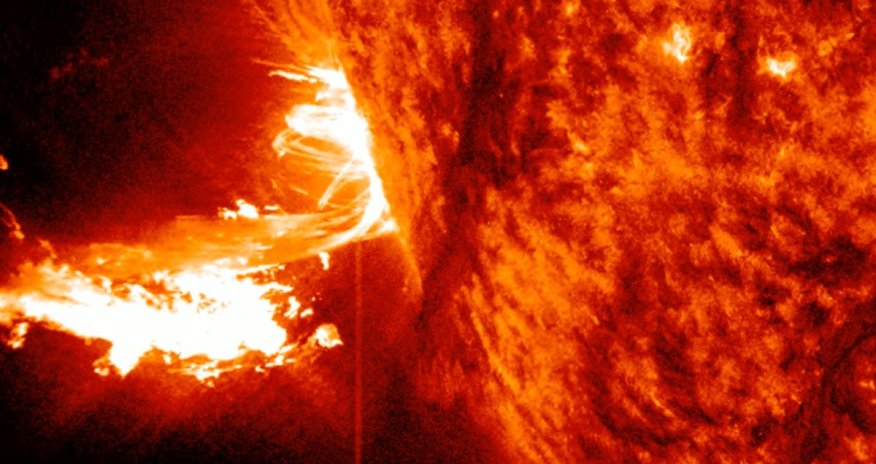
According to scientific models, Earth’s future is closely tied to the life cycle of the Sun. In roughly 5 billion years, the Sun is expected to exhaust its nuclear fuel and expand into a red giant. During that phase, Earth’s oceans would evaporate, rendering the planet uninhabitable. It could eventually be engulfed by the expanding star or pushed out of its orbit.
In contrast, red dwarf stars — which make up the majority of stars in the universe — burn their fuel much more slowly and can live for trillions of years. Rocky planets orbiting such stars may retain internal heat and geological activity for tens of billions of years.
Scientists say a planet’s fate depends not only on its internal structure but also on the long-term evolution of its parent star and the wider cosmic environment.












Latest news 
More news

 Photo
Photo 



 Video
Video