





Are smartphones making our working lives more stressful?
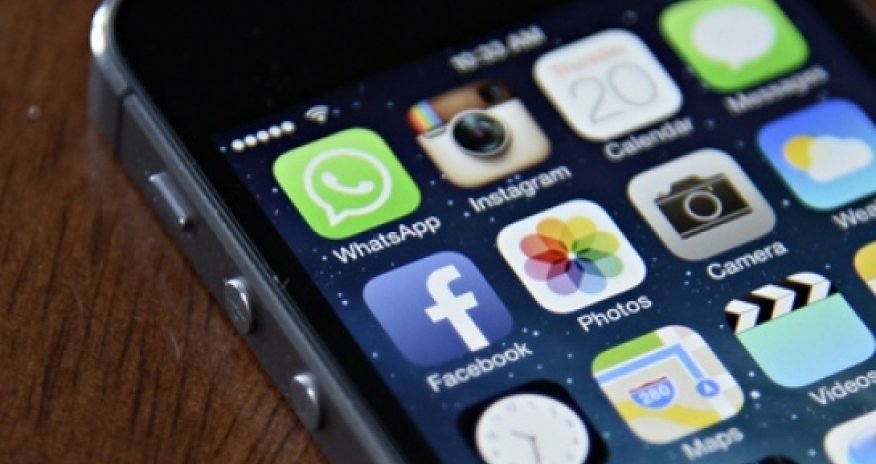


Are smartphones really so bad for us? Hard science on the matter is hard to come by. In the absence of solid evidence, debates on their effects are driven more by conjecture, anecdotes and surveys. Some studies, however, are starting to provide a few answers.
When companies hand out smartphones to their employees there is an implicit agreement that those staff are on call any time, any place. Once the workers are used to being connected to the office at all hours, it can be hard for them to detach and relax, says Arnold Bakker, a professor of work and organisational psychology at Erasmus University in Rotterdam.
In 2012, Bakker showed that heavy smartphone use caused more "work-home interference" – that is, work encroached badly on home life. So far, so unsurprising, but he went on to show that this led to more burned-out employees, which manifested itself as exhaustion and cynicism. The smartphone had become a Trojan horse through which work infiltrated the home. "It seems difficult, if not impossible, for mobile users to maintain a satisfactory balance between their work and personal life," he wrote in a 2012 report published in Applied Psychology.
The work was backed up by studies from Michigan State University. Researchers surveyed US workers and found that those who checked their smartphones for work reasons after 9pm were more tired and less engaged the next day. The tiredness came from their being mentally engaged late at night, and blue light from the screens might also affect their normal sleep patterns.
"Smartphones are almost perfectly designed to disrupt sleep," Russell Johnson said when the work was published in January.
Christine Grant at Coventry University surveyed remote e-workers at 11 major UK companies. She found that the impact of mobile technology was very much down to the individual. Many found the technology helpful and that it allowed them to work more flexibly. Others suffered from the "always-on" culture, particularly frequent fliers who were contacted at all hours by colleagues in different time zones.
A Gallup poll in May found that stress levels in US workers were higher the more often they checked work emails on their smartphones out of normal hours. Nearly half who checked their emails frequently reported high stress levels, compared with around a third who never bothered.
There was more to the data than that. Workers who emailed most outside work hours rated their lives better than those who did not. Though more stressed out, the emailers saw their behaviour as proof of professional success and accomplishment, Gallup speculated. In other words, emailing outside work hours gave people a sense of importance and status.
The rise of social media and its use through smartphones has spawned concerns that the gadgets are destroying our attention levels. That is an open question, which Imperial College researchers hope to answer in a three-year study launched this year. The study is the largest in the world to investigate whether mobile devices affect children's cognitive development. It will look for the effects of electromagnetic radiation, but also of "brain training" through social media, gaming and the rest.
Is there any evidence that smartphones are harming our brains? The science is still in its infancy here. An Australian study of mobile phone users found that working memory was poorer, while reaction times improved. Whether the effects are real and arise from smartphone use might also be answered by the Imperial College study.
Other studies suggest that a reliance on mobile technology might change how our brains work. In 2010, researchers at McGill University in Montreal showed that a reliance on GPS might reduce activity in the hippocampus, a part of the brain we use to get from A to B. Another study, from Columbia University in New York, investigated the "Google effect" and found that people used computers as a substitute for their own memories.
(theguardian.com)
Bakudaily.Az














 Photo




 Video


