


Upgrading water and sanitation services in Nakhchivan
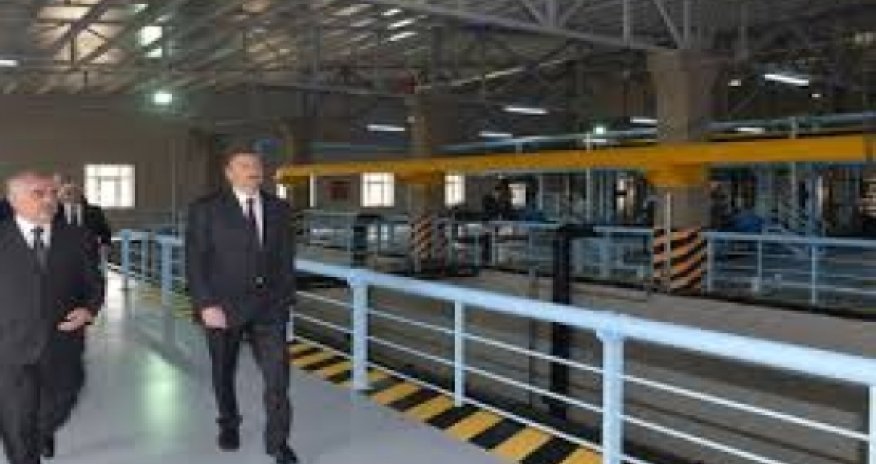


An ADB-supported project is bringing safe drinking water and improved sanitation services to Azerbaijan's isolated region of Nakhchivan.
When Azerbaijan gained its independence in 1991, Nakhchivan, like many cities in the post-Soviet region, inherited a long-neglected, obsolete water distribution and wastewater collection system of rusty, leaky pipes. Untreated wastewater was pumped into the Aras River. Many new houses relied on cesspools. Drinking water was contaminated.
The Nakhchivan Autonomous Republic is part of Azerbaijan yet isolated from the main part of the country, being surrounded by Armenia and Iran. Its capital - the city of Nakhchivan, in the foothills of the Zangezur Mountains and on the banks of the Nakhchivan River - is home to about 90,000 people.
This year, the $228 million water distribution and wastewater collection system, financed by ADB ($159 million) and the Government of Azerbaijan ($69 million), will be in place to deliver sanitation services and safe drinking water - around the clock. Three 25,000-square-meter reservoirs, about 14 kilometers of water pipelines, and a water purification system equipped with the latest nanofilters have been built. With the completion of the new 222-km water distribution and 202-km sewer pipeline, Anand Chiplunkar, director of the Urban Development and Water Division of ADB’s Central West Asia Department, says “the state-of-the-art system will provide water sanitation and health benefits to about 90,000 people.”
Livelihood opportunities
The project has opened job opportunities for residents. About 600 people have received permanent or temporary jobs. More than 400 people, organized into about 40 groups, were recruited to install the water and sewerage connection in every house and every building in the project area. More than 20 people have been trained to maintain the water supply and sanitation system.
“I worked as a taxi driver before,” says resident Ganbar İmanov. “I had to work long hours to earn enough to feed my family. I even worked on Saturdays and Sundays. If I got sick or my car broke down, it meant no money. Since I got the job with this project, I don’t have to worry about tomorrow because I have a steady monthly income.”
Nakhchivan goes green
Collection and treatment of wastewater will help recycle scarce water and prevent water pollution. The new treatment plant will purify wastewater for industrial use and irrigation. Organic impurities will be turned into fertilizer.
“We have far-reaching ambitions,” says İbrahim Mammadov, director of the project implementation unit under the State Committee for Amelioration and Water Management of the Nakhchivan Autonomous Republic. “We bought and installed the latest water-purifying equipment. We are planning to build a wastewater treatment plant equipped with the most advanced technology. Our goal is to ensure that Nakhchivan city has a safe and sustainable water supply and sanitation system for the next 40 years.”
Clean water, good health
Wastewater used to be discharged into the streets, causing diarrhea, cholera, typhoid, and other waterborne diseases. Toilets without piped water at kindergartens, schools, hospitals, and other public places bred intestinal parasites and helped spread the hepatitis A virus.
“As a doctor, I know that water and sanitation is not only about improving water supply and collecting wastewater. It’s about delivering drinkable water, which will improve health and reduce ailments. I’m happy I won’t see puddles of sewer water in the city streets anymore. I always have been and will be educating people about hygiene and sanitation,” says Maleyka Karimova, who runs a clinic in Nakhchivan.
Easing women’s burdens
Water supply in the city used to be available for only 4 hours a day. Like in many countries, it is the women’s responsibility in Nakhchivan to fetch water for their families, which they use for drinking, washing, cooking, and cleaning. They spent about an hour a day collecting and storing water. Now, that time can be used for other things.
“I am a school teacher,” says Fatima Aliyeva. “I began to tutor an extra group of students after work thanks to the improved piped water supply. This is important for my family, as we have a tight budget.”
“We were told that the water will be drinkable and soft. It will not destroy our washing machines, taps, or water pumps. This is very good as it will save us time, effort, and money,” says housewife Ganira Mustafayeva,
Some families used to buy water for drinking and cooking, which cost them $30 to $60 a month depending on the season and family size. Households had to buy electrical pumps to bring water up to their apartments.
Mammadov looks forward to bringing clean water to other towns and regions. “We highly value our cooperation with ADB and hope it continues. We look forward to delivering drinkable water, better health, a stronger economy, and a cleaner environment to every corner of the Nakhchivan Autonomous Republic, together with ADB.”
This web feature is based on an article, entitled "Drinking Water in Nakhchivan: Past, Present, Future," which was published in the quarterly newsletter of the Azerbaijan Resident Mission in December 2013.







 Photo




 Video


