




Newly found microbe is close relative of complex life
07.05.2015 11:30


A newly discovered life form could help resolve one of the most contentious conundrums in modern biology.
All organisms on Earth are classified as either prokaryotes, which have simple cells, or eukaryotes, which have larger, more complex cells.
But the two cell types are so divergent that understanding how one evolved from the other has foxed biologists.
The new microbes, reported in Nature journal, go some way to bridging that gap.
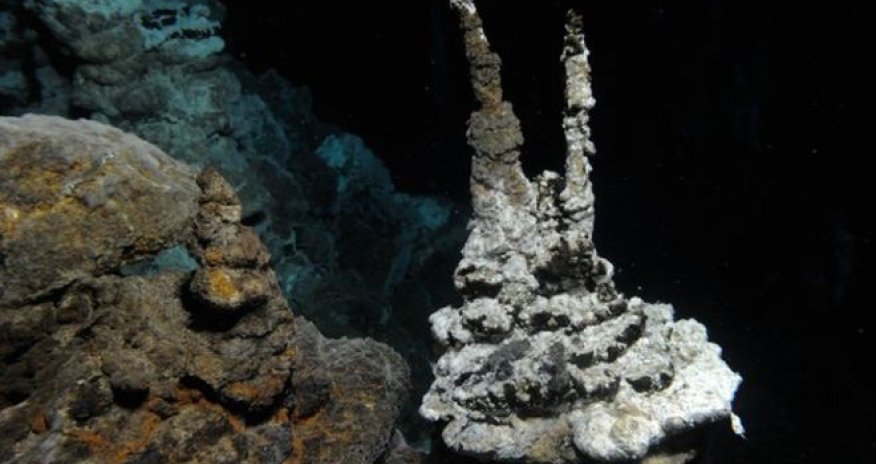
They have been named Lokiarchaeota, partly after the Loki's Castle volcanic vent system lying 15km away from the site where the microbes' genetic material was isolated in cold marine sediments of the Arctic Mid-Ocean Ridge.
Domain names
Prokaryotes are single-celled organisms and comprise all bacteria and archaea (a group of microbes that were once considered to be bacteria, but now form a separate domain of life).
Eukaryotes comprise some single-celled life forms, as well as all multi-cellular organisms, such as animals, plants and fungi.
The gulf between these two groupings is vast. The eukaryotes possess cellular structures that are enclosed within a lipid envelope. The defining trait is the nucleus, which hosts the cell's genetic material.
Another would be mitochondria; these are found in most eukaryotes and act as a cell's "batteries". According to a widely accepted theory, mitochondria began as bacteria and were gradually incorporated into eukaryotic cells, perhaps through some relationship of mutual benefit.
Lokiarchaeota have genes that code for proteins only otherwise found in eukaryotes, such as parts of the cytoskeleton - a matrix that supports cell shape and movement.
Sister act
"Archaea and eukaryotes are sister groups, sharing a common ancestor," said lead author Thijs Ettema, from Uppsala University in Sweden.
He told BBC News: "This has been a leading model for 20 years or so. What happened a few years ago is that the branch in the tree that had the eukaryotes jumped on to the archaea branch. More specifically, it was affiliating with a group known as the TACK archaea."
Lokiarchaeota fall within the TACK grouping and represent the closest prokaryotic organisms to the eukaryote state.
According to Dr Ettema, the similarities between them show that Lokiarchaeota shared a common ancestor with eukaryotes roughly two billion years ago, and that this ancestor possessed a "starter kit" of genes that supported the increase in cellular complexity seen in eukaryotes today.
He explained: "The fact that we have found these same genes in [Lokiarchaeota] does not mean that they have the same function as they do in eukaryotes.
"But what we need to do to find out what those genes do in Lokiarchaeota is to carry out experiments, and for that we need actual cells."
The team had to reconstruct the new organisms from genetic material found in the cold marine sediments. But the effort to isolate cells will be a challenge.
"Getting the samples is not easy, and the amount of nutrients in these harsh environments is extremely limited. So the number of cells in these sediments will be extremely low and in general life down there is very slow.
"Some people have made predictions about how often cells divide down there and they have come up with numbers like one division every 10 years. If you want to grow them in the lab, these are not timescales that are feasible."
But the researchers are looking for "Loki-like" organisms in other locations, including hot springs in Yellowstone National Park, in the US, and New Zealand.
"We might even find Loki-like organisms that have more recent ancestry with eukaryotes. We could try to reconstruct their genomes and find additional pieces of the puzzle of how complex life might have originated," said Dr Ettema.
A key event in the evolution of eukaryotes was the acquisition of mitochondria. Lokiarchaeota do not possess them - making this organism no different from any other prokaryote. So precisely when cells first merged with the ancestors of these cellular powerhouses remains an open question.
"The acquisition of mitochondria really got things started," said Dr Ettema, adding: "The genes we find in Loki provide some pointers."
One critically important gene in eukaryotes is that which encodes a protein called actin. This has many functions in eukaryotic cells, but one of them is "phagocytosis". This process enables cells to engulf other cells, "eating" them.
"In Loki we also find genes that are related to those that encode actin proteins. Although we don't know what they do in Loki, we can infer that the last common ancestor had these genes," said Thijs Ettema.
Commenting on the research in the latest edition of Nature, Newcastle University cell biologists Martin Embley and Tom Williams write: "The identification of Lokiarchaeota so early in the history of this nascent field suggests that more closely related archaeal relatives of eukaryotes will soon be discovered."
(BBC)
www.ann.az


Twitter
Follow us on Twitter

Similar news
Similar news




Society 13:30
Students Without Final Academic Evaluation Ineligible for School Diplomas — Deputy Minister




 Photo




 Video


