





The myth of universal beauty
29.05.2020 06:53


Would you have been beautiful in another era? David Robson discovers that attractiveness is more malleable and subjective than we might imagine.
The plus-sized comedian Dawn French would be unlikely to describe herself as a sex symbol, but was she simply born at the wrong time? "If I had been around when Rubens was painting, I would have been revered as a fabulous model,” she once quipped. "Kate Moss? Well, she would have been the paintbrush.”
French may have been talking in jest, but her point is a serious one. Do standards of beauty change over time? Or are some features universally accepted, across the centuries and across cultures, as being universally appealing?
There are even some good evolutionary reasons why beauty might be timeless. Certain biological features might signal health, fitness, and fertility – the makings of good mate – and we should find these features sexually attractive. Yet the more biologists and psychologists have looked, the harder it has been to find a purely biological basis for beauty.
Consider the apparently received wisdom that we prefer symmetrical, evenly balanced features. The scientific explanation seems sound: disease and stress during childhood could subtly influence the body’s development, creating an "instability” that leads one side to grow slightly differently to the other. A slightly lopsided face should therefore be a sign of physical weakness – making them less appealing as the parent of your children.
The problem had been that many of the previous experiments had asked just a small number of subjects to rate different faces – making it easier for fluke results to jump out. When Stefan Van Dongen at the University of Antwerp conflated the results in a large meta-analysis, he found the effect almost disappears when you consider enough people. In fact, facial symmetry probably doesn’t say much about your health: taking 3D scans of nearly 5,000 teenagers and quizzing them about their medical history, a 2014 study found that those with the most symmetrical features had been no fitter than the others.
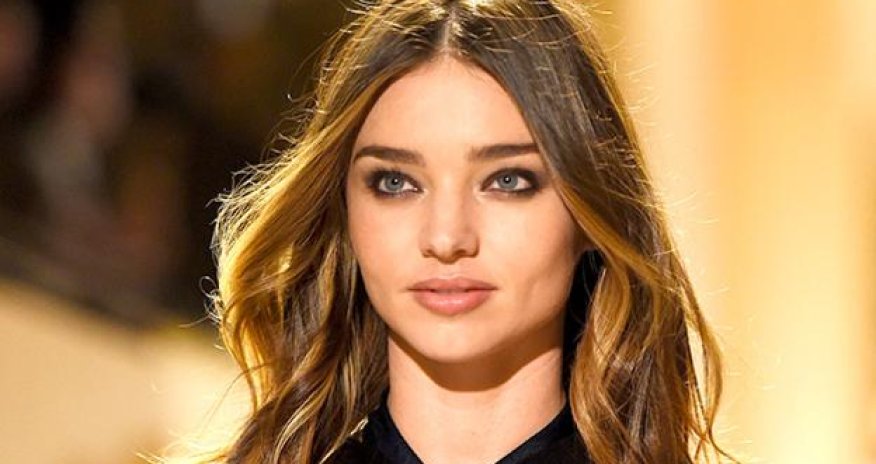
Biologists had also hypothesised that we prefer faces that epitomise the ‘manliness’ or ‘femininity’ of their gender: the broad jaw of Jon Hamm for men; the delicate features of Miranda Kerr for women. Again, the rationale was sound: bone structure reflects the sex hormones pumping through our blood, so they could advertise a woman’s fertility and traits like dominance in men – important considerations when picking a partner.
Yet most studies had only examined Western societies. When Isabel Scott at Brunel University, and colleagues, decided to cast their net wider – across communities in Asia, Africa, South America and Russia, they found a variety of preferences. In fact, it was only in the most urbanised regions that they found the strong attraction to more masculine men and more feminine women; in the smaller, more remote communities, many women actually preferred the more "feminine” looking men.
The same goes for body shape. In the West, people may prize longer legs in women while preferring less "lanky men”, yet the nomadic Himba society in Namibia have the opposite tastes. Indeed, Western preferences seem to have shifted over time; even Botticelli’s Venus – once the Western ideal of beauty – has shorter legs, compared to her body, than the desired shape for models today.) And although an hourglass figure in women, and men with broad, V-shaped shoulders tapering at the waist, are admired in most places, the ideal extremes depend on the society.
Perhaps our choice of mate needs to be flexible, so we can choose the best partner based on our current circumstances. "For example, in cultures where starvation is a real risk, preferences for heavier weight in partners is expected because those individuals are most resistant to food shortages,” says Anthony Little at the University of Stirling – and indeed, this does seem to be the case. By the same token, someone who faces higher risk of illness will be more primed to value the signs that signal good health – like facial symmetry – compared to those who are relatively safe from infection. Areas where dominance is valued, meanwhile, will also then take to men with squarer chins. "We’ve found, for example, that exposure to cues of male-male competition, such as seeing men fight each other, increases women’s preferences for masculine male faces,” he says.
(BBC)
www.ann.az


Instagram
Follow us on Instagram
Similar news
Similar news





Society 13:30
Students Without Final Academic Evaluation Ineligible for School Diplomas — Deputy Minister







 Photo




 Video


