




Euro hits near two-year low
05.12.2016 22:01


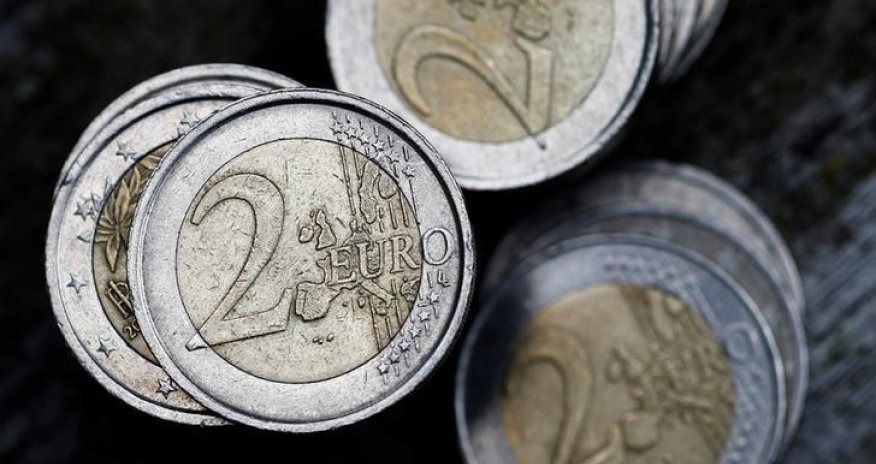
The euro tumbled on Monday after Italian Prime Minister Matteo Renzi said he would resign as he conceded defeat in a referendum over his plan to reform the constitution, raising political uncertainty in the euro zone.
The euro dropped as much as 1.4 percent to $1.0505, falling below its 1 1/2-year low of $1.0518 touched late last month, and testing its key support levels where the currency has managed to rebound in the past couple of years.
A break below its 2015 March low of $1.0457 would send the currency to its lowest level since early 2003, opening a way for a test of $1, or parity against the dollar, a scenario which many market players now see as a real possibility.
For now, though, the currency's slide was blocked by heavy option-related buying at $1.05, traders say.
"The focus now is on Italy's politics after Renzi resigns. If no one can form a government and the country is forced to hold an election, that would be a real tail risk for markets," said Kyosuke Suzuki, director of forex at Societe Generale.
Given Renzi's Democratic Party (PD) is running neck-and-neck with the anti-euro 5-star Movement in the opinion polls, an early election would rattle investors.
After Renzi tenders his resignation on Tuesday, President Sergio Mattarella could ask Renzi to reconsider, or open a round of consultations with party leaders to find a new prime minister, if Renzi declines.
The referendum also came at a bad time for Italy's fragile banking system, as Monte dei Paschi di Siena, the country's third biggest but ailing lender, needs to raise 5 billion euros by year-end to avert the risk of being wound up.
"The 'No' vote was priced in to a certain extent in advance. So I do not expect a freefall in the euro in the near term," said Minori Uchida, chief currency analyst at the Bank of Tokyo-Mitsubishi.
"But in the long run, this will delay progress in Italy's efforts to get rid of banks' bad debt and is likely to widen the yield spread of German Bunds and Italian bonds," he added.
The referendum outcome could be taken as another sign of rising anti-establishment sentiment in the core of Europe, potentially eroding investor confidence in the euro ahead of elections in the Netherlands, France and Germany next year.
One comfort for investors, however, was that Austrian voters roundly rejected on Sunday a candidate vying to become the first freely elected far-right head of state in Europe since World War Two, halting at least temporarily the wave of populism sweeping some Western democracies.
The euro fell more than 1.0 percent at one point to 118.70 yen while it also shed more than 0.7 percent to 0.8315 British pound, its lowest level since late July.
The dollar briefly fell to 112.87 yen before stabilising at 113.77, up 0.3 percent from late U.S. levels, still off its 9-1/2-month high of 114.83 touched last week.
The dollar softened on Friday as investors took profits from its recent gains following solid, but not spectacular, U.S. non-farm payrolls data for November.
Non-farm payrolls increased 178,000, in line with expectations, while the unemployment rate hit its lowest level since August 2007.
Wages, on the other hand, slipped for the first time in nearly a year though economists partially blamed the drop in average hourly earnings on a calendar quirk.
Some investors are also starting to see that market realignments after the U.S. elections - including a rally in U.S. stocks and the dollar and sell-off in U.S. bonds and emerging market currencies - may have run their course, at least for now.
DoubleLine Capital Chief Executive Jeffrey Gundlach, known as the "Bond King" on Wall Street, said financial markets could reverse their solid momentum at the latest by U.S. President-elect Donald Trump's Jan. 20 inauguration.
Data on Friday showed that speculators' net long positions on the dollar rose to their highest since mid-January. They also turned net short on the Japanese yen for the first time since last December.
Elsewhere, the New Zealand dollar fell almost one percent to $0.7075 after Prime Minister John Key, who won praise for his economic stewardship after the global financial crisis, unexpectedly announced his resignation.
(reuters.com)
www.ann.az


Instagram
Follow us on Instagram
Similar news
Similar news


Business 11:56
PASHA Bank discusses financial inclusion and the future of microfinance at the 12th AMFA Conference






 Photo




 Video


