





Middle Corridor infrastructure lags container growth, Baku port adviser says
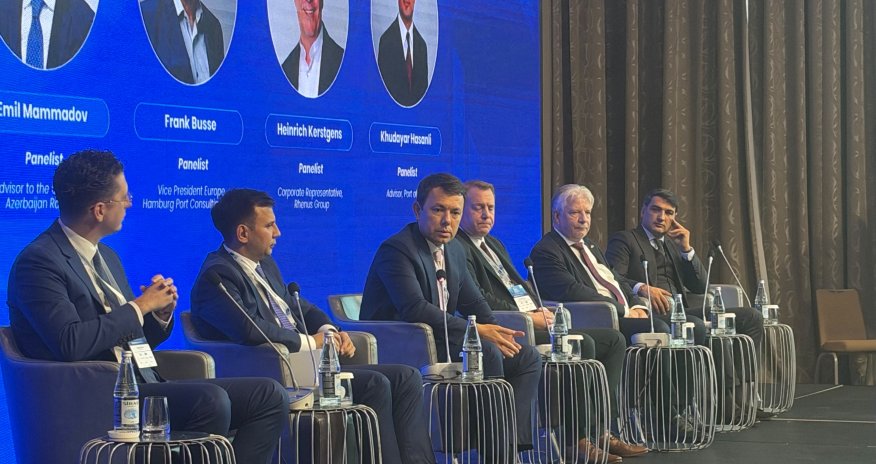


Infrastructure development along the Middle Corridor is failing to keep pace with rising container traffic, requiring countries on the route to coordinate capacity expansion and improve operational efficiency, Port of Baku adviser Khudayar Hasanov said.
Geopolitical developments have driven cargo volumes above expectations, increasing pressure on transport infrastructure, he said.
“Physical infrastructure development is not keeping pace with the growth in container volumes,” Hasanov said.
Expanding individual ports and railways must be accompanied by efforts to align capacity across the route, he said, adding that a bottleneck in any one section could affect the entire corridor.
“Capacity along the corridor should match,” he said, also stressing the need for regular, scheduled freight services in both eastbound and westbound directions.
The Port of Baku handled more than 77,000 twenty-foot equivalent units (TEU) in 2024 and more than 107,000 TEU in 2025, according to figures cited by Hasanov. Throughput is expected to exceed 120,000 TEU this year.
Hasanov reaffirmed previously announced plans to increase the port’s annual container handling capacity to 260,000 TEU from the current 150,000 TEU. He gave no precise completion date or investment figure.
The second phase of the port’s development envisages increasing total annual cargo handling capacity to 25 million tonnes, including container capacity of 500,000 TEU.
The port also plans to expand its general cargo and specialised terminals to accommodate other freight, including fertiliser shipments from Central Asia, Hasanov said.
Alongside the route through China and Kazakhstan, he highlighted the importance of the route linking Kyrgyzstan, Uzbekistan and Turkmenistan with Azerbaijan across the Caspian Sea.
N.Tebrizli









Latest news 

 Photo
Photo 



 Video
Video