

Moscow parade highlights Putin's isolation
27.04.2015 15:00


By Vitaly Shevchenko
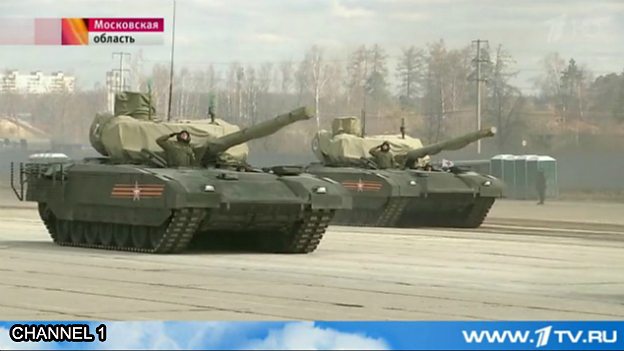
The upcoming parade in Moscow marking the 70th anniversary of the Soviet victory over Nazi Germany was meant to be the highlight in the Kremlin's calendar this year, but instead it has become a sign of President Putin's political isolation.
The parade will crown months of patriotic build-up in the media, which has seen what Russians call the Great Victory referenced not only in news programmes, but also in talk shows, documentaries, film dramas and even bake-offs and body art contests.
However, the event has somewhat been overshadowed by the absence of several Western politicians critical of what they see as Russia's meddling in Ukraine.
Who's staying away?
Russia holds annual military parades to celebrate the defeat of Nazi Germany, but every five years they tend to be more grandiose and high-profile affairs graced by the presence of major foreign dignitaries. In 2010, the leaders of Germany, Poland, Israel, Bulgaria, Croatia, Latvia and Estonia were among those watching the spectacle in Red Square. And US President George Bush was in attendance in 2005.
None of the these countries will be sending their leaders to see this year's parade, a reflection of what many commentators call a new cold war between Russia and the West.
"With a view to Russia's actions in Crimea and eastern Ukraine, taking part in a military parade appears inappropriate," Angela Merkel's spokesman Steffen Seibert said.
Russia's response
So how is Russia responding to the snub? Speaking during his annual question-and-answer session on TV on 16 April, President Putin accused Washington of putting pressure on other countries to boycott the parade. The USA "does not need allies, it needs vassals", he said.
Official TV played down the Western boycott. "Whether some of the invitees come or not is not going to make this holiday any less important or dear for Russians," state-run Channel One said.
Pro-Kremlin daily Komsomolskaya Pravda was even more dismissive. "Were we really so keen for them to come?" it wondered.
But in another article, columnist Aleksandr Grishin appeared angry at Israel for not sending top officials to the parade in Moscow. "The Jewish state's authorities have somehow forgotten that Israel would not exist had it not been for the USSR and Comrade Stalin personally," he said.
Moskovskiy Komsomolets, another Moscow-based daily, looked at the reasons why Western leaders are staying away. They see Russia as "a geopolitical and ideological enemy", the newspaper opined. Also, they are unwilling to be seen standing next to North Korea's Kim Jong-un (who is expected to attend the parade, according to some reports) or see troops "who do not just symbolize Russia's military might, but took part in annexing Crimea", the paper said. [http://bit.ly/1yR30mO]
Other high-profile leaders expected are Chinese President Xi Jinping and Cuba's Raul Castro. There will also be a smattering of more obscure politicians from the likes of Lesotho, Liberia and Somalia.
Why Victory Day is so important
The Great Victory is hugely important for Russia, not least because it highlights the country's military might at a time of rising tensions with the outside world.
With less than a month to go until Victory Day on 9 May, turn on a TV in Russia and it won't be long before you'll be reminded of how the Soviet Union defeated Nazi Germany 70 years ago and how Russia is being menaced by enemies today.
Nazism is rearing its head once again right next to Russia 's borders, state media warn. Over the past year, Russian state TV has bombarded viewers with reports claiming that Ukraine has been overrun by neo-Nazis. It has also pointed to what it says is resurgent Nazism in the Baltic states.
But Russia itself has been criticized for courting the favour of far-right politicians in Europe, including France's Front National leader Marine Le Pen.
State media often describe Ukrainian troops battling the Moscow-backed insurgency in the east as "punishers", a term previously reserved for Nazi forces during World War II. In contrast, Rossiya 1 TV praises Moscow-backed rebels for "remembering their ancestors' feat in fighting fascism and being ready to rise up to it".
"Our grandfathers fought" is a phrase repeated in Russia so often that it has become an internet meme. It not only honours Russia's war veterans, but suggests that their grandchildren may be called upon to fight, too."
(BBC Monitoring)
www.ann.az


Facebook
Follow us on Facebook


Similar news
Similar news
Political News 11:30
Azerbaijani, Georgian state security chiefs discuss cooperation and regional threats in Baku
Political News 16:30
Bayramov says opposition status does not exempt anyone from legal responsibility
Political News 17:30
Azerbaijani lawmaker criticizes low unemployment insurance coverage and unspent fund reserves

Latest news 
More news 
 Photo




 Video


