



German foreign minister calls to start serious talks on Nagorno-Karabakh
29.05.2020 03:45


German Foreign Minister Frank-Walter Steinmeier on Tuesday called to start serious talks to settle the conflict in Nagorno-Karabakh.
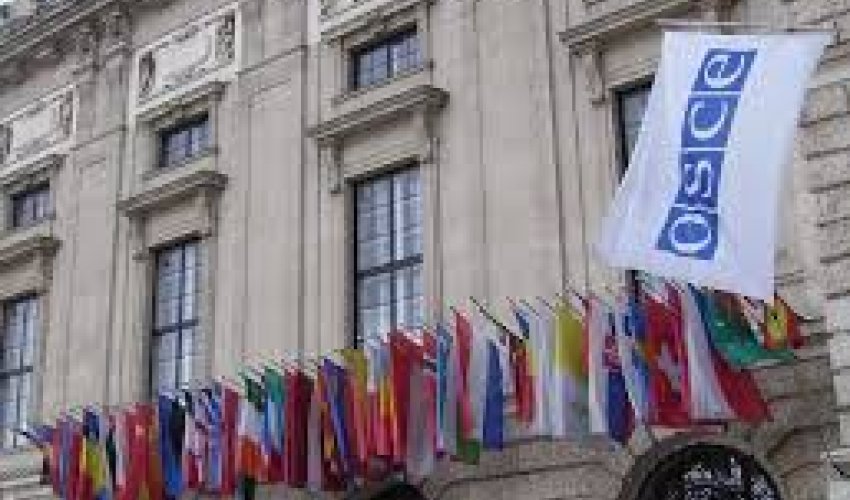
Steinmeier said this prior to the meeting of the OSCE Troika, underway in Berlin in the residence for official guests of the German Foreign Ministry (Villa Borsig).
The minister hailed the agreement on truce between Azerbaijan and Armenia, but, in his words, the status quo in the situation around Nagorno-Karabakh can't "contribute to security" in the region. Steinmeier, the chairperson-in-office of the Organization for Security and Cooperation in Europe, underscored that Germany is ready to support "efforts to resume serious talks on the future of Nagorno-Karabakh."
Another topic for the meeting of the Troika, which consists of Serbian Foreign Minister Ivica Dacic, his Austrian counterpart Sebastian Kurz and OSCE Secretary General Lamberto Zannier, is the situation in eastern Ukraine.
Steinmeier noted that the situation there "causes disappointment" as there are numerous violations of the truce. He called for the launch of the political process and adoption of the law on local elections in Donbass.
During a separate meeting, the foreign ministers of Germany and Austria plan to discuss the migration crisis in the European Union.
The OSCE Troika comprises the chair-in-office as well as chairs of the last and next year.
The situation along the line of contact in the Nagorno-Karabakh conflict zone deteriorated dramatically overnight to April 2, and fierce clashes began. The parties to the conflict accused each other of violating the truce. The defense ministries of Armenia and Azerbaijan agreed on a ceasefire with Russia's mediation and later reported that hostilities stopped in Nagorno-Karabakh from 11:00 a.m. Moscow Time April 5.
Talks on Nagorno-Karabakh have been held on the basis of the so-called Madrid Principles suggested by co-chairs of the Minsk Group of the Organization for Security and Cooperation in Europe (OSCE) - Russia, France and the United States
in December 2007 in the Spanish capital.
They include three key principles written in the Helsinki Final Act: refraining from the threat or use of force, territorial integrity and the right to self-determination.
Nagorno-Karabakh sought independence from Azerbaijan at the end of the 1980s, which resulted in a war between Azerbaijan and Armenia that claimed the lives of 25,000-30,000 people between 1988 and 1994. Since then, the territory has been controlled by Armenia.
The OSCE Minsk Group acts as a mediator. It is a mechanism designed to promote a peace solution to the conflict between Armenia and Azerbaijan over Nagorno-Karabakh.
The group is led by co-chairs France, Russia and the United States. It also comprises Belarus, Germany, Italy, Sweden, Finland, and Turkey, as well as Armenia and Azerbaijan.
www.ann.az
Steinmeier said this prior to the meeting of the OSCE Troika, underway in Berlin in the residence for official guests of the German Foreign Ministry (Villa Borsig).
The minister hailed the agreement on truce between Azerbaijan and Armenia, but, in his words, the status quo in the situation around Nagorno-Karabakh can't "contribute to security" in the region. Steinmeier, the chairperson-in-office of the Organization for Security and Cooperation in Europe, underscored that Germany is ready to support "efforts to resume serious talks on the future of Nagorno-Karabakh."
Another topic for the meeting of the Troika, which consists of Serbian Foreign Minister Ivica Dacic, his Austrian counterpart Sebastian Kurz and OSCE Secretary General Lamberto Zannier, is the situation in eastern Ukraine.
Steinmeier noted that the situation there "causes disappointment" as there are numerous violations of the truce. He called for the launch of the political process and adoption of the law on local elections in Donbass.
During a separate meeting, the foreign ministers of Germany and Austria plan to discuss the migration crisis in the European Union.
The OSCE Troika comprises the chair-in-office as well as chairs of the last and next year.
The situation along the line of contact in the Nagorno-Karabakh conflict zone deteriorated dramatically overnight to April 2, and fierce clashes began. The parties to the conflict accused each other of violating the truce. The defense ministries of Armenia and Azerbaijan agreed on a ceasefire with Russia's mediation and later reported that hostilities stopped in Nagorno-Karabakh from 11:00 a.m. Moscow Time April 5.
Talks on Nagorno-Karabakh have been held on the basis of the so-called Madrid Principles suggested by co-chairs of the Minsk Group of the Organization for Security and Cooperation in Europe (OSCE) - Russia, France and the United States
in December 2007 in the Spanish capital.
They include three key principles written in the Helsinki Final Act: refraining from the threat or use of force, territorial integrity and the right to self-determination.
Nagorno-Karabakh sought independence from Azerbaijan at the end of the 1980s, which resulted in a war between Azerbaijan and Armenia that claimed the lives of 25,000-30,000 people between 1988 and 1994. Since then, the territory has been controlled by Armenia.
The OSCE Minsk Group acts as a mediator. It is a mechanism designed to promote a peace solution to the conflict between Armenia and Azerbaijan over Nagorno-Karabakh.
The group is led by co-chairs France, Russia and the United States. It also comprises Belarus, Germany, Italy, Sweden, Finland, and Turkey, as well as Armenia and Azerbaijan.
www.ann.az


Similar news
Similar news
Political News
18:48
Azerbaijani President: By burning our flag, Armenians only showed their ugly qualities to the whole world
Political News
10:30
Azerbaijani FM, US Assistant Secretary of State discuss peace process between Azerbaijan and Armenia

Latest news 
More news
 Photo
Photo 

 Video
Video