





Microscope observes life of the ocean floor
29.05.2020 01:19


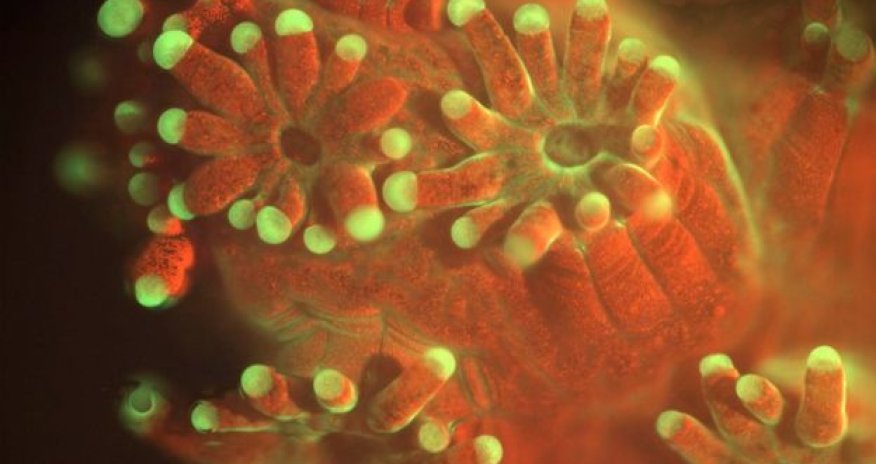
Marine scientists have developed a microscope that for the first time provides a window into the small scale behaviour of marine life.
The Great Barrier Reef, a huge collection of 600 types of coral, is so large it can been seen from space.
It is therefore easy to forget that this form of marine life undergoes processes on a much smaller scale.
The team from California and Israel outline details of the microscope in Nature Communications.
The health and changing characteristics of coastal marine life such as kelp forests, mangroves, seagrass beds and coral reefs are significantly affected by activities that occur at sizes a thousand times smaller than a millimetre.
Observing these processes though is a tricky business. The rapidly changing water currents, temperature, oxygen levels, and acidity have so far made studies on this scale impossible in their natural environment.
Previously, researchers have taken marine life into the lab, once removed from the ocean, though, crucial information is lost about how the samples interact and behave.
The new instrument was therefore developed to operate at the sea floor.
"We are imaging the organism in its natural environment which is very complex and difficult to recreate in the lab," Dr Tali Treibitz, part of the microscope's development team, told BBC News.
The group of scientists have demonstrated the impact of this microscope by recording the behaviour of individual polyps, the small animals that together make up coral reefs.
They observed differing species of polyp attacking each other with extended stinging filaments, and also individual polyps connecting to share resources.
As coral reefs around the world are declining in size due to human activities a deeper knowledge of the small scale processes causing this demise is required. This microscope has the potential to provide these observations.
Explaining her passion for the work, Dr Treibitz from the School of Marine Sciences at the University of Haifa said: "The ocean influences a lot of our lives, some people are not aware of the complexity and the richness of what is going on out there."
The microscope consists of shape changing lens made from a flexible membrane filled with fluid. By applying electricity the shape of the lens could be changed. Focused LED light ensured the marine life was well lit.
All the equipment was contained in a compact system that could be taken down to the sea floor and operated by a diver.
The scientists report that the new microscope will be able to impact upon a diverse range of scientific fields including ecology, physiology, biomechanics, fluid dynamics, marine geology and physics.
(BBC)
www.ann.az


Similar news
Similar news












 Photo
Photo 



 Video
Video