





Meet the man on a mission to save carnivorous plants
16.09.2016 16:30


Many of these insect-eating plants are on the brink of extinction, but one researcher is trying to rescue them
Stewart McPherson is prepared to go a long way for his science: even into the grounds of a prison in the Philippines. "I had to be guided by murderers," he says.
His target was, appropriately enough, a plant that kills: a tropical pitcher plant called Nepenthes deaniana that traps and digests insects. "It hadn't been seen for nearly 100 years."
McPherson has been fascinated with carnivorous plants since childhood. As an eight-year-old he came across his first species in a British garden centre. Immediately fascinated, he started a collection. After a couple of years, he had filled the family conservatory with hundreds of different plants.
The young naturalist found carnivorous plants extraordinary – as many others have for centuries. But despite their startling abilities, carnivorous plants are also in profound danger.
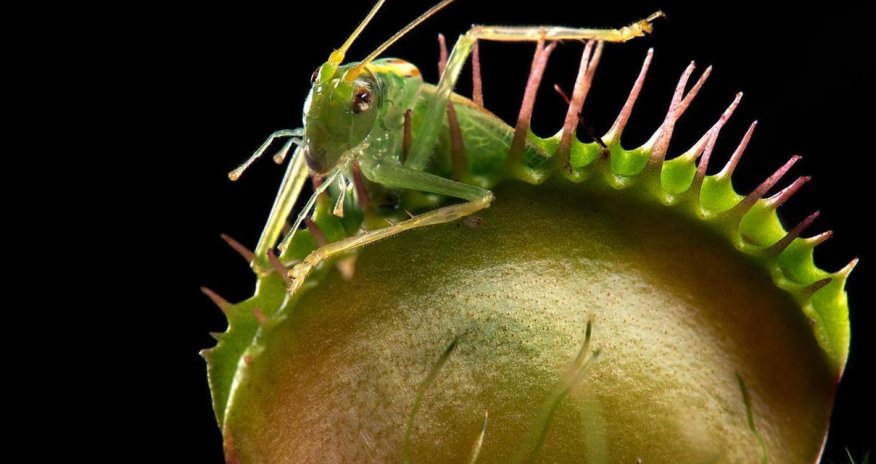
"To think they are plants with highly modified specialist leaves that have adapted through evolution to attract, capture, kill and digest animals – in some cases as big as rats – is pretty amazing," says McPherson.
The idea of flesh-eating plants has long captured the imagination, from Victorian fables of man-eating species to post-apocalyptic sci-fi with John Wyndham's The Day of the Triffids and the musical fantasy film Little Shop of Horrors.
These plants were mythical, of course. The thought of real-world carnivorous plant species once seemed impossibly implausible.
So much so that when the great biologist Charles Darwin wrote about them in his 1875 book Insectivorous Plants, he was mocked for suggesting some plants were carnivorous.
"But of course he was right – as he always was – and he provided the evidence that showed these plants capture and kill animals," says McPherson.
McPherson always longed to see carnivorous plants in the wild so, after leaving university, he set out to various countries across the world to document them in a series of field guide books. Over the last decade, he has climbed 300 mountains, formally described 35 new carnivorous plants and rediscovered long-lost ones – like the Nepenthes deaniana in that Philippine jail.
Because, strange as it might seem, botanists and scientists often overlook carnivorous plants.
"They haven't received as much attention as they deserve," says McPherson. "There are hundreds of them all over the globe that are underappreciated."
But, thanks to his and other researchers' efforts, that is changing. "In the last 10 years, more of these plants have been found than in any time in history."
Many species are found in remote, inaccessible areas of – for example – Malaysia, Indonesia and Western Australia. Some of these plants had been hard to assess because the environments they occupy are unstable and difficult to travel in.
This means McPherson has had to go to great lengths to explore carnivorous plant biology. On one "epic" trip to a remote mountain in Kalimantan in Southern Borneo, on the trail of Nepenthes pilosa, a species that had not been since 1899, McPherson and his team ran out of food."We had to eat frogs on the way back," he says. "We'd go out each night with a torch and look out for their glowing eyes, and catch them for breakfast, lunch and dinner."
While compiling his book on pitcher plants, he travelled to Palawan, a little-known narrow island in the Philippines. As a result of political instability in the 1980s and 1990s, few botanists had travelled to Palawan and explored the spine of mountains that runs along its length.
It was a rich treasure trove for McPherson. "I went up all of the tallest mountains and found an undescribed species on almost every one – seven in total," he says.
The most exciting of the new species was a giant pitcher plant on Mount Victoria that he named after David Attenborough (Nepenthes attenboroughii), because of the broadcaster's inspiring passion for the natural world. The plant is big enough to put your hand inside.
McPherson heard a story from a group of missionaries who returned after a fateful trip and said they had seen "giant cup plants". He became convinced they were talking about a new species of Nepenthes. "It was immediately clear that it was a brand-spanking-new species, because it was so gigantic."
"We felt absolute elation. It's wonderful contributing anything to science or knowledge. It's lived there for tens of thousands of years, quite possibly millions of years, and no one has known or appreciated it. It's humbling to know that a plant or animal has existed in habitats for years in silence, just slowly ticking along waiting to be noticed and appreciated."
(BBC)
www.ann.az


Similar news
Similar news












 Photo
Photo 



 Video
Video