


OSCE Minsk Group confirms commitment to negotiated settlement of Nagorno-Karabakh conflict
09.12.2016 09:00


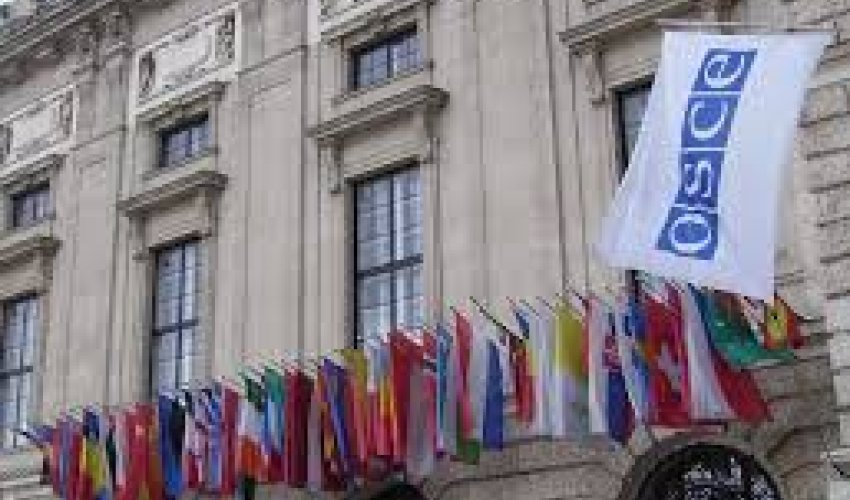
The OSCE Minsk Group is committed to a negotiated settlement of the Nagorno-Karabakh conflict and is prepared to host a meeting between Armenia's and Azerbaijan's presidents in one of the co-chair countries, the Heads of Delegation of the OSCE Minsk Group Co-Chair Countries said in a joint statement issued on Thursday.
"The Co-Chair countries are prepared to host a meeting of the Presidents of Armenia and Azerbaijan when they are ready," Foreign Minister of the Russia Sergey Lavrov, Secretary of State of the United States John Kerry, and Foreign Minister of France Jean-Marc Ayrault said in the statement. "We firmly believe that the Presidents need to engage in negotiations in good faith at the earliest opportunity."
"Continuous and direct dialogue between the Presidents, conducted under the auspices of the Co-Chairs, remains an essential element in building confidence and moving the peace process forward," the document says.
"In light of the dramatic escalation in violence along the Line of Contact in April, we express concern over continuing armed incidents, including reports on the use of heavy weapons, and strongly condemn the use of force or the threat of the use of force," the three top diplomats underscored.
The ministers stressed that there is "no military solution to this conflict and no justification for the death and injury of civilians."
"We appeal to the sides to confirm their commitment to the peaceful resolution of the conflict as the only way to bring real reconciliation to the peoples of the region. We also urge them to adhere strictly to the 1994/95 ceasefire agreements that make up the foundation of the cessation of hostilities in the conflict zone," the statement says.
The situation along the contact line of conflicting sides in Nagorno-Karabakh, a disputed territory between Armenia and Azerbaijan, deteriorated dramatically overnight to April 2,2016 when fierce clashes began. The parties to the conflict accused each other of violating the truce. On April 5, a ceasefire agreement was reached with Russia's mediation.
The participants in talks on Nagorno-Karabakh in Vienna on May 16 involving the presidents of Azerbaijan and Armenia and mediated by the foreign ministers from the OSCE Minsk Group co-chair countries (Russia, the UnitedStates and France) agreed to observe
ceasefire in the region in compliance with the 1994-1995 accords. The parties to the conflict also agreed to complete as soon as possible the work on an OSCE tool
on investigating incidents on the contact line.
In a trilateral statement adopted on June 20 following a summit ofRussian Armenian and Azerbaijani presidents in St. Petersburg, the sides confirmed their commitment to the normalization of the situation along the engagement line in Nagorno-Karabakh.
The conflict between neighboring Armenia and Azerbaijan over Nagorno-Karabakh, a disputed territory that had been part of Azerbaijan before the Soviet Union break-up but was mainly populated by Armenians, broke out in the late 1980s.
In 1991-1994, the confrontation spilled over into large-scale military action for control over the enclave and some adjacent territories. Thousands left their homes on both sides in a conflict that killed 30,000. A truce was called between Armenia and the Nagorno-Karabakh republic on one side and Azerbaijan on the other in May 1994.
www.ann.az
"The Co-Chair countries are prepared to host a meeting of the Presidents of Armenia and Azerbaijan when they are ready," Foreign Minister of the Russia Sergey Lavrov, Secretary of State of the United States John Kerry, and Foreign Minister of France Jean-Marc Ayrault said in the statement. "We firmly believe that the Presidents need to engage in negotiations in good faith at the earliest opportunity."
"Continuous and direct dialogue between the Presidents, conducted under the auspices of the Co-Chairs, remains an essential element in building confidence and moving the peace process forward," the document says.
"In light of the dramatic escalation in violence along the Line of Contact in April, we express concern over continuing armed incidents, including reports on the use of heavy weapons, and strongly condemn the use of force or the threat of the use of force," the three top diplomats underscored.
The ministers stressed that there is "no military solution to this conflict and no justification for the death and injury of civilians."
"We appeal to the sides to confirm their commitment to the peaceful resolution of the conflict as the only way to bring real reconciliation to the peoples of the region. We also urge them to adhere strictly to the 1994/95 ceasefire agreements that make up the foundation of the cessation of hostilities in the conflict zone," the statement says.
The situation along the contact line of conflicting sides in Nagorno-Karabakh, a disputed territory between Armenia and Azerbaijan, deteriorated dramatically overnight to April 2,
The participants in talks on Nagorno-Karabakh in Vienna on May 16 involving the presidents of Azerbaijan and Armenia and mediated by the foreign ministers from the OSCE Minsk Group co-chair countries (Russia, the United
In a trilateral statement adopted on June 20 following a summit of
The conflict between neighboring Armenia and Azerbaijan over Nagorno-Karabakh, a disputed territory that had been part of Azerbaijan before the Soviet Union break-up but was mainly populated by Armenians, broke out in the late 1980s.
In 1991-1994, the confrontation spilled over into large-scale military action for control over the enclave and some adjacent territories. Thousands left their homes on both sides in a conflict that killed 30,000. A truce was called between Armenia and the Nagorno-Karabakh republic on one side and Azerbaijan on the other in May 1994.
www.ann.az


Similar news
Similar news
Political News
18:48
Azerbaijani President: By burning our flag, Armenians only showed their ugly qualities to the whole world
Political News
10:30
Azerbaijani FM, US Assistant Secretary of State discuss peace process between Azerbaijan and Armenia




 Photo
Photo 

 Video
Video