


Baku: Swiss National Council president justifies Armenia’s aggression against Azerbaijan
07.02.2018 23:59


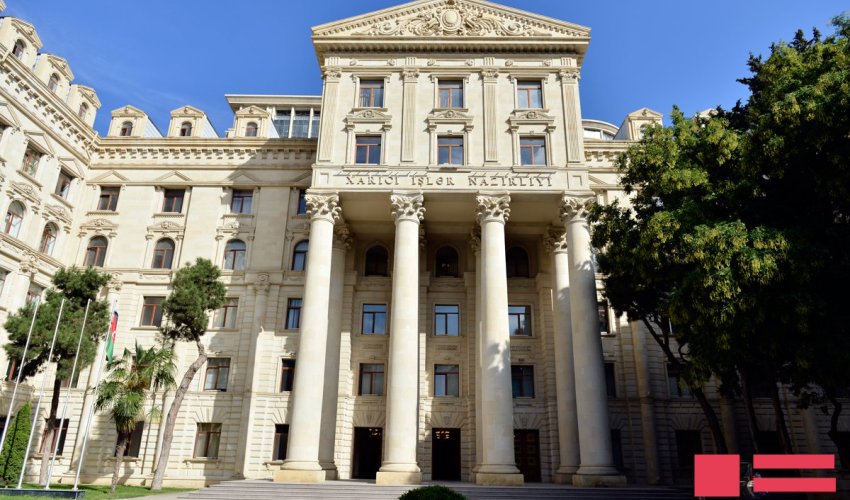
The president of the Swiss National Council, Dominique de Buman, abusing his official power, made biased statements during his visit to Yerevan, which
contradict Switzerland’s policy of neutrality and
undermine the negotiations on
settlement of the Armenia-Azerbaijan Nagorno-
Karabakhconflict , Hikmat Hajiyev, spokesman for Azerbaijan’s Foreign Ministry, told APA on Wednesday.
Hajiyev was commenting on the statements voiced by the Swiss National Council president during his visit to Yerevan.
The spokesman noted that the ideas voiced by Dominique de Buman in Yerevan can be regarded as support for segregation and racism when translated into the internationally accepted language.
He recalled that the Swiss National Council president paid an illegal visit in 2012 to the Azerbaijani territories occupied by Armenian armed forces, violating the laws, territorial integrity and sovereignty of Azerbaijan.
"With that trip and now with the statements he made from Yerevan is indicative of him justifying the Armenian aggression against Azerbaijan, as well as the occupation of Azerbaijani territories by Armenian armed forces and the bloody ethnic cleansing of more than one million Azerbaijanis in the occupied territories,” Hajiyev added.
The Nagorno-Karabakh conflict entered its modern phase when the Armenian SRR made territorial claims against the Azerbaijani SSR in 1988.
A fierce war broke out between Azerbaijan and Armenia over the Nagorno-Karabakh region of Azerbaijan. As a result of the war, Armenian armed forces occupied some 20 percent of Azerbaijani territory which includes Nagorno-Karabakh and seven adjacent districts (Lachin, Kalbajar, Aghdam, Fuzuli, Jabrayil, Gubadliand Zangilan), and over a million Azerbaijanis became refugees and internally displaced people.
The military operations finally came to an end when Azerbaijan and Armenia signed a ceasefire agreement in Bishkek in 1994.
Dealing with the settlement of the Nagorno-Karabakh conflict is theOSCEMinsk Group, which was created after the meeting of the CSCE (OSCE after the Budapest summit held in December 1994) Ministerial Council in Helsinki on 24 March 1992. The Group’s members include Azerbaijan, Armenia, Russia, the United States, France, Italy, Germany, Turkey, Belarus, Finland
and Sweden.
Besides, the OSCE Minsk Group has a co-chairmanship institution, comprised of Russian, the USand French co-chairs, which began operating in 1996.
Resolutions 822, 853, 874 and 884 of the UN Security Council, which were passed in short intervals in 1993, and other resolutions adopted by the UN General Assembly, PACE, OSCE, OIC, and other organizations require Armenia to unconditionally withdraw its troops from Nagorno-Karabakh.
www.anews.az
Hajiyev was commenting on the statements voiced by the Swiss National Council president during his visit to Yerevan.
The spokesman noted that the ideas voiced by Dominique de Buman in Yerevan can be regarded as support for segregation and racism when translated into the internationally accepted language.
He recalled that the Swiss National Council president paid an illegal visit in 2012 to the Azerbaijani territories occupied by Armenian armed forces, violating the laws, territorial integrity and sovereignty of Azerbaijan.
"With that trip and now with the statements he made from Yerevan is indicative of him justifying the Armenian aggression against Azerbaijan, as well as the occupation of Azerbaijani territories by Armenian armed forces and the bloody ethnic cleansing of more than one million Azerbaijanis in the occupied territories,” Hajiyev added.
The Nagorno-Karabakh conflict entered its modern phase when the Armenian SRR made territorial claims against the Azerbaijani SSR in 1988.
A fierce war broke out between Azerbaijan and Armenia over the Nagorno-Karabakh region of Azerbaijan. As a result of the war, Armenian armed forces occupied some 20 percent of Azerbaijani territory which includes Nagorno-Karabakh and seven adjacent districts (Lachin, Kalbajar, Aghdam, Fuzuli, Jabrayil, Gubadli
The military operations finally came to an end when Azerbaijan and Armenia signed a ceasefire agreement in Bishkek in 1994.
Dealing with the settlement of the Nagorno-Karabakh conflict is the
Besides, the OSCE Minsk Group has a co-chairmanship institution, comprised of Russian, the US
Resolutions 822, 853, 874 and 884 of the UN Security Council, which were passed in short intervals in 1993, and other resolutions adopted by the UN General Assembly, PACE, OSCE, OIC, and other organizations require Armenia to unconditionally withdraw its troops from Nagorno-Karabakh.
www.anews.az


Similar news
Similar news
Political News
18:48
Azerbaijani President: By burning our flag, Armenians only showed their ugly qualities to the whole world
Political News
10:30
Azerbaijani FM, US Assistant Secretary of State discuss peace process between Azerbaijan and Armenia



 Photo
Photo 

 Video
Video