





Ilva blaze threatens Baku Steel’s €900M investment
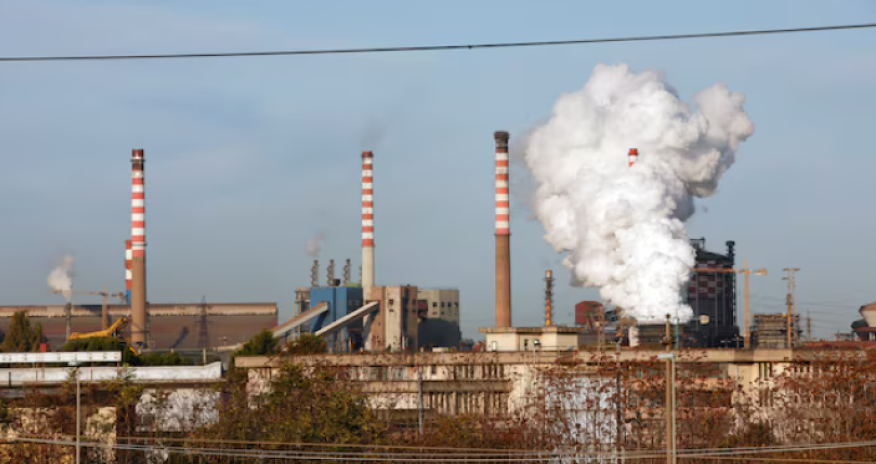


One of Europe’s largest metallurgical plants, Ilva Steel in Taranto, has suffered a major technical malfunction followed by a fire, severely disrupting what was to become Azerbaijan’s largest industrial foreign investment project. The €900 million modernization plan of the Azero consortium — formed by Baku Steel Company and Azerbaijan Investment Company — is now under threat.
The incident caused significant damage to the plant’s primary production systems, forcing a complete revision of previously agreed contractual terms. A final agreement originally expected by June has been indefinitely postponed. The terms are being rewritten, and initial obligations have come under question.
The plant’s energy supply, infrastructure burden, and nearly €700 million in outstanding debt have raised serious doubts about the long-term resilience of Azerbaijan’s industrial diplomacy.
The decision-making process that led Baku Steel to enter such a complex and high-risk project is now itself the subject of scrutiny.
Was Baku Steel on the verge of building an industrial flagship in Europe — or did it walk into an uncontrollable crisis?
Strategic and industrial importance
Ilva Steel has been operating since 1965 and features a full-cycle production chain, from iron ore processing to the manufacture of finished products such as flat steel, pipes, alloyed and stainless steel. It plays a strategic role in Europe’s metallurgy sector and could influence the EU’s position in trade talks with the United States, especially on steel and aluminum tariffs.
In March 2025, Azero won a multi-stage international tender from the Italian government due to its strong investment package and commitments to environmental and social responsibility. Financial stability was to be guaranteed by Azerbaijan Investment Company as the state investor.
The plant’s location in Apulia — the Italian region that receives Azerbaijani gas via TAP, the European section of the Southern Gas Corridor — adds further strategic logic to the project. Successful completion of the deal could deepen Azerbaijan-Italy economic ties.
Where the deal broke down
The fire, triggered by a malfunction in the blast furnace cooling system, crippled Ilva Steel’s main production line, which had a daily output capacity of 4,500 tons. Preliminary estimates suggest tens of millions of euros in damages. Under these conditions, the previously agreed investment terms have lost legal and financial viability.
The closing ceremony initially scheduled for June has been delayed. New technical reports, legal opinions, and audit evaluations are now required. Talks have effectively reset, though both sides refrain from public admission.
What changes with SOCAR Trading’s involvement?
The plant’s energy supply is a key component of the deal’s viability. Ilva’s annual gas demand stands at around 800 million cubic meters and could triple after full recovery.
SOCAR Trading is expected to offer both pipeline gas via TAP and LNG from the European market. However, two major risks remain. The first is price volatility, as the European gas market remains highly unstable. The second is political uncertainty — Italy has not yet approved a new FSRU (floating storage regasification unit) project.
SOCAR’s role is not only commercial but also geopolitical, linking Azerbaijan’s energy diplomacy directly with corporate risk.
The fate of the €700M debt: Who pays?
Initially, the Italian side had pledged to cancel Ilva Steel’s €700 million debt burden. However, post-fire, this arrangement may enter legal dispute.
If any part of the debt is reactivated, the financial load on the Azero consortium could exceed €1 billion — turning this into not just an investment risk but a reputational and sovereign liability.
Azerbaijan’s image at stake: State investor under pressure
Azerbaijan Investment Company’s role as the strategic guarantor ties the government’s reputation directly to the deal. Failure could trigger criticism not only of Baku Steel but of Azerbaijan’s entire foreign investment strategy.
Failure to assess infrastructure and technical risks accurately, combined with unresolved energy issues, places Azerbaijan’s overseas commercial ventures in a vulnerable light in the international arena.
Conclusion
The acquisition of the Taranto plant is a critical test for Azerbaijan’s industrial, energy, and diplomatic ambitions. If successful, it could secure a gateway into Europe’s industrial market.
But if mismanaged, the initiative may unravel into a chain of financial, reputational, and political liabilities.
N. Tebrizli










 Photo
Photo 

 Video
Video