




Empowering Azerbaijani Students Through International Education – INTERVIEW
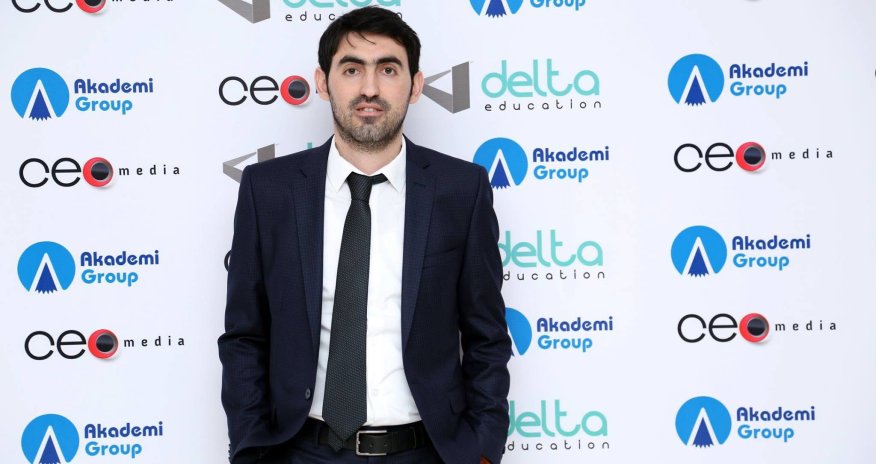


Mr. Elshad Mammadzada, a pioneer of impactful and sustainable initiatives in Azerbaijan’s education sector, believes that international education will serve as a powerful driving force and a key source of hope for Azerbaijani youth in the future.
As the Co-Founder of Akademi Group, Founder of Delta Education, and an active contributor to the advancement of higher education in Azerbaijan, Mr. Mammadzada shares his insights on international study opportunities for Azerbaijani students, his role in pioneering initiatives, and his vision for the future of global education in the country.
- Mr. Mammadzada, thank you for joining us. Let’s begin with your academic journey. Could you tell us about your educational background and how it has shaped your career in this new exiting industry?
- Thank you for having me—it's a pleasure to join you. My academic journey began at the Azerbaijan University of Foreign Languages, where I completed both my bachelor's and master's degrees in English Linguistics. Studying language at this level was more than just learning vocabulary or grammar—it was about understanding different cultures, perspectives, and the importance of effective communication.
This foundation naturally led me to the field of international education. Today, we work with
Azerbaijani students, helping them pursue academic opportunities abroad—from identifying the right programs to guiding them through the admissions process. My own academic background allows me to connect with students on a personal level, understand their aspirations, and help them prepare not just academically, but also culturally, for the challenges of studying in a foreign country.
“Education changed my life, and I’m passionate about helping others access that same transformative experience on a global scale.”
- How did you decide to get into this field and what were your motivations along the way?
- That’s a great question. My path into international education was not something I planned from the start—it evolved through personal experiences and a growing desire to help others access the same opportunities.
As a master's student in English Linguistics, I have always been fascinated by life and education abroad. A major turning point for me came in 2005, when I participated in the
International Exchange Program and traveled to the United States. That experience gave me firsthand exposure to living in a different country, adapting to a new culture, and discovering how transformative international experiences can be. It truly showed me the power of mobility and cultural exchange in shaping personal and professional growth.
After that experience, I started helping friends and younger students with their university applications and study-abroad plans. What began as informal guidance quickly turned into a passion. I realized that many talented students in Azerbaijan have the ambition, but not always the right information or support, to pursue global education.
Between 2008 and 2012, I successfully facilitated the participation of hundreds of students in International Exchange Programs, specifically the Work and Travel, Camp USA and Internship Programs in the United States. In addition, I organized Summer Study and Camp programs to the U.S., coordinated Summer Language programs to the United Kingdom, and arranged internship opportunities for young professionals through specialized exchange initiatives.
Another project I launched focused on sending university students to study for one semester at U.S. universities, giving them a chance to experience the American education system firsthand and build valuable academic and cultural connections.
Through these combined efforts, many students gained meaningful international exposure, and inspired by their experiences abroad, several went on to pursue full degrees at universities in the United States and the United Kingdom.
That became my motivation—to bridge that gap, to provide tailored and trustworthy guidance, and to make international education more accessible for Azerbaijani youth. Seeing a student go from hesitation to holding an acceptance letter, or starting their journey abroad, is incredibly rewarding. That impact is what continues to drive me every day.
And as an additional point, during that period I also met several times with representatives of the U.S. Consulate. We discussed both the new opportunities for collaboration and the challenges that Azerbaijani and other international students face in joining U.S.-based exchange programs. It was a valuable dialogue that helped highlight ways to make these international experiences more accessible and supportive for our students.
- Given your extensive experience in working with foreign universities and education institutions, could you share potential challenges in getting acceptance from foreign universities for Azerbaijani students?
- Certainly. While many Azerbaijani students are highly motivated and academically capable, there are several challenges they often face when applying to foreign universities.
Before anything else, there’s often a lack of awareness or realistic expectations in the education field. Some students may not know which programs are best suited to their academic background or future goals. They may aim too high or too low simply because they lack reliable advice.
That’s why our work is so important. We not only help students find the right universities but also prepare them thoroughly—academically, emotionally, and practically—for what lies ahead. When the process is well-managed, their chances of acceptance increase significantly.
Addition to that one of the main challenges is language proficiency—particularly in English-speaking countries. Even students who have studied English for years may struggle with standardized exams like IELTS or TOEFL, which are crucial for admission. Preparing for these tests requires not just language skills but also test-taking strategies and confidence.
Another major hurdle is academic documentation and recognition. Some foreign institutions may not be familiar with the Azerbaijani education system, grading scales, or curricula. This sometimes leads to confusion or additional verification steps during the admissions process. Part of our job is to bridge that understanding and help universities recognize the value of Azerbaijani qualifications.
We also see challenges around financial planning and visa requirements. Even if a student gets accepted, navigating scholarship applications, proving financial support, or passing visa interviews can be overwhelming without proper guidance.
- Could you highlight key projects you've led and their impact on opening new horizons for Azerbaijani students? How have your services contributed to the development and scaling of Azerbaijani students’ education?
- Most educational consultancy firms in Azerbaijan relied on conventional and largely subjective university placement practices, which frequently led to student underperformance or incompatibility with the host institution’s academic standards. We recognized the systemic issues very well and designed a two-step student assessment and placement model that aligns students’ actual capabilities and adaptive traits with the expectations of academic institutions abroad.
This assessment and placement model was unprecedented in the national market, as we introduced a structured, data-driven, and academically grounded framework for matching students with foreign academic institutions based on comprehensive performance analytics and psychological adaptability metrics. The feedback from the world’s leading institutions has been amazing. They were pleased that resource allotment and financial resource management improved thanks to our efforts.
Additionally, we brought a completely new concept to the higher education field by organizing the Academy Fair Series. We hosted over 70 participating universities from various countries, providing Azerbaijani students with direct access to university representatives, scholarship information, and a wide range of academic programs. What I’m especially proud of is that we didn’t limit the fair to Baku. We intentionally expanded it to Ganja to reach students in the regions who typically don’t have the same access to international opportunities. For many of those students, it was the first time they could speak directly with foreign universities and explore real study-abroad options.
The Academy Fair Series was later extended to Georgia and Kazakhstan, further broadening its regional impact and strengthening educational ties across the South Caucasus and Central Asia. By doing so, we created a platform that connected thousands of students with universities from around the world, encouraging regional collaboration and shared educational growth.
These events not only helped students gain access to a wide variety of universities but also enabled universities to reach their target audiences systematically and cost-effectively. They provided institutions with valuable insights into regional education trends, student interests, and emerging markets, helping them shape more effective recruitment and partnership strategies.
Beyond the direct student-university interaction, the fairs also fostered stronger cooperation between local education agencies, government organizations, and international institutions.
They encouraged transparency in the admission process, increased awareness about scholarships and exchange opportunities, and promoted a culture of educational mobility across the region.
As a result, many students from both the capital and regional areas went on to apply and begin their studies abroad, particularly in fields such as medicine, engineering, and social sciences. Families, too, began to see international education not as a distant dream but as an attainable reality supported by concrete information and guidance.
Overall, the Academy Fair Series became a catalyst for expanding access to global education, strengthening international partnerships, and shaping a more informed, confident, and globally minded generation of Azerbaijani students.
- What do you think about the State Program for the education of young people at foreign universities? How effective is it, and what opportunities or challenges do you see?
- To me, the State Program is a very important and strategic initiative for Azerbaijan. It gives young people the chance to study at some of the world's top universities, and we’re already seeing how graduates bring back new perspectives and standards that benefit our country. I have also been invited to discussions on the program, where I contributed by sharing my own recommendations on how it can be further improved. That said, I believe there are ways to make the program even stronger.
For example, many talented students—especially outside Baku—struggle during the preparation phase. Offering more information and financial support for standardized tests like SAT, IELTS, or TOEFL would really help widen access and ensure equal opportunity.
I also think it’s crucial to prepare students before they leave. Strong pre-departure orientation sessions could help them understand cultural differences, academic expectations, and practical matters abroad. It would also be valuable to introduce sessions on Azerbaijan’s strategic priorities—such as digitalization, energy transition, healthcare innovation, agriculture—so students know how their education can later contribute to national development.
Of course, there are challenges. The first is awareness and accessibility, not everyone has the same access to information. The second is re-integration, some graduates return with excellent qualifications but struggle to find roles where they can fully apply their skills. And finally, there’s a need for stronger alignment between what students study abroad and the sectors where Azerbaijan needs future leaders.
Overall, I fully support the State Program. With a bit more focus on preparation, guidance, and reintegration, I believe it can become one of the most powerful drivers of Azerbaijan’s long-term growth.
- Which countries do you primarily focus on, and why have you chosen them as key destinations? What criteria do you consider when selecting a destination country for students?
- I mainly focus on countries like Turkey, the United States, Germany, Hungary, and the United Kingdom. Each of them attracts students for different reasons. For example, Turkey is popular among Azerbaijani families due to its cultural similarities, language familiarity, and more affordable costs. Meanwhile, the United States, Germany, the United Kingdom, and Hungary are chosen for their strong academic standards and international recognition. If an applicant can afford the cost and has the skillset to thrive in this challenging but highly rewarding educational journey, I fully support their decision to choose the U.S. or the U.K.
It’s important to mention that, in most cases, the decision isn’t made by the student alone. Parents play a major role, and very often they prefer closer and culturally familiar destinations. That’s why Turkey frequently becomes the first option, it gives parents a sense of security and proximity.
When guiding students, I consider a few key criteria: the quality and accreditation of the university, the financial aspect and scholarship availability, language and adaptation challenges, and future career opportunities. I also pay attention to visa policies and student safety, because these factors strongly influence the family’s final decision. At the end of the day, it’s about finding the right balance between ambition, affordability, and family expectations, so the student can not only study abroad but succeed abroad.
- What advice would you give to students who aspire to study abroad? What key strategies should they focus on to secure admission, and how can they make the most of their international education experience?
- My first advice to students who want to study abroad is to start early and take the process seriously. Studying abroad is not only about dreaming of a foreign university, it’s a structured journey that requires planning, preparation, and patience.
In terms of key strategies, I always emphasize three things: first, academic preparation. Universities look for consistent academic performance, language proficiency, and strong motivation. Students should work on their grades, prepare seriously for tests like SAT, IELTS or TOEFL, and build a clear personal statement that reflects their goals.
Second, research and clarity. Many students apply randomly. Instead, they should research programs carefully—understand the requirements, scholarships, deadlines, and perhaps the most critically, what the university expects from international applicants. A well-informed application is always stronger.
Third, skills and mindset. Studying abroad is not just about getting into a university; it’s about growing as an individual. Students should develop independence, communication skills, and adaptability. These will help them succeed once they arrive on campus.
At the same time, universities today look beyond grades. I always encourage students to engage in volunteering, join clubs, take leadership roles, or participate in community projects. These experiences show maturity, responsibility, and initiative—qualities that international universities highly value.
And finally, once they go abroad, I always tell them: don’t limit yourself to classes. Engage with international communities, join clubs, attend seminars, and build networks. The real value of international education comes from experiences, connections, and the ability to bring that knowledge back home.
Finally, what is your long-term vision for expanding international education opportunities for Azerbaijani students?
Elshad Mammadzada: My long-term vision is to create a complete ecosystem that supports Azerbaijani students in accessing international education—not only by sending them abroad but also by bringing global education closer to home. I want to expand access to international opportunities beyond Baku.
There is enormous talent in regions like Ganja, Lankaran, and Nakhchivan, but many students lack proper guidance. Through regional fairs, mentorship programs, and outreach initiatives, we can ensure equal opportunity for all students, not just those in the capital.
Additionally, we need a strong support infrastructure—preparation for academic proficiency exams, scholarship guidance, and pre-departure orientation. If students receive early support, their chances of admission and success abroad increase significantly.
I believe Azerbaijan should take a bold step and host campuses of at least two-three reputable international universities within the country. This would allow thousands of students to access global-quality education without leaving home, reduce financial burden, and create academic competition that can elevate our national education standards.
Finally, my vision is to build a global Azerbaijani student and alumni network, so our young people abroad stay connected, support each other, and eventually return with modern knowledge and leadership skills.
Because in the end, it’s not just about studying abroad, it’s about bringing that experience back and using it for national development. If we can achieve all this, access, support, global campuses, and reintegration, then international education will become a long-term driver of transformation in Azerbaijan.
N.Təbrizli










 Photo
Photo 


 Video
Video