





"Vampires" were killed by CHOLERA
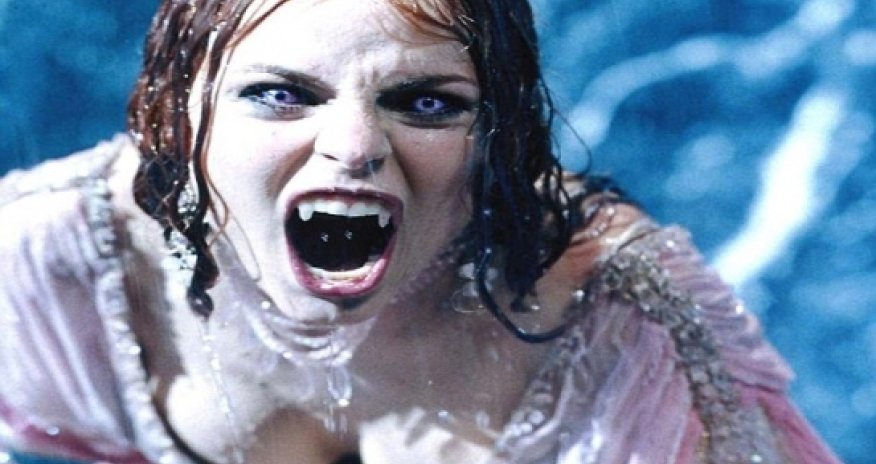


Suspected vampires were buried in bizarre rituals during the 17th and 18th centuries to ward off evil and prevent them from rising again from the grave.But rather than being blood-sucking monsters, tests have revealed they were in fact early victims of cholera and were viewed suspiciously because they died so suddenly. Archaeologists discovered skeletons in a Polish cemetery that had rocks and sickles placed across their necks in these strange funerals, known as apotropaic burials.Initially it was thought the people had been suspected as vampires because they were viewed with suspicion for being outsiders who had recently moved to the area before dying.However, now scientists have analysed the dental enamel from the teeth of six 'vampires' along with 60 other individuals from the cemetery.They found that rather than being immigrants to the area, they were locals and their deaths had instead been viewed by others in the area as strange for other reasons.The scientists claim that the burials appear to match with a time when cholera epidemics were prevalent in Eastern Europe and these may have been the first people to die in outbreaks.Dr Lesley Gregoricka, from University of South Alabama, who led the work, said: 'People of the post-medieval period did not understand how disease was spread.'Rather than a scientific explanation for these epidemics, cholera, and the deaths that resulted from it, were explained by the supernatural - in this case, vampires.'Vampire legends have suggested that the power of the undead can be passed to their victims through their bite, much like a disease.Instead, by killing those that caught it in a way not encountered before, it led to the victims being viewed suspiciously by others in the local area, particularly once others started dying in similar ways.The researchers studied skeletons that had been unearthed during excavations at a cemetery in the town of Drawsko Pomorskie in north western Poland.In total, 285 human skeletons were recovered from the site between 2008 and 2012. Six of them - including one adult male, three adult females, a teenage female and another child - were found to have been buried in strange ways.Five of them had been buried with a sickle placed across their throat or abdomen, as a way of removing the head or guts should they attempt to rise from the grave.Two had also had large stones positioned beneath their chins to prevent them from biting others.Other items including coins bearing crosses were also found with the remains. Unlike other vampire burials in Eastern Europe, these had been buried among others in the cemetery. Usually the graves of suspected vampires were situated on the outskirts.In an attempt to find out who these people were, Dr Gregoricka and her colleagues examined the molars from 60 individuals using strontium isotope ratios.These were then compared to the strontium isotopes found in the teeth of animals from the same area.As these isotopes build up in the teeth through an animal and person's life from their diet and water, they were able to work out whether those buried in the cemetery had been local.The results showed that each of the six vampires, rather than being outsiders, had been members of the local community.This led the researchers to conclude that there had been something else to cast suspicion on their deaths. Dr Gregoricka said: 'A multitude of attributes associated with vampirism also made locals susceptible to accusation, possibly resulting in apotropaic burial at Drawsko. 'Individuals ostracized during life for their strange physical features, those born out of wedlock or who remained unbaptized, and anyone whose death was unusual in some way – untimely, violent, the result of suicide, or even as the first to die in an infectious disease outbreak – all were considered vulnerable to reanimation after death'In particular, historic records describe multiple cholera epidemics that swept through Poland throughout the 17th century as a result of contaminated water.'The first person to die from an infectious disease outbreak was presumed more likely to return from the dead as a vampire.'But she added: 'However, because cholera kills quickly and does not leave behind visible markers on the skeleton, it is unclear if this is the case at Drawsko.'Bakudaily.Az











 Photo
Photo 


 Video
Video