




Three cheers for the onion
06.01.2015 11:00


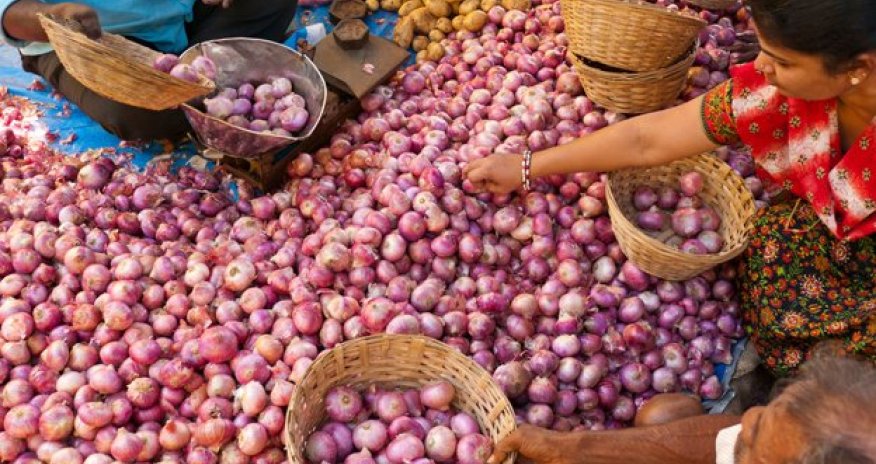
Onions are eaten and grown in more countries than any other vegetable but rarely seem to receive much acclaim. It's time to stop taking the tangy, tear-inducing bulb for granted and give it a round of applause, writes the BBC's Marek Pruszewicz.
Deep in the archives of Yale University's Babylonian Collection lie three small clay tablets with a particular claim to fame - they are the oldest known cookery books.
Covered in minute cuneiform writing, they did not give-up their secrets until 1985, nearly 4,000 years after they were written.
The French Assyriologist and gourmet cook Jean Bottero - a combination only possible in France, some might say - was the man who cracked them. He discovered "a cuisine of striking richness, refinement, sophistication and artistry" with many flavours we would recognise today. Especially one flavour.
"They seem obsessed with every member of the onion family!" says Bottero.
Mesopotamians knew not just their onions, but also their leeks, garlic and shallots.
And this devotion to the humble bulb is shared by most subsequent cooks too - rare is the cookery book that that is onion-free.
It's the world's most ubiquitous foodstuff. The UN estimates that at least 175 countries produce an onion crop, well over twice as many as grow wheat, the largest global crop by tonnage.
And unlike wheat, the onion is a staple of every major cuisine - it's arguably the only truly global ingredient.
"We think that based on genetic analysis onions came from central Asia, so they are already far afield by the time the Mesopotamians are using them. There's also very early evidence of their use in Europe back to the Bronze Age," says food historian Laura Kelley, author of The Silk Road Gourmet.
"They are a very pretty flower, so it could be someone thought, 'These are gorgeous,' and then found they were also nutritious. They are very, very easy to grow... There's a very good chance of success and very few pests."
Without doubt, onions would have been traded along the Silk Road as far back as 2,000BC, around the time the Mesopotamians were writing down their onion-rich recipes, Kelley says.
(BBC)
ANN.Az


Similar news
Similar news









Latest news 
More news

 Photo
Photo 



 Video
Video