




Up close and personal with the Airbus A380
28.05.2020 22:22


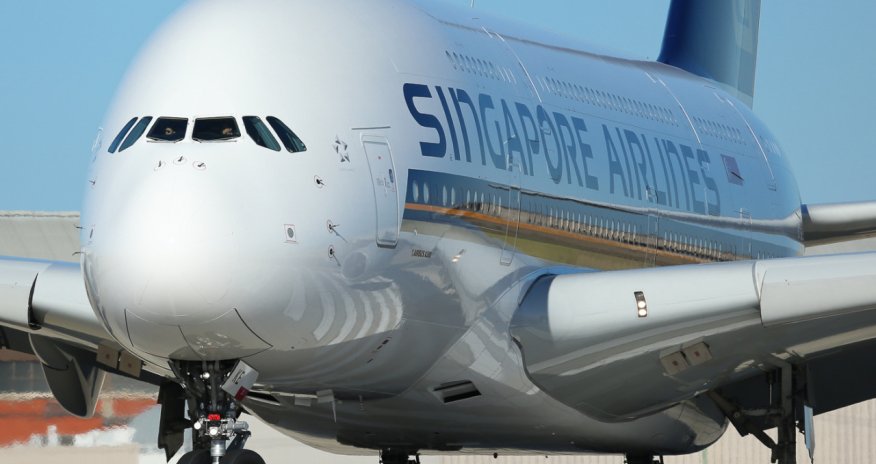
The Airbus A380 is the world’s biggest airliner. Jack Stewart gets a behind-the-scenes look at some of its secrets.
The Airbus A380 is the largest passenger plane in operation, and is still an awe-inspiring sight nearly a decade after it first entered regular service.
Stand at the end of the runway at one of the large airports that it operates out of, and you will hear people exclaim "how does something that big get into the air?!” Often the next comment is: "How do they get all the people on and off?” Because that’s the other thing about this giant of the skies; as we’ll find out it can fit hundreds of people, their luggage, and the comforts and entertainment they demand on its long flight routes.
British Airways has ordered 12 A380s for its fleet (some of which are still being built), and invited BBC Future to witness an engineering service inspection – known as a 2A check – to see the parts of the plane that the paying public do not usually get to see, and to discover the answers to some of the most common questions.
First things first; the A380 is so large that the engineering hangars at Heathrow Airport had to be specially modified – and these hangars can easily swallow a Boeing 747. The 1950s buildings are architectural landmarks, but at 23m (76ft) high were just a shade too short to fit the plane’s giant tail fin. The entrance to two hangars was given an extra notch in height of 3.5m (11.5ft) to allow the A380 tail to pass through. It is still a tight fit, as you can see in our timelapse:
Derek Cogswell, an aircraft engineer for British Airways, was our guide through the engineering maintenance facilities. "It took about 18 months to convert these two hangars to be able to accept the A380,” he says.
The aircraft we are touring is in for a service check, which occurs every three months. "As a passenger you only ever see these engines closed up,” he says. "But we’re going to open them up now so that you can see the complexity of these amazing machines.”
The A380 is available with a choice of jet engines. The configuration BA uses is four Rolls-Royce Trent 900 turbofans.
Unusually the A380 does without thrust reversers on the outermost engines, which are normally used to slow down an aircraft on landing. The giant brake packs on each of the A380’s wheels were designed to produce all the braking power needed.
There are thrust reverse systems on the inboard engines (the ones closest to the fuselage on each wing) to assist when the tyres don’t have enough grip, such as on a wet runway.
The engine cowlings are so large they cannot be opened by hand, so they have to use electrical power. Several clamps are released by hand, and then it’s just a case of pushing an "UP” switch and letting the motors whine and do their work. BBC Future was allowed to open the cowling, but as Cogswell explained safety is always upmost. "That’s my responsibility,” he says. "I’ll be there to make sure it’s all closed properly and safe for flight.”
(BBC)
www.ann.az


Similar news
Similar news











 Photo
Photo 



 Video
Video