





Why U.S. should do more for refugees - OPINION
10.09.2015 20:00


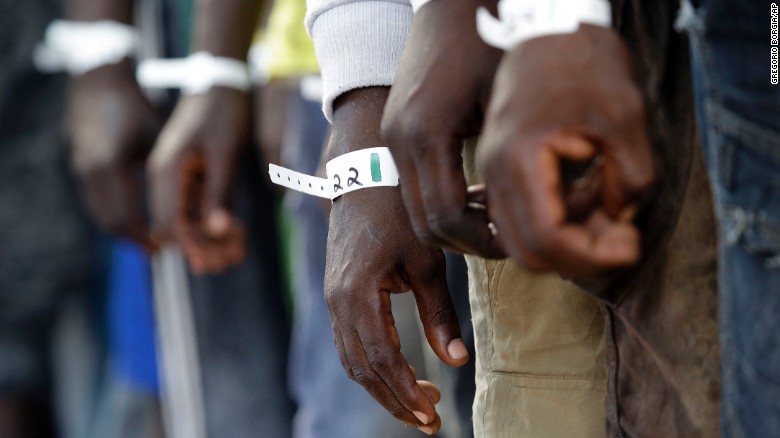
The German government's announcement this week that it could cope with as many as half a million refugees a year for the next "several years" has understandably made headlines -- and set a high bar for other nations, including the United States.
The announcement came in response to the ongoing humanitarian crisis taking place across the Mediterranean, as European nations grapple with the largest number of refugees the region has seen since World War II. Indeed, the U.N. refugee agency has said the number of refugees in the world has reached an all-time high.
All this has raised the question of whether other countries are doing enough in response. Certainly, the countries of first asylum for refugees from Syria and Iraq -- Turkey, Lebanon and Jordan -- are already overwhelmed, having taken in nearly 4 million refugees between them.
But as Europe debates the issue of quotas, some are looking to the United States to accommodate more. After all, the United States has taken in about 1,500 Syrian refugees through its resettlement program, and granted asylum to about that many more. Shouldn't it be doing more in the face of this humanitarian crisis?
The answer has to be yes -- and there are at least three reasons why.
The first reason is leadership. The United States has been a leader in humanitarian response since it emerged from isolationism in World War II. Since then, and starting with the aftermath of the war and the clanging down of the Iron Curtain, the United States has routinely resettled more refugees than the rest of the world combined, every year.
Of course, in the current crisis, we are protected by geography from the huge inflows of refugees arriving directly to the neighboring countries and to Europe to seek asylum. But we can still exert our traditional leadership by resettling refugees from zones of conflict across the Middle East and Africa.
The trouble is, our resettlement program remains mired in bureaucracy and timidity. We have never recovered from the post-9/11 fear that a terrorist may infiltrate our refugee resettlement program -- despite the fact that it has not happened in 15 years and the laborious, heavily scrutinized resettlement program is the least likely route for a would-be terrorist. With this in mind, it would be foolish for the United States to give up the soft power advantage that we earn from being the world leader in refugee resettlement for a nightmare that we can -- and do -- easily protect ourselves against.
The second reason we should take in more refugees is a matter of responsibility. The Syrian crisis in its current phase, where as many people are fleeing from ISIS as from the brutal Bashar al-Assad regime, is tied to the Iraq war and its aftermath.
The reality is that many of ISIS' leaders and backers are remnants of the Baathist army that the U.S. occupation insisted on disbanding after the fall of Saddam Hussein. The chaos of Syria and its spillover into Iraq's Sunni heartland provide the chance they have been waiting for to gain a new territorial foothold. In addition, the U.S. tolerance of the divisive Nuri al-Maliki government allowed the poison to spread into Iraq, and Iraqis are now joining the flows of Syrian refugees in the hundreds of thousands.
The United States took responsibility for the refugee aftermath of the Vietnam War and led the resettlement of almost a million Indochinese. We can at least manage a fraction of that for Syrians and Iraqis -- to say nothing of the continuing refugee outflows from Afghanistan -- who are among the largest groups seeking asylum in Europe. We helped to break it, so we should help to fix it for at least some of the people who are bearing the cost.
The third reason the United States should take more refugees is a matter of pure self-interest. We have largely benefited from the refugee populations we have resettled. German refugee scientists helped us win World War II; Eastern European scholars fleeing communism staffed the faculties of our finest universities for decades during and after the Cold War era. Hungarian refugees like Andy Grove, former Intel chairman, Cuban refugees like Carlos Gutierrez, former secretary of commerce and Kellogg CEO, and the Vietnamese and Chinese refugee valedictorians who went on to found high-tech companies have led the United States to industrial dominance in their sectors.
Right now the United States accepts about 70,000 refugees a year through its resettlement program. As recently as 1992, the number was almost twice that. We can certainly take more refugees, and we should.
Ultimately, refugees have for decades given the United States tremendous payback for its humanitarian leadership. We would be a poorer country -- in pocket and in spirit -- if we had not taken them in.
(CNN)
www.ann.az


Youtube
Follow us on Youtube


Similar news
Similar news










 Photo




 Video