





India's chaotic lesson in letting go
15.09.2015 19:30


I first stepped on Indian soil some 20 years ago, determined to change the place. I didn’t want to change everything about India, of course, just the parts that I found exceedingly frustrating: the Darwinian scramble at bus stops and train stations, the freestyle driving, the liberal interpretation of a scheduled appointment, the noncommittal answers that were more than a "no” yet less than a "yes”. Determined to change all this, I considered myself a Reformer, and I went about my mission with the gusto of the naïve and misguided.
Reformers don’t last long in India. Invariably, you see them packing their bags, grumbling about India being an "impossible place”. The Acceptor, on the other hand, knows that Indian civilisation has been around for a very long time and is not about to change because some baggy-pants wearing, camera-toting traveller wants it to.
I arrived in India a Reformer but left an Acceptor. I came to realize that India was not going to bend; Iwas the one who needed to bend. Otherwise, I’d endure a breakdown – or worse, life without India, and the lessons it affords.
The greatest of these lessons is the crucial yet under-appreciated art of letting go. That means, first and foremost, letting go of expectations. Indians know a thing or two about this. In the Bagavad Gita, a Hindu holy text, Lord Krishna says to Arjun, in effect: Give 100% effort to the task at hand but have precisely 0% invested in the outcome. This is, of course, extremely difficult to pull off. Normally, the more effort we exert, the higher our expectations – and, often, the greater our disappointment. Krishna’s advice, I think, is one that travellers to India would be wise to heed. Arrive not with high expectations, or low ones, but with no expectations. Let go of expecting anything.
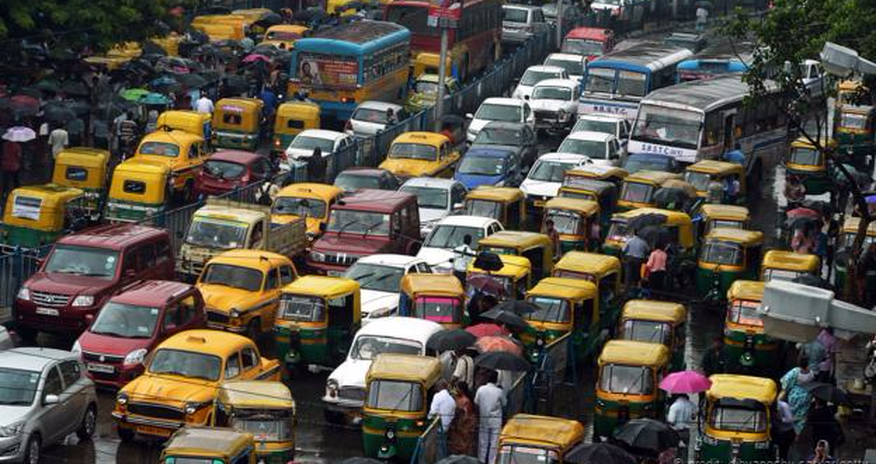
In Kolkata recently, I experienced this firsthand. I was conducting research for my latest book. I had a schedule I expected to keep. I had a plan that I expected to work. Neither lasted very long. For starters, it was monsoon season, and this meant even more power outages and traffic hassles than usual. When I eventually reached people, they were neither available nor unavailable, so I found myself stuck in a humid purgatory. The hotel clerk took pity on me, pointing out that in Hindi, the word for tomorrow is the same as the word for yesterday. I began to see that I needed to let go of my rigid expectation of time as something linear and immutable, and I needed to relinquish the illusion of control.
That is not easy, of course, for it is a persistent illusion. We commute to work, pay bills, cook meals – and, yes, go on holiday – convinced that our actions have consequences, and that if we only manage the former "properly” then the latter will fall into place and all will be well. India strips this illusion bare. Here, any attempt at controlling the vagaries of fate, or bureaucracy – or pretty much anything else – is futile.
Over the years, I’ve also learned that I need to let go of the notion that I "understand” how India works. In Kolkata, for instance, I stepped into a bookstore – not much more than a shack really – and saw only anarchy, with everything from Tagore to Grisham stacked floor to ceiling, in no discernible order. Yet when I requested a particular title (a historical novel called Those Days), the clerk quickly and effortlessly retrieved it. He saw order in the chaos.
I realize now that all of India is like this: both chaotic and orderly at the same time. Think of the way the chai-wallah prepares each cup of tea in precisely the same manner, or the way the rickshaw driver expertly weaves through traffic. As the British economist Joan Robinson famously observed: "Whatever you can rightly say about India, the opposite is also true.”
Robinson might be onto something. It’s been said that an indication of mental health is whether you can simultaneously retain two contradictory ideas without your head exploding. By that measure, India is the most mentally healthy place in the world.
Which is not, of course, to say it is easy. The fact is, India is hard, and it is this hardness that offers its appeal (two ideas, of course, that don’t typically go together). But if the point of travel is to challenge ourselves – to discover a "new way of seeing”, as Henry Miller put it – then naturally we should seek out the most "difficult” destinations, like India, not in order to change them but, rather, to change ourselves.
(BBC)
www.ann.az


Twitter
Follow us on Twitter












 Photo




 Video


