




Can Special Forces defeat ISIS in Syria and Iraq?
24.11.2015 09:00


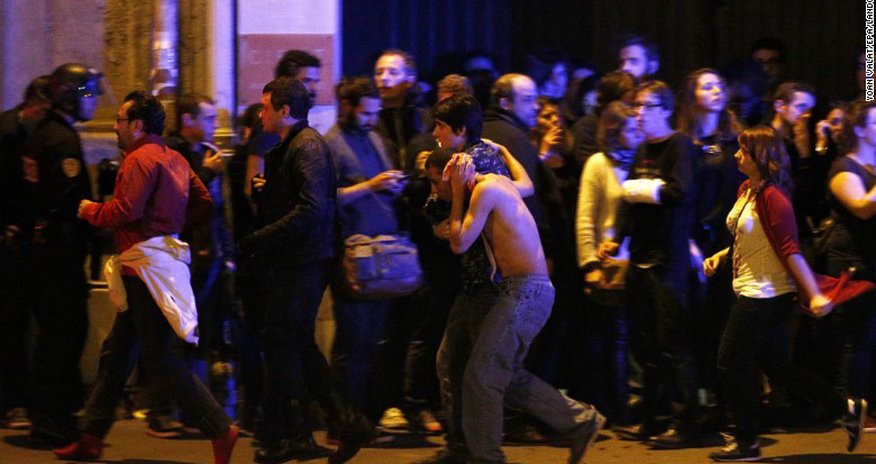
President Obama said his current strategy on ISIS is working and that the death of 129 people in Paris is a "setback." He also said ISIS is contained, despite ISIS claiming credit for the downing of a Russian airliner over Egypt, the death of dozens in a bombing in Beirut, and the other 31 successful global attacks by ISIS and its affiliates this year.
The recent announcement by the White House that not more than 50 special operations forces will be dispatched to help coordinate the fight against ISIS was heralded by some as evidence of the administration's seriousness on the issue. As CNN reported, this represented "the most significant escalation of the American military campaign against [ISIS]." Unfortunately, enthusiasm must be tempered by reality. Though it was a very small step in the right direction, it does not represent a grand strategy.
Time after time, military advisers have said special operations forces are not a cure-all. And we have bombed ISIS in Syria for over a year, yet three of their deadliest attacks have happened in the last three weeks.
To understand how special operations forces are properly used, and where they can be successful, it's necessary to rewind the clock and examine Iraq at the peak of special operations-led actions there in the mid-2000s.
Under Gen. Stanley McChrystal, U.S. Joint Special Operations Command developed a system that linked forceful action with immediate processing of intelligence and real time analysis. Special operators launched missions at dusk and continued all night; hitting one safe house after another, analyzing the information gained in one strike and launching subsequent raids based on what they found, in hours.
How was this operational tempo achieved? First, the United States was working with the full support, consent and backing of the elected Iraqi government. The U.S. dominated the battle space, there was relatively sizable local support, and these teams enjoyed full air support, including medical evacuation, in the event an operation went poorly.
Similar conditions in Syria do not exist -- Bashar al-Assad's government forces represent a threat, and are not supportive of any foreign intervention except for that of Russia and Iran, and the United States does not dominate the battle space.
Where ISIS operates, it operates with near impunity. While there is often local hatred of Assad or ISIS, much of the allied ground support in the region actually comes from Kurds, not Sunni Muslim Syrian locals.
So if a similar operational tempo is not an option in Syria, and major Syrian domestic support is unlikely to emerge, what can the special operations forces achieve?
The administration said these troops are intended to advise and train local forces -- Syrian Arabs, Kurds and other groups. Teams may be able to launch limited strikes against high-value targets in Iraq and Syria, and augment these Syria- and Iraq-based forces during their raids. It is likely these troops will also act as forward air controllers and observers, directing strikes launched from Turkey and elsewhere against ISIS positions.
Will this be enough to defeat ISIS? It's a start, but it is unlikely. We have been sporadically bombing Raqqa and other ISIS strong points for more than a year, and still ISIS has recently ramped up external attacks. To a large extent, relying on proxy forces presents us with quality control problems as well as divergent long-term interests.
Tactical successes, such as snatching an ISIS oil minister or engaging in airstrikes, will not be enough if they are not translated into operational momentum paired with an overarching plan. A minimal number of special operations forces can achieve a great deal but they are incapable of achieving strategic success. Like airstrikes, they are tools that are supposed to be used in executing a strategy, but they are not a strategy in and of themselves.
Special forces committed to the fight must be accompanied by better on-the-ground intelligence operations, combined with constant targeting and degradation of ISIS leadership, and a more robust disruption of the ISIS logistics chain, executed simultaneously in Iraq and Syria.
(CNN)
www.ann.az


Telegram
Follow us on Telegram








 Photo




 Video


