




EU migration policy suggests Europe prefers strongmen over reality
08.06.2016 14:59


There is nothing especially seismic about the latest version of the EU’s migration policy, which was unveiled on Tuesday afternoon. The central premise is the same one that Europe has long employed: asking the developing world to deal with migration, so it doesn’t have to.
In a carrot-and-stick approach, Europe is offering aid, trade and expertise to countries bearing the brunt of migration flows in the Middle East and north Africa. Those that fail to comply will not get the aid or the trade. "There are consequences,” one EU memo ominously reads, "for those that refuse.”
Those taking the carrot will be expected to make life a bit better for the millions of migrants within their borders. Above all, they are tasked with readmitting the few who manage to escape – and to stopping the rest from leaving in the first place. It is the EU-Turkey deal, but repeated across the southern Mediterranean and the Sahara.
Amid the insulting promises of compliance with international law, there are nevertheless some promising ideas that – while offering only sticking-plaster solutions – could marginally improve life for people who otherwise might think of migrating.
Development programmes and trade deals for Jordan and Lebanon offer a glimmer of hope for the roughly 2 million Syrians now stuck across both tiny countries – and slightly improve their chances of joining the legal labour market. Libya is years from stability, but financial and institutional support for the country’s vulnerable UN-installed government will do more good than harm.
Another progressive idea involves more refugees being offered legal routes to Europe – a welcome admission that to curb irregular migration, you need to show would-be migrants that they at least have the slim chance of moving in a more regular fashion. Europe, one document says, "must create genuine prospects of resettlement to the EU to discourage irregular and dangerous journeys”.
Never mind that this part of the plan offers little in the way of numbers; at least European officials are finally acknowledging that the failure to offer legal resettlement is one of the causes of irregular movement towards Europe.
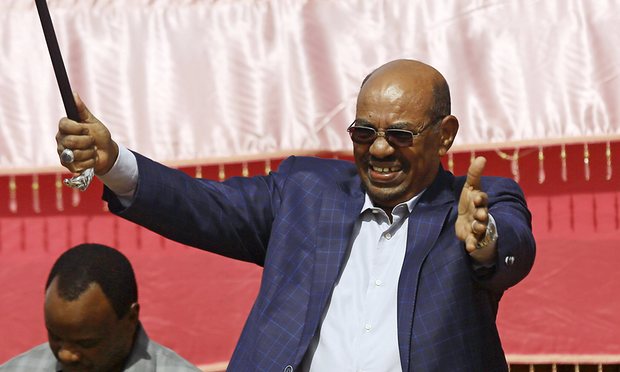
More insidious is the revelation that Europe still intends to work with despotic regimes in an attempt to stop people travelling across deserts and seas to Italy and Greece. For weeks, journalists have reported that the EU intends to work with Sudan – whose president is wanted for war crimes – and Eritrea, whose totalitarian government the UN suspected of crimes against humanity.
The EU has ducked and dived over the claims, essentially maintaining that nothing has been set in stone. But Tuesday’s policy papers show that the intent to partner with Sudan and Eritrea is still very much there. Both countries are mentioned as potential partners – and one document confirms that a plan to work with both "will start this summer”.
Previously released information about this plan shows that – in an attempt to stop refugees seeking sanctuary in Europe – the continent may end up donating cars, equipment and conceivably even planes to Sudan’s notorious security services; and "building capacity” within Eritrea’s judiciary, which the UN has accused of aiding and abetting President Isaias Afwerki’s campaign of terror.
The EU’s new migration policy is laced with the progressive language of "migration management”, of accepting that migration flows cannot be stopped, only better managed.
But the policy’s content suggests that Europe still has not accepted this reality. Once we get past the cuddly but vague nods towards resettlement and development, the main takeaway is that palling up to dictators and strongmen remains Europe’s preferred method for dealing with migration. Even though they are usually the main causes of migration in the first place.
www.ann.az


Instagram
Follow us on Instagram
Similar news
Similar news










 Photo




 Video