




Terrorism: The jihad-crime nexus
29.05.2020 05:23


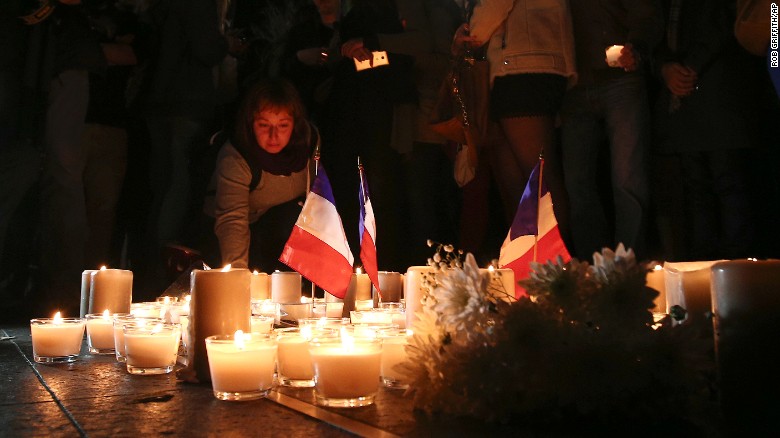
There have been eight lethal terrorist attacks in Europe since 2014, five of them in France alone, carried out by ISIS or by "lone wolves" inspired by the terror group or by al Qaeda.
What do these attacks have in common? The terrorists are almost invariably criminals who have either served time in the French or Belgian prison systems, or they have been convicted for lesser offenses but have avoided jail time.
Mohamed Lahouaiej-Bouhlel, who killed at least 84 people Thursday in Nice, France, had a long record of petty crimes. Bouhlel assaulted a motorist last year for which he received a six-month suspended sentence.
It is not yet clear how exactly Bouhlel came to commit his terror attack. But it is striking how many of the terrorism cases in Europe share a jihad-crime nexus. By contrast, of the more than 300 individuals charged of a jihadist terrorism crime in the United States since 9/11, only about 10% had a background of crimes other than terrorism.
Larossi Abballa, who stabbed a police commander and his partner to death in June in a town outside Paris, had been convicted of recruiting jihadists to fight in Pakistan. He was sentenced to 2½ years in prison in 2013 but was released shortly after his conviction because he had spent more than two years in jail awaiting trial, where he had preached about Islam to other prisoners.
The Kouachi brothers, the perpetrators of the January 2015 attack at the satirical French magazine Charlie Hebdo, had been imprisoned for a range of crimes, including involvement in a terrorist organization as well as trafficking in counterfeit sneakers.
Amedy Coulibaly, who killed four Jews at a kosher supermarket in Paris shortly after the Charlie Hebdo attacks, was a close friend of the Kouachi brothers. He met Chérif Kouachi in prison while he was serving a six-year sentence for armed bank robbery. It is there where they were both radicalized, in part by an incarcerated al Qaeda recruiter.
Prisons in France and Belgium have incubated many jihadist terrorists. This is because the proportion of the French prison population that is Muslim is estimated to be around 60%, which is extraordinarily high given that Muslims account for 8% of France's population.
In Belgian prisons, there is a similar disproportionality: Thirty-five percent of the prison population is Muslim, compared with 6% of the general population.
Conditions in these prisons and society in general exacerbate the spread of radicalism. Despite their high Muslim population, many of these prisons lack an adequate number of Muslim chaplains. This leaves the door open for Islamist militants among the prison population to spread their ideology during mealtimes and exercise hours through informal preaching sessions.
Muslims in France and Belgium have long been marginalized. They are often sequestered in poorer and more violent neighborhoods than their counterparts in the United States and are subject to pervasive racial discrimination.
French and Belgian prisons have proven to be universities of jihad. The members of the ISIS cell responsible for the attacks in Paris in November that killed 130 and the attacks in March in Brussels, Belgium, at the airport and on the subway system that killed 32, bonded through criminal activities or in prison.
Abdelhamid Abaaoud and Salah Abdeslam, the cell's masterminds, were childhood friends who grew up in the Brussels neighborhood of Molenbeek. In 2010, the men were arrested and spent time in the same prison.
Ibrahim Abdeslam, Salah's brother, also spent time in prison with Abaaoud. He would go on to be one of the terrorists in the November Paris attacks.
Khalid and Ibrahim El Bakraoui, both suicide bombers in the Brussels attacks, had served lengthy prison sentences for armed robbery and assault on police.
ISIS recruit Mehdi Nemmouche, who is accused of killing four at the Jewish Museum in Brussels in 2014, had been in a French prison for robbery.
How to stop prison radicalization? France has begun to implement new measures, such as separating militants from the general prison population and placing them in solitary confinement so they cannot exert their ideological influence on other inmates.
But more needs to be done -- not only to identify those who go into prison as radicals, but also, crucially, to identify those who come out of prison more militant, as seems to have been the case of so many terrorists who have launched attacks in France and Belgium in the last three years.
(CNN)
www.ann.az


Facebook
Follow us on Facebook


Similar news
Similar news










 Photo




 Video