





Air Force Pilots Say They're Flying Blind Against ISIS
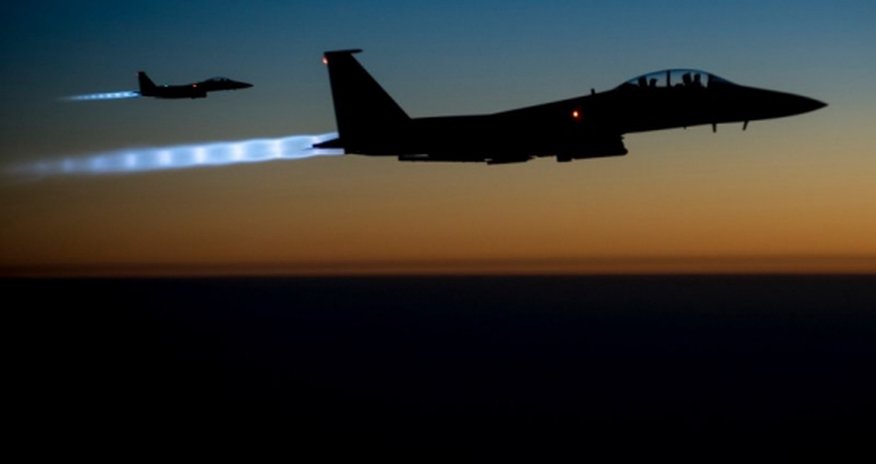


Obama’s no-boots-on-the-ground pledge is keeping America from fighting an effective air campaign in Iraq and Syria.
Within the U.S. Air Force, there’s mounting frustration that the air campaign against ISIS in Syria and Iraq is moving far more slowly than expected. Instead of a fast-moving operation with hundreds of sorties flown in a single day—the kind favored by many in the air service—American warplanes are hitting small numbers of targets after a painstaking and cumbersome process.
The single biggest problem, current and former Air Force officers say, is the so-called kill-chain of properly identifying and making sure the right target is being attacked. At the moment, that process is very complicated and painfully slow.
“The kill-chain is very convoluted,” one combat-experienced Air Force A-10 Warthog pilot told The Daily Beast. “Nobody really has the control in the tactical environment.”
A major reason why: the lack of U.S. ground forces to direct American air power against ISIS positions. Air power, when it is applied in an area where the enemy is blended in with the civilian population, works best when there are troops on the ground who are able to call in strikes. From the sky, it can be hard to tell friend from foe. And by themselves, the GPS coordinates used to guide bombs aren’t nearly precise enough; landscape and weather can throw the coordinates off by as much as 500 feet. The planes need additional information from the guys on the ground. The only other option is to use laser-guided bombs, but even then the target has to be correctly indentified beforehand.
But putting the specialized troops the Pentagon calls “Joint Terminal Air Controllers,” or JTACs, into combat comes with a cost. “The problem with putting JTACs on the ground is that once you get American boots on the ground—and one of those guys gets captured and beheaded on national TV or media,” the A-10 pilot said.
The Pentagon has compensated for this, in part, by easing back in Syria on the restrictive rules used in Afghanistan to minimize civilian casualties. But in many other aspects, current and former Air Force personnel say, U.S. Central Command is fighting the war against ISIS in largely the same way it operates against the Taliban in Afghanistan. “The strategic problem posed by [ISIS] is different than that in Afghanistan,” one former senior Air Force official said. “So the similarity of the minimal application of airpower, along with excessive micromanagement by the CENTCOM bureaucracy, is a symptom of not recognizing that this is a different strategic problem.”
After all, ISIS isn’t simply a collection of terrorists. The group holds territory, and manages an inventory of heavy military and civilian equipment. There’s a reason they call themselves the Islamic State. So instead of worrying about individual air strikes, this former official said, the CENTCOM needs to run a wider more free-ranging air war where more targets are hit much more quickly. “Very few in the military today have experience in planning and executing a comprehensive air campaign—their experience is only in the control of individual strikes against individual targets,” the official added. “There needs to be constant 24/7 overwatch, and immediate attack of any [ISIS] artillery, people, vehicles, or facilities that they are occupying.”
But that is a view shared mainly by those within the Air Force—which has, for decades, argued that it has the ability to win wars though strategic bombing.
Even in the case of the campaign against ISIS, there are many officers from the Army, Navy and even the Air Force who told The Daily Beast that they agree with the restraint shown by CENTCOM leadership—noting it is pointless to bomb the wrong target and antagonize the local population.
Further, the challenge for CENTCOM is further compounded by the lack of workable intelligence in Syria. It’s hard to untangle the convoluted alliances and entanglements between friend or foe. Often, so-called moderate rebel forces cooperate with the hardcore Islamic fighters in their fight against the Syrian government or even ISIS. (That’s why, late last month, a moderate camp was almost hit by an allied airstrike; the bombs were meant for the al Qaeda outpost next door.) Additionally, there is little to no cooperation or coordination with moderate rebel forces and the U.S. military.
(thedailybeast.com)
Bakudaily.Az












 Photo




 Video


