

The world's most feared terrorist group? - ANALYSIS
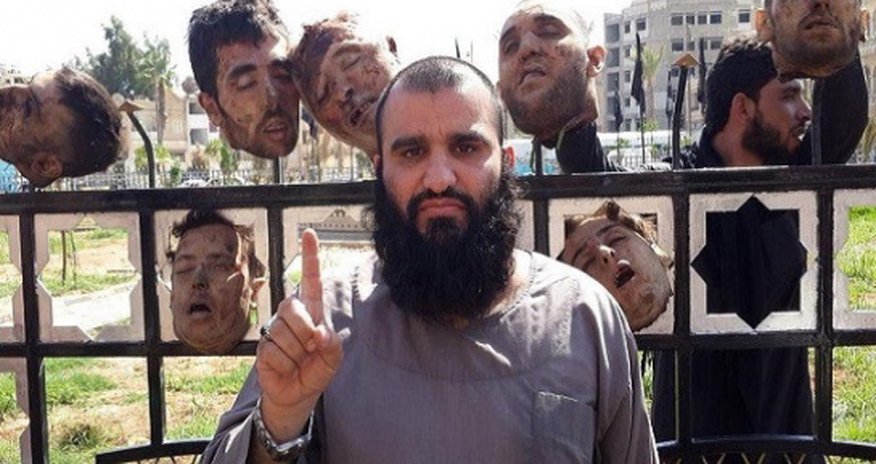


The organisation that calls itself the Islamic State has confounded all expectations of modern politics except the brute fact that extreme violence pays dividends.The dividends are control over territory, over hearts and minds, and over the West’s response to events in the Middle East.They are also more literal dividends: Islamic State may be the richest terrorist group in history.We already know it trades in oil and in grain – including with governments supposed to be fighting it. It is now also possible that it is trading in people.One theory is that James Foley was captured by an essentially criminal gang in north-western Syria and then sold to the jihadists.At that time, November 2012, Islamic State in its current incarnation did not exist. The main jihadist group operating in Syria was Jabhat al-Nusra, which was set up as a local al-Qaeda group with the help of Islamic State of Iraq, al-Qaeda’s offshoot over the border.It had a local leader, Abu Mohammed al-Golani, and worked with other rebel groups, especially Islamist ones, despite being proscribed by the United States and other countries which backed the rebel cause.Aside from James Foley, who may have been a special case, kidnappings only became regular after Jabhat al-Nusra split in two the next spring – one part remaining loyal to al-Qaeda and Golani, the other swearing an oath of obedience to the Iraqi group and its head, Abu Bakr al-Baghdadi.Baghdadi immediately began to institute the ultra violent tactics including kidnappings espoused by the Iraqi wing and first promulgated by a former leader, Abu Mousab al-Zarqawi, which earned him a rebuke from Osama bin Laden himself.Zarqawi was killed by an American air strike in 2006 but not before claiming responsibility for a series of mass bombings and killings, including beheadings, some of which he carried out himself.Islamic State of Iraq and the Levant, as its full name was often translated, had its greatest coup when it emerged from the jihadists’ split to control the town of Raqqa in eastern Syria.With it came a number of oil fields, and it managed to devise a way of selling oil both to the regime and to local entrepreneurs who distilled it and sold it on the black market.Other resources, including factories, were stripped. Grain and bread were sold to local people at a discount.Its wealth and success made it the most attractive focus for the foreign Muslims coming to join the rebel cause in Syria, despite or because of its reputation for brutality. Its refusal to compromise meanwhile has forced governments the world over, which had been attempting to turn their attention away from the Middle East's imbroglios, to pay attention.Predictions that its approach would be self-defeating, and turn adherents away, have proved very wrong. Fear has been shown to be the best recruiting tool.Raqqa also became a refuge, when the group were driven out of Aleppo by a coalition of other rebel groups in January, to which they took their considerable number of captives. James Foley was among them, though it is not entirely clear where he was the whole time from 2012 to this year.Some of his fellow hostages – mainly French, Italian and Spanish – have been handed back, with large ransoms presumed to have been paid, as they have been with other jihadist kidnappings across the Middle East and North Africa.Individual sums have never been disclosed, but one estimate has it that a hostage is now worth USD10 million. The New York Times recently calculated that al-Qaeda-linked groups had earned at least USD125 million in ransoms since 2008.The British and American governments, by contrast, have always refused to pay ransoms: their citizens seem less likely to be kidnapped, but are killed more often.With them, it has also always been clear that their hostages were being held as a disincentive for intervention – exactly as has proved the case with James Foley.It is more than an irony that money provided by European governments for one set of hostages may have been used to purchase others from intermediaries.(telegraph.co.uk)Bakudaily.Az






 Photo




 Video


