



Africa: homophobia is a legacy of colonialism
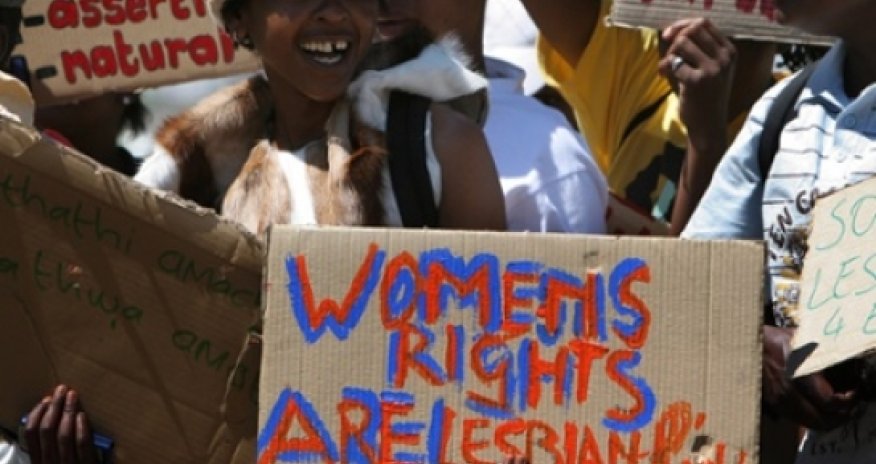


Most Africans don’t recognise homophobia as a colonial legacy even though before colonialism, many traditional cultures were tolerant of different sexualities and gender relations. For instance, in my tribe, the Ganda or Baganda, (Uganda’s largest ethnic group) women from the royal clan are addressed with male titles and may or may not be required to perform duties expected of women. More broadly, from the Azande of the Congo to the Beti of Cameroon, and from the Pangwe of Gabon to the Nama of Namibia, there is ethnographic evidence of same-sex relationships in pre-colonial Africa.By preying on African values of inclusive difference, however, Africa’s colonisers rewrote its history, the effects of which haunt Africa to this day. Tribal chiefs and village courts of law which were traditionally the hallmark of conflict resolution were traded for a European Penal Code system which included the criminalisation of homosexuality. It is also important to stress that so-called sodomy laws would not have impacted African sexual politics without the influence of Christianity. Christianity was used to whitewash African culture as primitive and to demonise traditional interpretations of African intimacies. The bible became the credo of African morality, disordering African sexuality to missionary positions of heteronormativity (ie. the idea that heterosexuality is the only 'natural' sexual orientation).But sexuality is not all that the colonisers rewrote about Africa. European colonies were established through military conquest, perpetuated through the politics of divide and rule, and religion. The colonisers understood that to conquer Africa they had to turn Africans against Africans such that Africans would blame themselves for their divisions, most of which culminated in ethnic hostility. Amongst other things, colonial policies of divide and rule spurred ethnic tensions. For example, by dividing Rwanda along race and class, German imperialists turned the Tutsis against the Hutus. In Sudan meanwhile, British imperialists divided the Northern Muslim region from the Southern Christian region creating divisions that perpetuate ethnic tensions to this day.American evangelicalsIn today's postcolonial world, the influence of US conservative evangelicals on Africa’s sexual politics cannot be understated. They have picked up where their colonial predecessors left off and are providing the propaganda, by way of religious brainwashing, for Africa’s anti-gay campaigners to make the case for harsher laws against LGBT communities. This is why holding American missionaries like Scott Lively and Lou Engle to account is crucial to the protection of LGBT people in countries where they evangelise.When Africans accuse Western countries of importing homosexuality, LGBT Africans become demonised as social deviants and criminals, and politicians turn to the law as the solution. What needs to happen in Africa is an honest discussion on human sexuality in the African context before, during and after the colonial period. This is a conversation local activists, civil society, academics, and the media should begin to shape.Africans will have to reclaim their forgotten pasts as peoples who traditionally refused to hate but stood side-by-side and embraced their differences. Although needed and requested by African LGBT activists, outrage towards anti-gay African countries may not solve Africa’s homophobia. The pushback against Western interventions such as aid cuts is usually informed by an African resistan ce against neocolonialism. However, there is no going back. More than ever, what Africa needs is a global uprising for LGBT rights.It is stories like Binyavanga Wainaina’s, the Kenyan author and journalist, who recently came out that could contribute to meaningful conversations on human sexuality in the African context. Although Wainaina’s story constitutes a personal choice that does not have to be politicised, his story could be the beginning of what is still a long walk to the acceptance of LGBT people on the continent.(theguardian.com)ANN.Az






 Photo
Photo 

 Video
Video