




Woman's ear turns black spider bite
16.11.2013 12:13


A Dutch woman’s ear turned black after she was bitten by a poisonous spider in Italy.
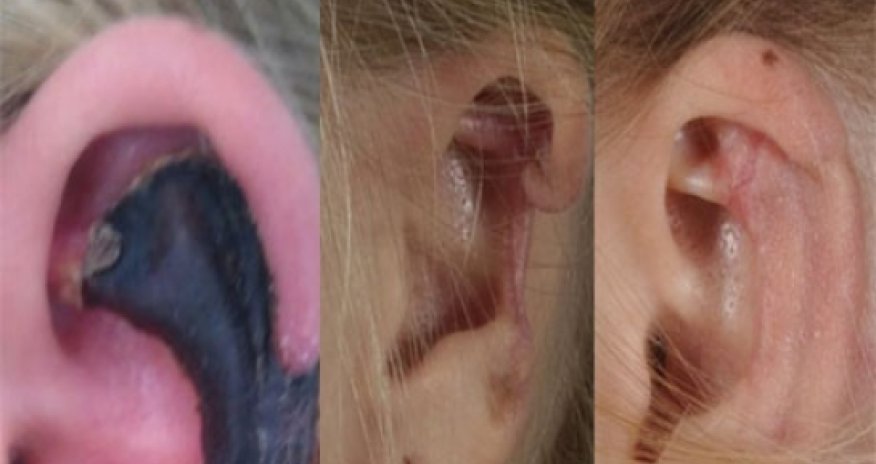
Part of the 22-year-old’s ear was liquefied by the Mediterranean recluse spider’s venom and the skin and cartilage died.
The woman’s experience is thought to be the first evidence that recluse spider venom can destroy cartilage.
The patient’s health problems began when she woke up with a painful ear one morning, LiveScience reports.
Her ear swelled up so, unaware she had been bitten by a spider, she visited a local hospital where she was given antihistamine.
Despite this treatment, the swelling and pain failed to subside.
By the time she returned to the Netherlands, part of her ear had turned back indicating the cells had died.
The woman sought medical help and doctors realised she had been bitten by a Mediterranean recluse spider as the creature’s venom is known to kill skin.
However, Dr Marieke van Wijk, a plastic surgeon involved in the patient’s care, explained this was the first time doctors had seen the spiders’ venom destroy cartilage as well as skin.
The spiders’ venom kills cells using a complex mixture of chemicals which break down proteins and there is no drug treatment that is known to be effective.
As a result, Dr van Wijk and her colleagues were forced to remove the dead tissue from the woman’s ear and then rebuild it using cartilage from her ribs.
The Mediterranean recluse spider originated in the Mediterranean region of North Africa and Europe but it is now widely distributed.
It has poisonous venom but is thought only to bite when forced into contact with people - for example, if trapped in clothes or bedding.
In rare cases, the spiders’ bites can be fatal as they can cause kidney failure.
Normally, bites cause a red patch to develop on the skin which leaves a slow-healing, open wound and exposed muscle.
It can take up to two months for the wound to heal and it often leaves a sunken scar.
Dr van Wijk told LiveScience that the spiders are ‘not that dangerous’ and that she ‘wouldn’t take precautions’ to avoid a bite.
The case was reported in the Journal of Plastic, Reconstructive and Aesthetic Surgery.
(dailymail.co.uk)
ANN.Az


Twitter
Follow us on Twitter













 Photo




 Video


