





Azerbaijan’s central bank leaves interest rate corridor unchanged
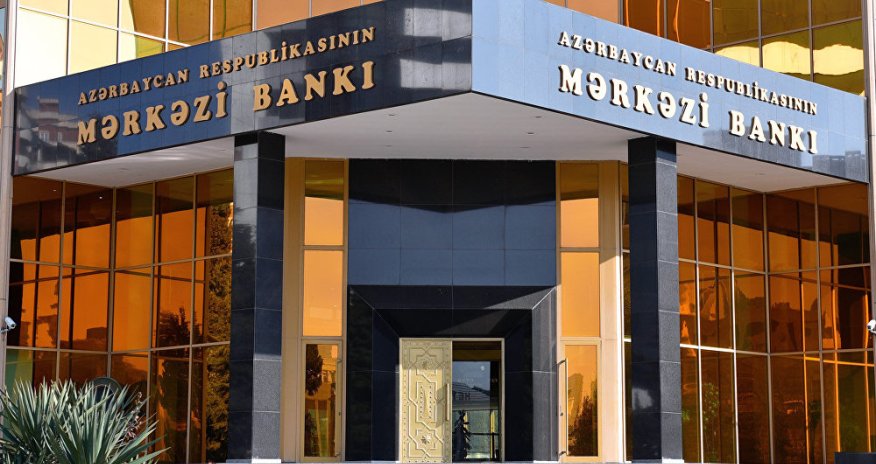


The board of the Central Bank of Azerbaijan kept all parameters of the interest rate corridor unchanged.
The central bank said the decision took into account actual and forecast inflation remaining within the target range, risks stemming from global geopolitical tensions, global financial conditions, the domestic macroeconomic environment and the transmission of monetary policy decisions to the real sector.
Annual inflation remains within the target range, the central bank said. Twelve-month inflation stood at 5.6% in March 2026.
Annual price growth was 6.5% for food, alcoholic beverages and tobacco, 5.7% for paid services and 3.7% for non-food products. Core inflation stood at 5.5%.
Since the start of the year, supply in the foreign exchange market has exceeded demand in both cash and non-cash segments. Preliminary data showed that in the first four months of 2026, purchases of cash foreign currency by exchange offices exceeded sales by $190 million.
The dollarisation level of deposits held by resident individuals fell by 2.1 percentage points over the past 12 months to 28% in March 2026.
In April, a significant decline in bank demand at foreign exchange auctions led to excess supply in the currency market, prompting the central bank to carry out purchase-side interventions.
The central bank’s foreign exchange reserves rose by 10.2% in the first four months of the year to $12.7 billion.
Customs data showed Azerbaijan recorded a $1.4 billion foreign trade surplus in the first quarter of 2026, up 93.3% from the same period last year.
The central bank revised upward its forecast for the current account surplus at the end of 2026 and 2027, citing higher prices for key export products and continued growth in non-oil exports.
In the unsecured money market, short-term interest rates are forming within the central bank’s interest rate corridor and close to the policy rate. The average daily AZIR rate stood at 6.47% in March and 6.44% in April.
Under the central bank’s baseline scenario, annual inflation is forecast at 5.9% in 2026 and 4.5% in 2027.
The central bank said the upward revision of the inflation forecast was mainly due to stronger external cost factors, including faster growth in global food prices, increased inflationary pressure among trading partners and a slowdown in the strengthening of the nominal effective exchange rate.
It also said the conflict in the Middle East had disrupted supply chains, increased transport and insurance costs, and intensified upward price volatility in global energy markets.
The next decision on the parameters of the interest rate corridor will be announced on June 24, 2026.
N.Tebrizli













 Photo
Photo 



 Video
Video