





Scientists puzzled over mystery early humans that Neanderthals had sex with
05.12.2013 21:44


Scientists have extracted and sequenced the oldest human DNA. It came from a fossilised leg bone of an early human who died about 400,000 years ago in what is now northern Spain.
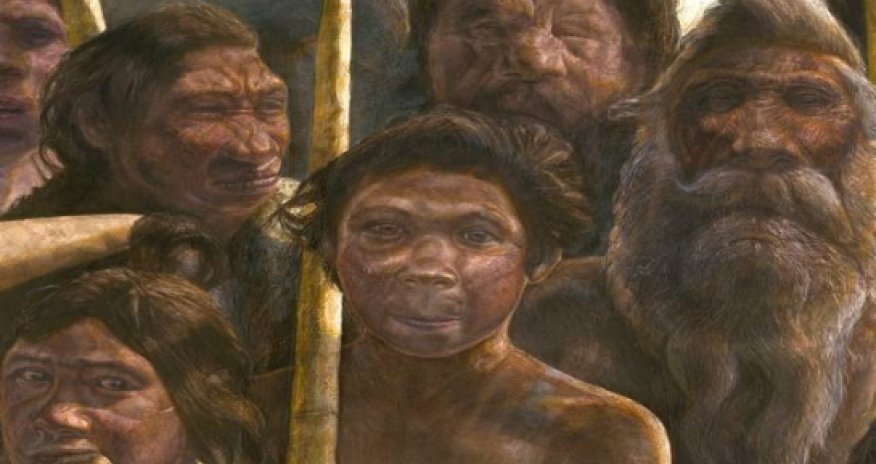
Its DNA sequence indicates that this early European was more closely related to a much earlier species of human living in Siberia about 700,000 years ago than to the later Neanderthals of Europe who became extinct about 30,000 years ago.The genetic link between early Europeans and even earlier Asians has surprised researchers who had expected to find a closer genetic relationship to the later Neanderthals, who had occupied Europe for tens of thousands of years before eventually dying out after anatomically-modern humans arrived.“It really raises more questions than it answers,” said Svante Paabo, the director the Max Planck Institute for Evolutionary Anthropology in Leipzig where the ancient DNA was extracted from the thigh bone of a skeleton excavated from the cave site known as the “pit of bones” in Sierra de Atapuerca.More than 28 human skeletons have been excavated from Sima de los Huesos cave, along with the bones of extinct animals such as cave bears dating back about 600,000 years, making it one of the richest sources of prehistoric fossils in Europe.Many palaeontologists believe that the femur bone used in the DNA extraction comes from an early “hominin” species known as Homo heidelbergensis, although other experts think that it is more likely to be a primitive ancestor of Neanderthal man.However, what has surprised the researchers is the relatively close similarity between the mitochondrial DNA of this Neanderthal-like European and the mitochondrial DNA of the Denisovans, a species that lived about 700,000 years ago in the Altai mountains of Siberia and known only from a small finger bone and two relatively large molar teeth.“The fact that the mitochondrial DNA of the Sima de los Huesos hominin shares a common ancestor with Denisovan rather than Neanderthal mitochondrial DNA is unexpected since its skeletal remains carry Neanderthal-derived features,” said Matthias Meyer of the Max Planck Institute, who led the study published in the journal Nature.


Similar news
Similar news












 Photo
Photo 



 Video
Video