





Horizon: How video games can change your brain
16.09.2015 23:00


The video game industry is a global phenomenon. There are more than 1.2 billion gamers across the planet, with sales projected soon to pass $100bn (£65bn) per year.
The games frequently stand accused of causing violence and addiction. Yet three decades of research have failed to produce consensus among scientists.
In laboratory studies, some researchers have found an increase of about 4% in gamers' levels of aggression after playing violent games.
But other research groups have concluded factors such as family background, mental health or simply being male are more significant in determining levels of aggression.
What is certain is that science has failed to find a causal link between video games and real-world acts of violence.
But away from the controversy, a growing body of work is beginning to show these games in a different light.
Motor skill
Dr Henk ten Cate Hoedemaker is the man behind Underground.
In the game, players must guide a child and her pet robot out of a mine.
But this is no ordinary game. Dr Hoedemaker is a keyhole surgeon, and Underground is designed to hone the skills of his profession.
Players use adapted controllers that mimic the tools used in surgery - and those who perform well in the game also do better in tests of their surgical skills.
Visual abilities
Around the world, other researchers are investigating the potential hidden benefits in video games.
At the University of Geneva, Prof Daphne Bavelier has compared the visual abilities of gamers and non-gamers.
In one test, subjects must try to keep track of the position of multiple moving objects.
She has found that individuals who play action video games perform markedly better than those who do not.
Prof Bavelier's theory is that fast action games require the player constantly to switch their attention from one part of the screen to another while also staying vigilant for other events in the environment.
This challenges the brain, making it process incoming visual information more efficiently.
Brain growth
At the Max-Planck Institute of Human Behaviour, in Berlin, Prof Simone Kuhn also researches the effects of the video games on the brain.
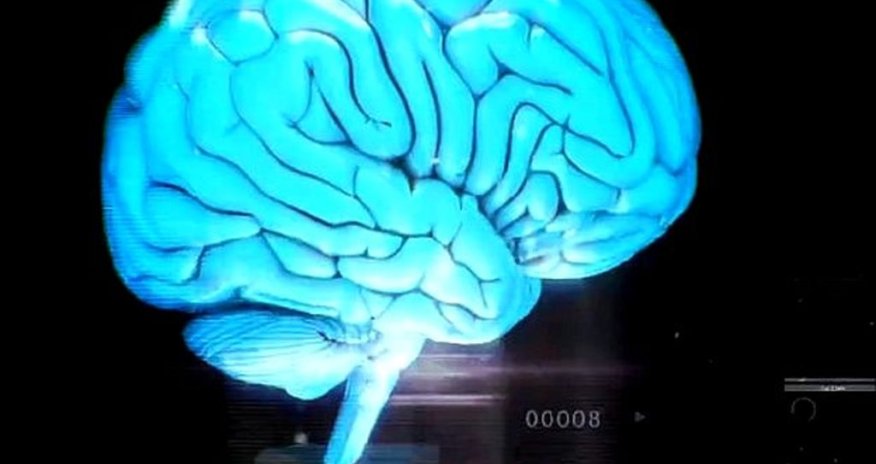
In one study, she used fMRI (functional MRI) technology to study the brains of subjects as they played Super Mario 64 DS, over a period of two months.
Remarkably, she found that three areas of the brain had grown - the prefrontal cortex, right hippocampus and cerebellum - all involved in navigation and fine motor control.
The visual layout of this game is distinctive: a 3D view on the top screen and a 2D map view on the bottom.
Prof Kuhn believes having to navigate simultaneously in different ways may be what stimulates brain growth.
Keeping sharp
Arguably the most exciting field of research is exploring the potential of video games to tackle mental decline in old age.
While electronic "brain training" games have long had enormous popular appeal, there is no hard evidence playing them has any effect beyond improving your score
But at the University of California, San Francisco, Prof Adam Gazzaley and a team of video game designers have created a game with a difference: Neuroracer.
(BBC)
www.ann.az


Similar news
Similar news












 Photo
Photo 



 Video
Video