





Eugenics need not be a dirty word - instead, it could be lifesaving technology
27.10.2015 16:27


On Thursday, the UK will become the first country in the world that allows "3-person IVF” – the creation of a baby with three parents.
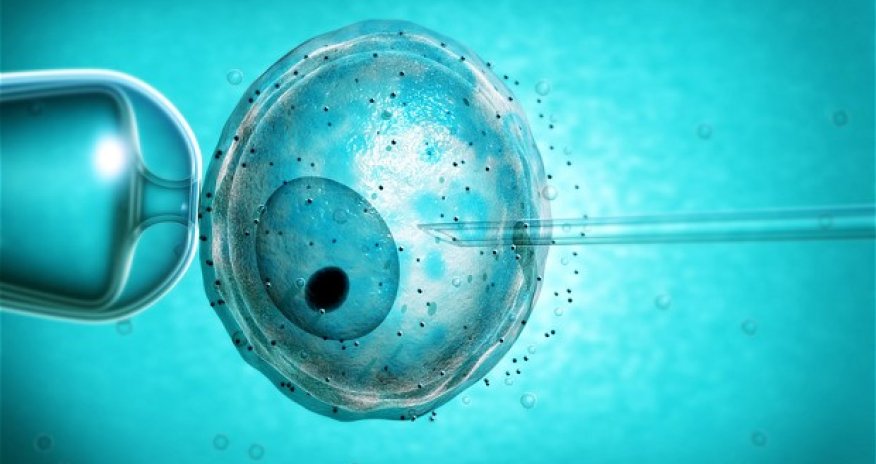
While this may sound like something out of a science fiction (or even a horror) film, the technique is relatively straightforward: it involves replacing DNA in a woman’s egg with a donor’s DNA, in order to prevent devastating genetic diseases from passing on from mother to child.
The diseases being targeted are caused by defects in the mitochondria: a tiny organelle within a human cell that generates energy for our survival.
The mitochondria have a separate set of genes, which is unique from the DNA in your cell’s nucleus – in other words, mitochondrial genes don’t determine your physical traits like hair and eye colour.
But they are vital nonetheless, because mitochondria power most cellular functions, genetic defects in their DNA can cause debilitating illnesses ranging from muscle wastage to diabetes, deafness and epilepsy.
From this week, though, these genetic defects can be corrected by using a donor egg from a healthy female, and replacing its nucleus with the birth mother’s nucleus. This results in an egg carrying the genetic material of two women, which can be fertilised by the father’s sperm.
It sounds like good news. But the debate over 3-parent IVF has been bitter, and the reason is clear: this is essentially eugenics, the science of improving the genetic quality of the human population.
Eugenics is a dirty word, most commonly associated with racist profiling, or Nazi experiments. But the time has come to rethink our attitude. It can also be understood as manipulating the genome in order to solve human health crises, such as sickle cell anaemia, and so give happier and longer lives to children otherwise doomed before birth.
Gene editing is the transformative technology of our generation: by altering the building blocks of life, we can start to address large-scale problems like poverty, climate change and even human longevity.
We are already creating "eugenic” crops, ranging from Vitamin A-enhanced golden rice which could save one million children a year from vitamin A-related deaths, to soybean with high levels of omega-3. In fact, genetically modified crops could be our best hope for feeding an ever-hungrier planet.
The fact is we are also engineering genes to cure, or breed resistance to, human disease. There are around 2000 human clinical trials in many countries around the world which are trialling gene therapy – inserting genes into your body – to treat a variety of illnesses including certain cancers like leukaemias and myelomas, Parkinson’s disease and cystic fibrosis. Trials are also trying to breed resistance to HIV.
Still, there is currently an international consensus that genetic engineering should not be used to modify human embryos in a way that could alter the characteristics of future children. This new legislation concerning defective mitochondria is the only exception. For now.
Because as genetic technologies have evolved in leaps and bounds, our ethical debate has to progress in tandem. We can’t bury our heads in the sand and avoid the discussion around gene engineering and editing simply because it "seems wrong” or strange, when scientists harbour the powerful knowledge that this could potentially save lives.
While I am a proponent of biomedical progress, my argument is not that we should perform eugenic techniques without carefully studying the possible side effects or consequences, but that the genie is well and truly out of the bottle, and we can’t put it back in.
We need to move the discussion forward on both a legislative and scientific front, allowing us to test, tweak, safeguard and implement these treatments until they become as safe as brain surgery or blood transfusions – medical breakthroughs we now take for granted.
The standard clinical trial pathway is to conduct safety trials first in vitro, then in animals, and humans, and finally give the experimental cure to those who would not otherwise survive. It can apply to eugenic techniques too.
A new type of gene editing technique, known as CRISPR-Cas 9, was already used in human embryos by Chinese researchers to modify the gene responsible for beta-thalassaemia, a potentially fatal blood disorder.
This experiment, while decried as unethical and dangerous, was in fact a crucial lesson in revealing the problems with the CRISPR technique, and enhanced the scientific community’s understanding of how gene editing works in practice.
So for the sake of those who need it the most, we must be brave enough push the frontiers of present-day human knowledge into territories unknown.
(telegraph.co.uk)
www.ann.az


Similar news
Similar news












 Photo
Photo 



 Video
Video