





Believe in aliens? Then you're probably an atheist or Muslim - VIDEO
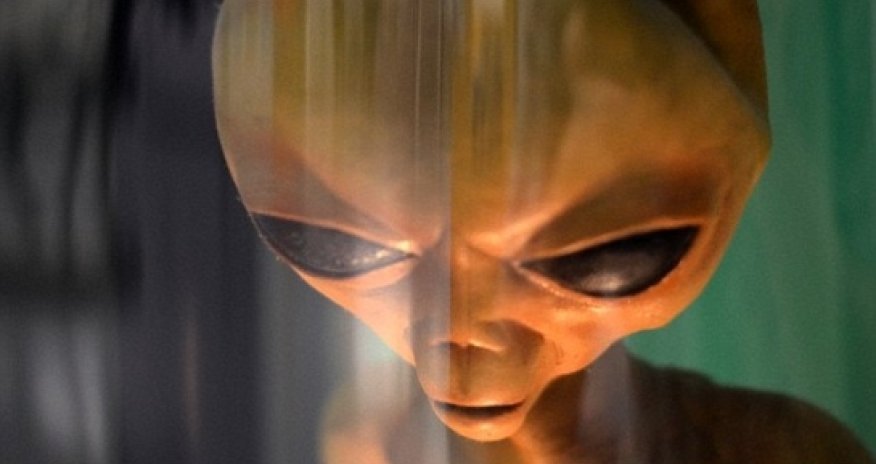


Now an astronomer has claimed that a person's belief in extraterrestrial life varies according to whether they also believe in a God and even specifically which religion they identify with.In the new book he reveals that atheists are the most likely group of people to believe in extra-terrestrials, at 55 per cent, followed by Muslims.It summarises what religious leaders and theologians from over 24 major religions say about alien life, including Judaism, Roman Catholicism, the Church of England, Hinduism and Buddhism.Astronomy professor David Weintraub, of Vanderbilt University in Nashville, Tennessee, said: ‘When I did a library search, I found only half a dozen books and they were all written about the question of extraterrestrial life and Christianity, and mostly about Roman Catholicism, so I decided to take a broader look.’‘Very few among us have spent much time thinking hard about what actual knowledge about extraterrestrial life, whether viruses or single-celled creatures or bipeds piloting intergalactic spaceships, might mean for our personal beliefs [and] our relationships with the divine.’His book, Religious and Extraterrestrial Life, includes the results of a poll that found 55 per cent of Atheists believe aliens exist, while 44 per cent of Muslims and 37 per cent of Jews think that life is out there in the universe.Around 36 per cent of Hindus and 32 per cent of Christians believe in aliens as well as divine beings.Of the Christians, the Eastern Orthodox faithful were the most likely to believe in aliens (41 per cent) while Baptists were the most sceptical at 29 per cent.Professor Weintraub thinks that Asian religions would have the least difficulty in accepting the discovery of extraterrestrial life, because Hindu thinkers have speculated that humans may be reincarnated as aliens, and vice versa, while Buddhist cosmology includes thousands of inhabited worlds.He found passages in the Qur’an that appear to support the idea that spiritual beings exist on other planets, but notes that these beings may not practice Islam as it is practiced on Earth.However, Professor Weintraub found very little in Judaic scriptures or rabbinical writings hinting at the existence of aliens.The few Talmudic and Kabbalistic commentaries on the subject do assert that space is infinite and contains a potentially infinite number of worlds and that nothing can deny the existence of extraterrestrial life.He says that Jews don’t believe the discovery of extraterrestrial intelligence would have much effect on them, quoting a Jewish anthropologist and scholar who concluded that the relationship between Jews and God would not be affected in the slightest by ‘the existence of other life forms, newly discovered scientific realities or pan-human behavioural changes.’ Professor Weintraub said that Roman Catholics have given the possibility of extraterrestrial life the most thought among Christian religions.Catholic leaders have been having an on-off debate about the possibility of life on other worlds for a thousand years, he said.The crux of the debate is whether intelligent aliens would suffer from original sin, because they are not descended from Adam and Eve, and if they do, did Christ visit them and was he resurrected on other planets?‘From a Roman Catholic perspective, if sentient extraterrestrials exist some but perhaps not all such species may suffer original sin and will require redemption,’ according to Professor Weintraub.The debate may increasingly come to the fore, because astronomers are detecting exoplanets - some of which could harbour life - at a rate faster than ever before.In 2000, astronomers had detected 50 planets orbiting other stars, while today that number has grown to more than 1,000.(dailymail.co.uk)Bakudaily.Az














 Photo
Photo 



 Video
Video