





Does the human eye prove that God exists?
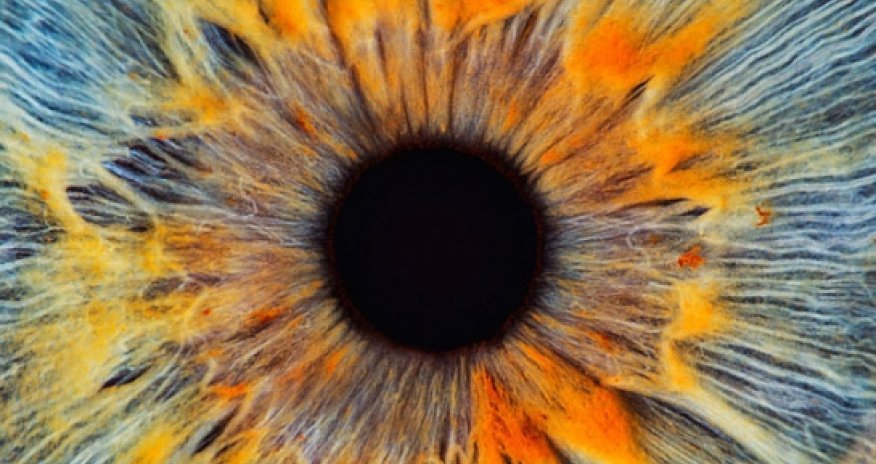


Instead, the scientific world lamented what, perhaps, Dr Sasai was about to achieve. As one of the directors at the RIKEN Center for Developmental Biology in Kobe, he was one of the world’s leading experts in stem cell technology. His team had pioneered incredible new techniques for creating organ-like structures – making giant strides towards a future where replacements for our failing human organs could be grown in a Petri dish.And most tragically, the months before his death had heralded Sasai’s biggest achievement. His team had already grown partial pituitary glands and even bits of the brain, but now he’d coaxed embryonic stem cells into forming the functioning tissue of arguably the most complex and scrutinised organ in the entire animal kingdom.Sasai had grown an eye. And in doing so, he’d also helped resolve a scientific obsession that had lasted centuries.In very basic form, the eye is thought to have first developed in animals around 550 million years ago. But such is its perfect design – its infinite adaptability, and irreducible complexity – that many argue it is proof of the divine itself. Even today, Christians and creationists believe that Charles Darwin himself was troubled by its existence – seizing upon an (oft-misquoted) aside in Origin of Species, where Darwin remarked that the whole idea of something so flawless “could have been formed by natural selection, seems, I freely confess, absurd in the highest degree.”The eye has become a focal point for biologists, ophthalmologists, physicists and many other branches of science ever since. So when the Spanish neuroscientist Santiago Ramón y Cajal made the first anatomical diagrams of neurons and the retina in 1900, it stoked a century of biologists attempting to unlock the eye’s secrets.And there have been several discoveries. Unlike our ears and nose, for example, which never stop growing our entire lives, our eyes remain the same size from birth. Then there’s the complicated process of irrigation, lubrication, cleaning and protection that happens every time we blink – an average of 4,200,000 times a year.And there are other astonishing inbuilt systems too. Take, for example, a little trick called the Vestibulo-ocular reflex (VOR). In short, it’s our own personal Steadicam – an inbuilt muscular response that stabilises everything we see, by making tiny imperceptible eye movements in the opposite direction to where our head is moving. Without VOR, any attempts at walking, running – even the minuscule head tremors you make while you read these words – would make our vision blurred, scattered and impossible to comprehend.But while the inner workings of the eye continue to surprise scientists, the last decade has seen an unprecedented confluence of biology, technology and ophthalmic innovation. An international scientific endeavour that is not only finally unlocking the eye’s true potential – but also how to counter, and ultimately cure, its biggest weaknesses.One scientist leading the charge is Professor Chris Hammond, the Frost Chair of Ophthalmology at King’s College London. “I’ve been working in ophthalmology for nearly 25 years,” he says. “And I think we’re at a key moment. The pace of our genetic understanding, cell-based therapies and artificial devices for the treatment of eye disease is advancing faster than ever.”His personal crusade – treating common conditions such as myopia, cataracts and glaucoma, as well as eye diseases – is, he says, slowly becoming possible. “For example, we’re finally starting to understand some of the mechanism of these diseases – how genetic and environmental risk factors, and not ageing, might be significant. And with some of the rarer diseases, we’re starting to look at actual cures.“We are also understanding more and more about the processing that is already being done within the retina, before signals are sent to the brain. And with the amazing abilities we have today for imaging, the emerging technologies are exciting too.”With much fanfare, the first bionic eye debuted last year. Developed by Second Sight Medical Products, the Argus II Retinal Prosthesis System consists of 60 electrodes implanted in the retina, and glasses fitted with a special mini-camera. Costing €73,000 (£58,000) to install, it then sends images – albeit very low-resolution shapes – to the user’s brain. Which means people with degenerative diseases such as retinitis pigmentosa can differentiate between light and dark, or make out basic shapes such as doorways.“In terms of devices like these, we are still at the very crude technology stage,” says Prof Hammond. “They’re only really of use to people who are completely blind. But the thing about technology is that it evolves with amazing speed.”Less invasive, “wearable” optic gadgetry is catching up fast. Although still in its infancy, the ability to mount microelectronics within a contact lens is already offering huge potential. Take the Sensimed Triggerfish, for example – a curiously-named soft, disposable silicone lens with a micro-sensor that continuously monitors the shape and pressure of your eyeball, ideal for monitoring the progress of treatment or post-surgical health.Other lenses are coming on the market too. In January this year Google announced a lens that tests the level of glucose in the tears of diabetes sufferers, eliminating the finger prick test commonly used several times each day by many diabetics. Others are planned that actually secrete precise dosages of drugs continuously into your system via your eye – even when you’re asleep.(telegraph.co.uk)Bakudaily.Az














 Photo
Photo 



 Video
Video