




It could leave you with a chronic sleep disorder
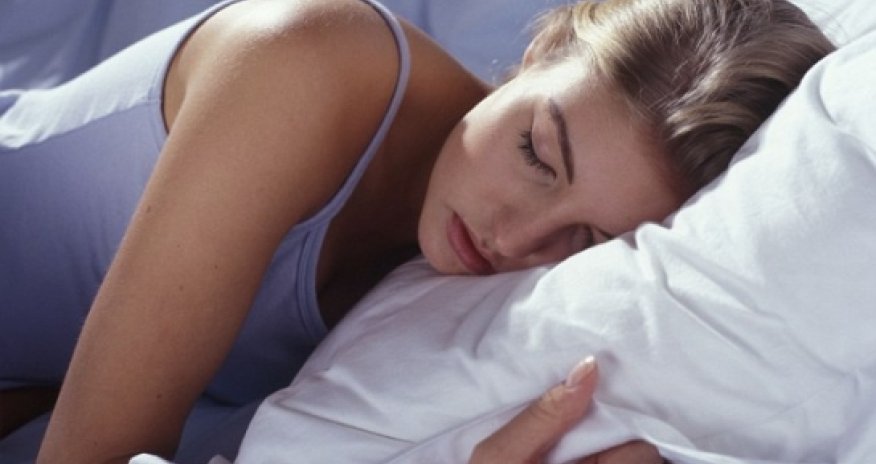


Niamh, 23, has survived on this little sleep for the past four years. As a child and teenager, she got at least eight hours' sleep a night. But her sleep patterns shifted at university when juggling two waitressing jobs, as she'd start her university work after coming home at midnight.Now she doesn't feel tired before 3am and she can't sleep before 3.30am.'No matter what I do, I can't change my body clock back,' says Niamh, who lives in Manchester.Every so often she tries sleeping from 11pm, but ends up tossing and turning for two hours, before giving up to do some work on her laptop instead.So, normally, she doesn't bother trying to sleep before 3am. She stays up doing laundry, cleaning or working until she's tired, despite having to be at work by 9.30am. 'I take work home and if I'm not asleep, I'll reply to emails and check news feeds on my phone. It's as if I can't switch off.'Niamh's habits might sound unusual, but she is one of an increasing number of people suffering from delayed sleep phase syndrome (DSPS), a disorder affecting the body clock, or circadian rhythm.What it means for sufferers is that their natural sleep patterns are pushed back - so they don't feel sleepy until the early hours of the next morning. However, unlike insomniacs, once they do fall asleep, they sleep well.Yet because they have problems getting to sleep at a decent time they can become chronically sleep deprived, so their physical and mental health can suffer as a result.'Delayed sleep phase syndrome is an extreme version of being a night owl - someone who sleeps late and gets up late - and it became a recognised condition in the Eighties,' says sleep expert Dr Neil Stanley.'It could be genetic, behaviour you've learned from your parents or that you've slipped into from going to bed later than normal and your body has got used to it. This can happen over up to three months.'Research suggest about 0.15 per cent of the population - 96,000 Britons - suffer from the disorder yet this may be the tip of the iceberg, says Dr Stanley, who runs The Sleep Consultancy.He says that the number of sufferers is probably rising thanks to a stressful work culture and increased use of technology, with the light emitted by devices such as TV, computers and mobile phones confusing the body clock.'People suffer in silence,' he says. 'We don't go to our GP with sleep problems and, if we did, most of our GPs don't know enough about sleep illnesses to make an accurate diagnosis. Most GPs will never have heard of delayed sleep phase syndrome and might misdiagnose it as depression.'When you sleep and how long you sleep for is not a problem unless it affects your daytime behaviour, says Dr Stanley.'If you're at university and you go to bed at 3am and get up at 10am, yet you still attend all your lectures, it's not a problem, but because of our nine-to-five society it is a problem for anyone who has to be at work at 9am.'People with this problem will go to bed at least two or three hours later than most people and so often end up chronically tired.Niamh has tried various remedies to help her drop off earlier, including lavender oils (lavender may help to lower the heart rate and blood pressure, aiding relaxation), drinking warm milk (which contains tryptophan, an amino acid that helps produce the sleep-inducing chemicals serotonin and melatonin) and chamomile tea (thought to work as a mild tranquiliser). But nothing has helped.'My lack of sleep has affected my health,' she says. 'I'm run down and get ill more often now. It takes weeks to shake off a cold or a bug.'I look tired most of the time. I have dark circles under my eyes, and I'm getting paler through lack of sleep.'My social life has been affected because I'm so shattered physically. There are times I feel I can't take on any more - it's hard to cope on so little sleep.'(dailymail.co.uk)Bakudaily.Az













 Photo
Photo 



 Video
Video