





Going abroad? Here are 10 diseases you need to watch out for


As globalization continues to grow and dominate our trade, economy and lifestyles, the associated ease of access to remote regions of the world is reflected in our travels.
Increasing numbers of destinations worldwide have opened their arms to international travelers, but as you venture on your own travels, whether for business or pleasure, which infectious diseases could you be exposed to?
Dengue Fever
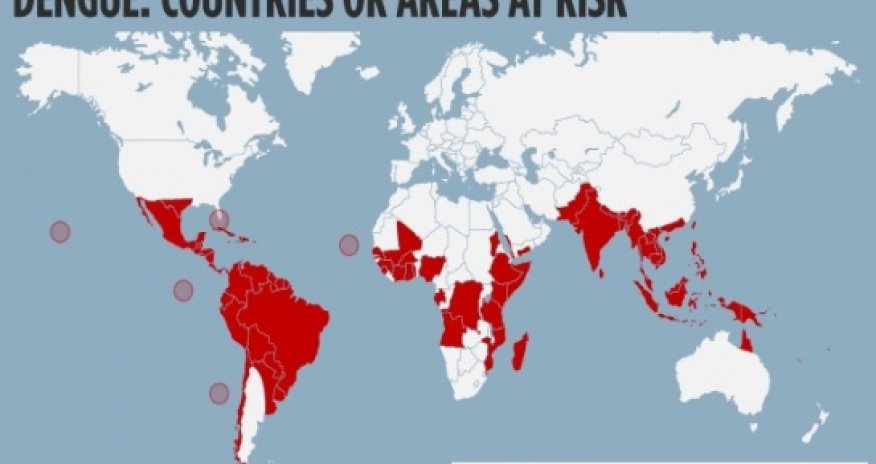
Locations: Caribbean, Central and South America, Western Pacific Islands, North Australia, South and South-East Asia, West and Sub-Saharan Africa.
This mosquito-spread virus can be found in many parts of the world and with no treatment or vaccine available yet, your only protection is to cover up and use insect repellent to keep the mosquitoes at bay. This species of mosquito, Aedes aegypti, bites throughout the day. Symptoms can take up to two weeks to develop and are flu-like, including fever, headache, nausea, vomiting and pain in the eyes, muscles and joints, and generally last for one week.
There are four different serotypes of the dengue virus, all of which are now found globally and whilst infection with one can give you immunity to that type in the future, infection with a second, third of fourth serotype can lead to more severe illness than the first exposure -- such as Dengue hemorrhagic fever.
Schistosomiasis
Locations: Africa, the Middle-East, and some parts of South America, the Caribbean and South-East Asia.
Freshwater snails carry the schistosoma parasitic worm that causes this disease -- also known as bilharzia. The snails release the worms' larvae into contaminated freshwater rivers, lakes, ponds or wetlands, which then penetrate through skin, such as the soles of your feet.
According to the World Health Organization (WHO), the worm is endemic in 52 counties where water is contaminated with the feces of people infected with the worm, which contains parasitic eggs. Symptoms can take up to two months to develop and whilst some people never develop symptoms, others experience fever, chills, cough, and muscle aches within two months of infection. The extent of symptoms depends on the amount of parasite you have inside your body.
You can evade infection by avoiding swimming in freshwater and by heating water if needed for bathing. There is no vaccine available, but there is an effective and fast-acting treatment: The drug praziquantil will kill parasites within one to two days of treatment.
Malaria
(CNN)
Bakudaily.Az













 Photo
Photo 



 Video
Video