





Caspian Sea level decline to continue
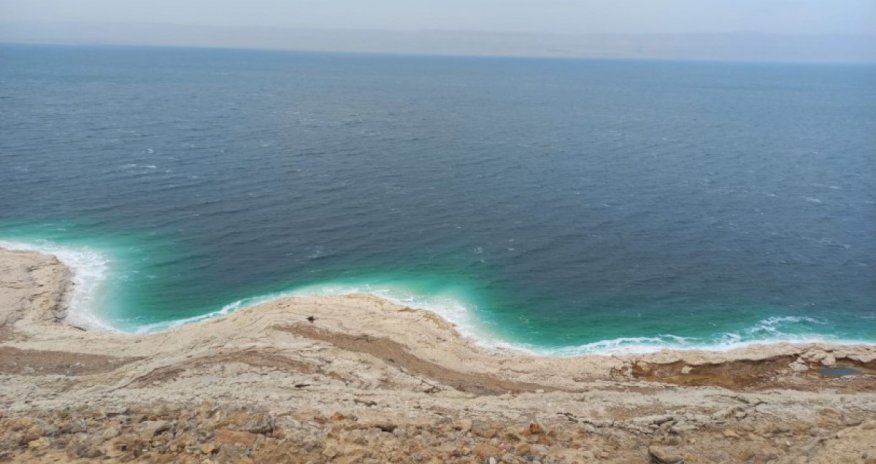


Russia and Azerbaijan agreed on Thursday to develop a joint programme to monitor the shrinking Caspian Sea, as falling water levels threaten regional ports, fisheries and transport routes, officials from both countries said.
The Caspian, the world’s largest enclosed inland body of water, has dropped to around 29 metres below sea level — its lowest point in centuries — according to Russia’s State Hydrological Institute. The most severe declines have been recorded in the shallow northern areas, impacting regions such as Dagestan, Kalmykia and Astrakhan.
Deputy Russian Natural Resources Minister Dmitry Tetenk in and Azerbaijani Deputy Ecology Minister Rauf Hajiyev co-chaired a working group meeting in St Petersburg ahead of the 11th Nevsky International Environmental Congress.
More than 80% of the Caspian’s inflow comes from the Volga River, but Russia has rejected suggestions that dam construction and irrigation along the river are the main causes of the sea’s decline. Officials insist that climate change, including rising air temperatures and reduced rainfall, is the dominant factor.
“Hydrological models show that the negative trend will continue for at least another 10 to 15 years due to warming, decreased river flow, and increased evaporation,” Igor Shumakov, head of Russia’s federal weather agency Roshydromet, told the congress.
Environmental experts warn that if current trends persist, Kazakhstan’s Aktau and Kuryk ports and Azerbaijan’s Port of Baku could be left several kilometres inland, disrupting trade routes such as the Middle Corridor, which links China to Europe via Central Asia and the Caucasus.
“This is no longer a localised issue; it is a systemic risk for all Caspian littoral states,” Hajiyev said in a statement. Tetenk in said Russia was “ready to work on common measures,” but called it “simplistic” to blame the Volga alone.
Federation Council Deputy Speaker Andrei Yatskin said the Caspian was at its lowest level in 400 years, warning of “radical shoreline changes” that could endanger regional ecology, fisheries, and port infrastructure.
Russia’s representatives avoided direct discussion of the impact of the Volga’s dam cascade on the Caspian’s decline. Some officials, including Astrakhan Region’s Deputy Governor Denis Afanasyev, attributed the situation to “natural processes” beyond human control, while acknowledging the need for adaptation strategies to mitigate water withdrawal and stabilise river flow.
Officials from Russia, Azerbaijan, Kazakhstan, Iran, and Turkmenistan are expected to discuss broader coordinated measures at a ministerial meeting later this year.
N.Tebrizli









 Photo
Photo 



 Video
Video