





TotalEnergies: Absheron Phase II may begin by year-end
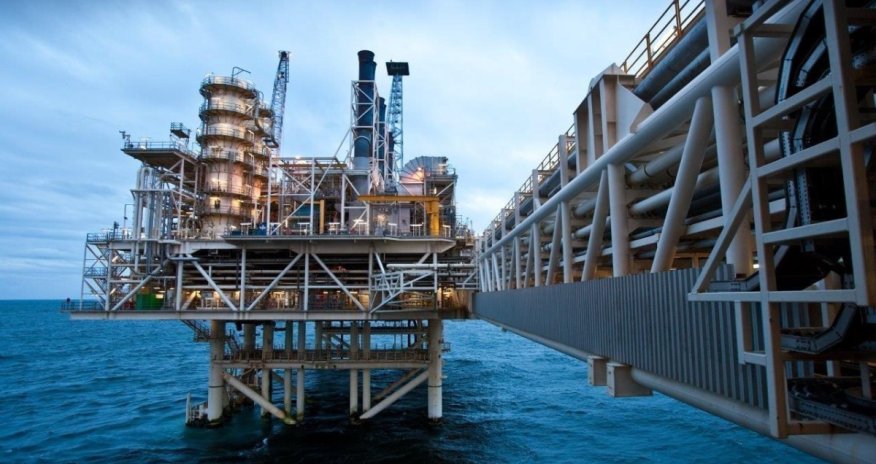


The Phase II development of the Absheron gas-condensate field in Azerbaijan is expected to start by the end of 2026, TotalEnergies' Country Manager for Azerbaijan Emmanuel de-Guillebon stated at panel discussions on the second day of Baku Energy Week.
The official highlighted that the initial production phase of the Absheron field was launched three years ago, and during this period, the field's performance has met expectations: "Production has been stable and better than expected. These results have provided all the data and confidence needed to implement the second phase. Within cooperation with SOCAR and ADNOC (Abu Dhabi National Oil Company), the FEED (Front-End Engineering Design) stage has been completed."
He added that Phase II will include the drilling of three new subsea production wells, each with a daily capacity of 40,000 barrels of oil equivalent: "About 70% of production will be gas, and 30% condensate. The wells will be directly connected to shore via a 140-kilometer subsea pipeline. No production platform is planned; the wells will be tied directly to the coast."
De Guillebon also noted that, for the first time worldwide, a new subsea technology will be applied on an industrial scale to prevent paraffin deposits: "An automatic subsea pig launcher system will be installed. Special devices used to clean pipelines will move monthly along the 140-kilometer line without stopping production or involving additional vessels. The first industrial application of this technology will be carried out in Azerbaijan within the Absheron project. We are proud of this."
He emphasized that part of the gas from Absheron Phase II will be exported to Türkiye via the South Caucasus Pipeline (SCP): "Yesterday, in the presence of the President, a gas sales agreement was signed with BOTAŞ. The other part of the gas will be directed to Azerbaijan's domestic market. The condensate produced from the field will be sent to the ACG terminal for processing and stabilization, and then exported via the Baku–Tbilisi–Ceyhan (BTC) pipeline."












 Photo
Photo 



 Video
Video