



How oil's become the world's most potent weapon
24.12.2014 09:30


From Russia to America, and from Scotland to the Middle East, the dramatic fall in the price of oil — down by nearly half in six months — has sparked an economic crisis that threatens to shift the global balance of power in dramatic fashion.
As Russia teeters on the edge of crisis, America and Saudi Arabia are using the depressed oil market to wreak havoc on enemies such as Iran. The repercussions are being felt closer to home, too, with the North Sea oil industry described as being close to collapse.
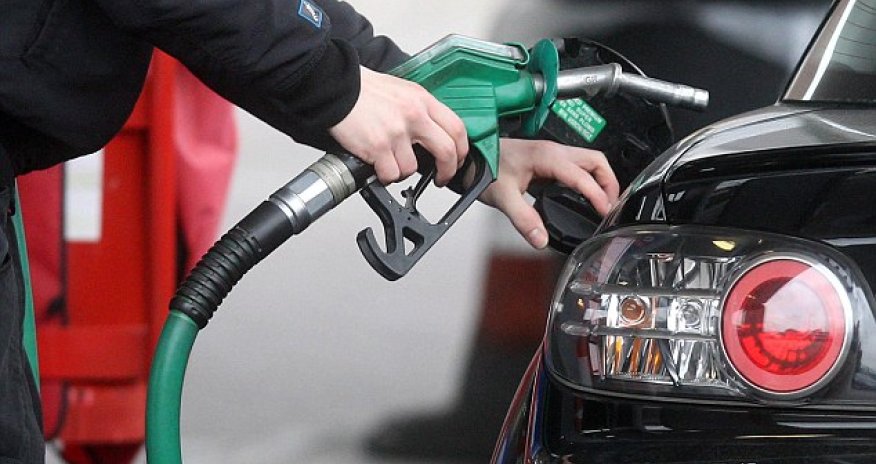
The good news is that it’s cheaper to fill up your car at the pumps, but what does it mean for Britain’s national security?
Here, the Economist magazine’s Energy Editor EDWARD LUCAS offers a simple guide to these deeply turbulent times.
RUSSIA IN MELTDOWN
The world has become used to Vladimir Putin giving tub-thumping speeches about the glory of modern Russia. His three-hour press conference last Thursday — by turns bombastic and duplicitous as he deflected questions about his country’s teetering economy — was no exception.
Railing against the sanctions enforced by the EU and America in response to the annexing of Crimea, he warned darkly against shackling the Russian bear and tearing out its ‘fangs and claws’.
During a recent visit to Turkey, however, he was forced to adopt a very different tone, announcing in clipped and petulant terms that his country’s prized new South Stream gas pipeline to Europe would not be going ahead.
Why? The collapse in the oil price across the world — down by nearly half since June — is emptying the Kremlin’s coffers.
As the third-biggest oil producer in the world, Russia is heavily dependent on a buoyant price, deriving more than half of its budget revenues from oil and gas extraction.
The kleptocrats in the Kremlin rely on oil and gas exports to sustain Russia’s bloated and bribe-ridden bureaucracy, as well as its ruthless aggression against other countries.
But the price per barrel of oil hit a five-year low of $58.50 last week, and though it has recovered slightly, it is still far too low to keep Mr Putin’s regime running at full blast, especially given the economic sanctions the West has imposed.
No wonder the value of the rouble has plummeted, causing panic buying in Russia, the movement of money out of the country and even the jacking-up of interest rates to an eye-watering 17 per cent in a bid to stop the currency sliding further. So these are very bad times for Russia, where no one has forgotten that low oil prices brought down the Soviet Union in 1991 by eviscerating its economy. Today, they could spell doom for Putin’s attempt to recreate that Soviet empire.
He has naively set out his spending plans for the next three years based on an oil price of around $100 a barrel — which now looks wildly optimistic.
But though the Kremlin is weakened, we should not count our blessings yet. For there is a danger that the Russian autocrat will lash out militarily, distracting his hard-pressed people with another foreign policy gambit aimed directly at humiliating Nato in Europe.
With that in mind, some feel that now is the time to go easy on Mr Putin. He has learned a hard lesson from this collision with reality; we should not push him too hard, the argument goes. Instead, we should offer him a face-saving deal on the situation in Ukraine, offer to lift sanctions and prevent the Russian economy from staggering over a cliff.
I disagree. Putin does not want a deal with the West. He wants to rewrite the rules of European security. Only if we accept that countries such as Ukraine are to be consigned to Russia’s control will the hard men of the Kremlin be satisfied.
That is a concession we cannot and should not make. If we concede Ukraine, we signal that might is right. What happens when Mr Putin tries his tricks on another country — perhaps our Nato allies in the Baltic states?
(dailymail.co.uk)
ANN.Az







 Photo
Photo 

 Video
Video