




From tragedy to independence
21.01.2015 21:06


By Elin Suleymanov
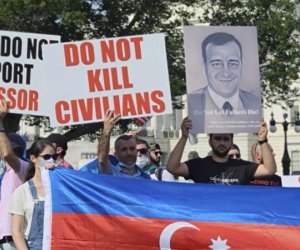
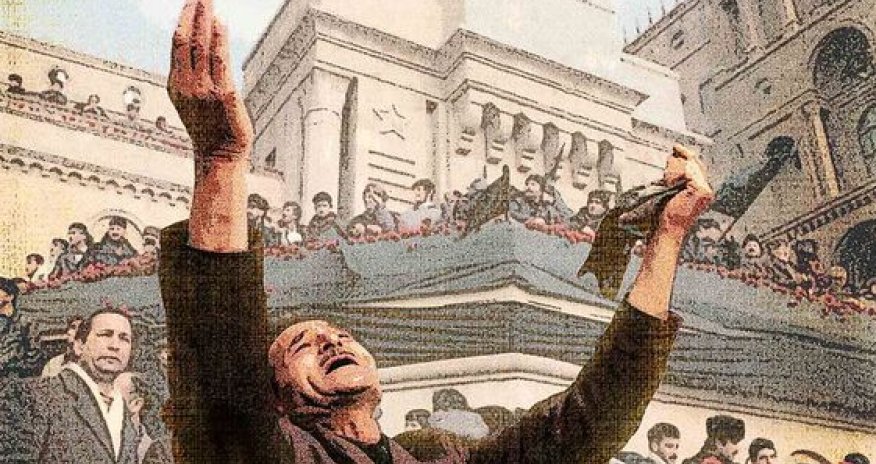
Twenty-five years ago, while then-President George H.W. Bush was delivering his State of the Union message before a joint session of Congress in Washington, Soviet troops attacked unarmed civilian protesters in the Azerbaijani capital of Baku, killing some 133 people and wounding hundreds of others. The Soviet effort to crush the growing Azerbaijani pro-independence movement culminated in the largest massacre in a generation, it but failed miserably, hastened the end of the USSR, and led directly to our formal declaration of independence two years later.
The events of 1990 helped crystalize key elements of the Azerbaijani social and political identity. Today two of those elements, namely a strong, unquestionable commitment to its independence and the inclusive nature of its tolerant society, remain at the core of Azerbaijan’s strategic importance. Despite a history of imperial domination, the people of Azerbaijan persevered, sacrificed and ultimately won the freedom and independent future they sought. In fact, Azerbaijan was the first nation of the Soviet Empire or Eastern Europe to become free of any foreign military presence on its soil.
Independence has given Azerbaijan the ability to act in the best interest of our own people without outside interference. Azerbaijan’s strengths today include energy security, a growing economy, modern infrastructure and a remarkable degree of stability. Independence has allowed us to pursue and achieve our peoples’ centurieslong dream of a prosperous and successful nation. This is no small accomplishment anywhere, but especially in the complicated geopolitical neighborhood in which we are located.
Azerbaijan is today a reliable international partner. History has shown that unstable nations with compromised sovereignty pose the greatest threat to peace and security while stable, prosperous societies committed to the fundamentals of international law both promote peace and establish the basis for continued democratic reforms. A stable, prosperous Azerbaijan is good for its people, for the strategically important region in which it finds itself, and for its international partners.
A people who have struggled and suffered in their quest for freedom and independence guard both. These people demonstrated their commitment to these aspirations 25 years ago. The Soviet troops who shot and killed so many citizens of Azerbaijan indiscriminately that day gunned down a diverse group of freedom lovers, including Azerbaijanis, Russians, Tatars, Jews and others. People of all ethnicities and faiths were killed by the troops of a collapsing Soviet empire that night, and people of all faiths and ethnicities of Azerbaijan came to mourn the victims. Led by the leaders of Azerbaijan’s Christian, Jewish and Muslim denominations, a million people marched in Baku on a cold January day in 1990 in a spectacular act of defiance against a Soviet army-imposed curfew.
On that day a quarter-century ago, an independent nation was reborn. In today’s world, where differences seem to matter more than common humanity, Azerbaijan’s vision of inclusive intercultural dialogue enriched by the experience of creating in 1918 the first-ever democratic republic with a predominantly Muslim population sets a valuable global example.
This tradition continues today under the current Azerbaijani President Ilham Aliyev. The nation’s commitment to inclusiveness and openness is widely recognized in the world, be it among the Muslim nations, by the Vatican or by Israel, an important partner of Azerbaijan.
Azerbaijan’s passionate devotion to meaningful independence and rejection of radicalism is sometimes misunderstood. It is easy enough for those who don’t live in our neighborhood to fault us for not acting precisely as they might like, but it is both dangerous and foolish to simply ignore the map of the world or to minimize the value of stable and independent allies in our region, There are even some in the West, including the U.S. Commission on Religious Freedom, who continue to view religious radicalism as some sort of theoretical problem rather than a truly dangerous global threat with which those who live in our region must contend. While we appreciate constructive criticism and advice, the driving force behind our policies and strong partnership with the United States will remain the choices, desires and interests of our people.
For a quarter-century, every Jan. 20 citizens of Azerbaijan of all persuasions bring red carnations to the memorial of the tragedy. It is, however, a truly independent, successful and diverse Azerbaijan that is the best tribute to the sacrifice of those who died on the streets of Baku at the hands of a collapsing Soviet regime.
NOTE: Elin Suleymanov is Azerbaijan’s ambassador to the United States.
(The Washington Times)
ANN.Az


Similar news
Similar news






 Photo
Photo 


 Video
Video