




Vast asteroid created 'Man in Moon's eye' crater
21.07.2016 15:31


One of the Moon's biggest craters was created by an asteroid more than 250km (150 miles) across, a study suggests.
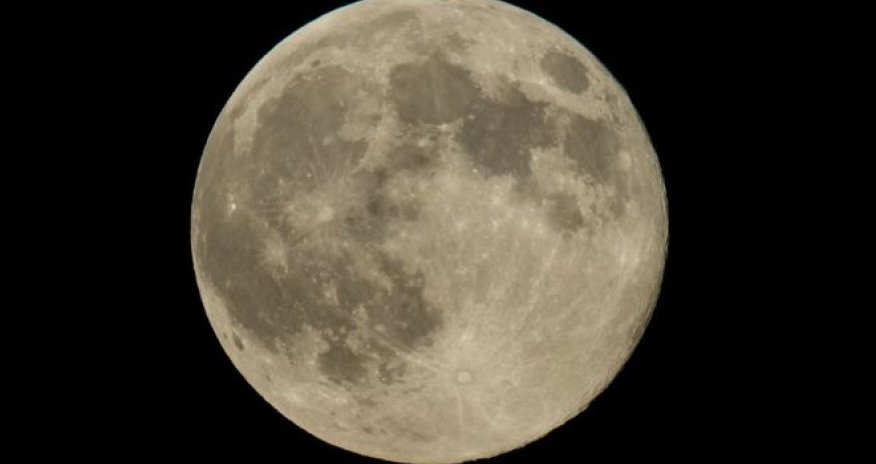
It smashed into the lunar surface about 3.8 billion years ago, forming Mare Imbrium - the feature also known as the right eye of the "Man in the Moon".
Scientists say the asteroid was three times bigger than previously estimated and debris from the collision would have rained down on the Earth.
The research is published in the journal Nature.
The asteroid was so big it could be classified as a protoplanet - a space rock with the potential to become a fully formed world.
Lead author Prof Peter Schultz, a planetary geologist from Brown University in the United States, said: "One implication of this work is that the asteroids may not have been these small chunks flying around - there may have been many more of these very large protoplanets.
"It would have been a catastrophic period of time."
The Imbrium crater measures more than 1,200km (750 miles) across. Until now, scientists used computer models to estimate the size of the asteroid that led to its formation.
But for in a new assessment of the collision, Prof Schultz recreated the smash in the lab.
Using a three-storey-high, hyper-velocity gun, the researchers fired small spheres of metal travelling at more than 22,000km per hour (13,000 mph) into a curved aluminium plate.
"We film it with high-speed cameras: things that go up to one million frames a second," Prof Schultz told BBC World Service's Science in Action programme.
By analysing the slowed-down footage and the pattern of debris, the researchers were able to calculate the size of the asteroid that crashed into the Moon.
"We know there were big asteroids, but we have increased the size significantly," explained Prof Schultz.
"The previous estimate for the Imbrium asteroid was in the order of 80km, and we've increased that by a factor of three."
(BBC)
www.ann.az


Similar news
Similar news










Latest news 
More news

 Photo
Photo 



 Video
Video