





Greenpeace video shows horrific fishing methods used to catch fish - PHOTO+VIDEO
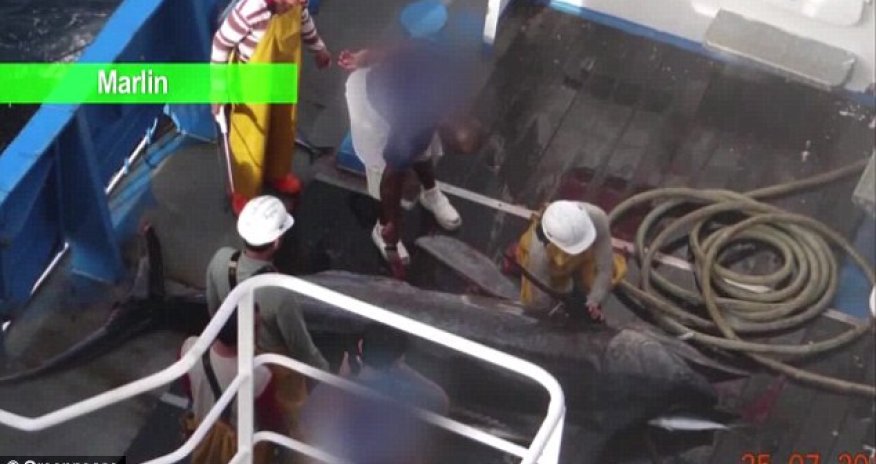


Australian consumers of tinned and fresh tuna have no way of knowing whether or not the tuna they eat is caught using this method, unless the tuna brand elects to state it on their label.And Greenpeace has warned that the popular 'dolphin friendly' tag used by many tuna brands is 'meaningless' because it is not regulated.In the video released by Greenpeace, fisheries from France, the UK and Italy are shown using fish aggregating devices (FADs) and nets to catch tuna in the Indian Ocean. Marine animals including whale sharks, silky sharks, marlins, rays, oceanic whitetip sharks, olive ridley sea turtles, mako sharks and other mixed species of fish - some of which are threatened species - are seen caught up in the nets and cast aside by fisherman.At the end of the video the dead marine animals are dumped back into the ocean.Greenpeace oceans campaigner Nathaniel Pelle said the purse seine nets pictured in the video – which are nets that circle around schools of fish before being drawn up like a purse – were not necessarily harmful when used on their own but were problematic when used with FADs.'The fish aggregating devices are designed to attract tuna but they also attract all sorts of other marine life,' Mr Pelle told Daily Mail Australia.'When you use those two methods in combination you end up catching large amounts of incidental species you don't mean to catch.'Australian consumers have no way of knowing where their canned tuna comes from because food labelling laws in Australia only require that canned tuna companies state where the fish is packed (usually Thailand) and not where it is caught.Greenpeace says 90 percent of tuna caught in the Indian Ocean is caught using FADs.Most tuna caught in the western Pacific Ocean is caught using the less harmful 'pole and line' method or using purse seine nets without FADs.Around 800,000 tonnes of tuna are caught in the Indian Ocean, where the video was taken, each year. Around 2.6 million tonnes are caught in the western Pacific Ocean.'Most tuna in the Pacific is caught using purse seine nets, which is a fairly clean way of fishing because giant schools of tuna tend to swim on their own,' Mr Pelle said.'They don't tend to catch as many sharks, turtles or other species as you would using this device.'Mr Pelle said every major Australian canned tuna brand has committed to removing fish aggregation devices from their supply chains by the end of next year, but the organisation is still calling for clearer labelling laws.'We've been asking for all seafood in Australia to be labelled where it's caught, not where it's put in a tin,' Mr Pelle said.'So Australian consumers can make an informed choice about whether they want to buy tuna that results in killing hundreds of thousands of sharks, dolphins, whales and turtles.'Mr Pelle added that 'dolphin friendly' labels on tuna cans were 'relatively meaningless'.'It's not regulated; some people put their own dolphin friendly label on their tins without any official body giving them that logo,' he said.'And just because it's so-called dolphin friendly it doesn't mean it's not killing sharks or other species as well.'(dailymail.co.uk)Bakudaily.Az













 Photo
Photo 



 Video
Video